Generic Battery Mantel Clock

A battery clock returns to the mantel.

A friend of the family was very upset that her mantel clock had decided to stop and despite changing the battery, it refused to start ticking.
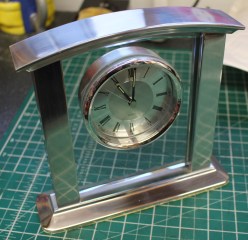
IMG_9122
FixItWorkshop, Worthing, May’19, Clock.

Now, this clock was not an expensive item, but it matched the décor of the room it was in and so the owner was very keen for it to be returned to its place above the fire.

Battery clocks like this are ubiquitous and often, like this one, don’t even carry a makers’ brand logo or name.  I was thinking; if the clock’s motor was unsavable, I would replace it using a generic replacement from eBay.

I’ve fixed many battery powered quartz clock motors.  They all work in a similar way.  An electromagnet which is pulsed using a simple circuit, regulated by a quartz crystal.  Add-in some gears and pointer hands and you’ve got yourself a clock.

After removing clock motor from the housing, just two screws, the motor comes apart by peeling back two plastic tangs.  Care should be taken not to force anything at this stage as the parts are very small and delicate.

The motor gears and electromagnet out of the way, the printed circuit board popped out and the fault became clear.  At some point in the past, I suspect that a battery had leaked just a little and the vapour from the leak had corroded the contacts.  A little dab of contact cleaner on an old toothbrush and a little bit of scrubbing and the corrosion was gone.

This slideshow requires JavaScript.

A little bit of jiggery pokery again and the motor was back together and refitted to the clock’s frame.  It just goes to show that something as simple as this can be fixed with basic tools and patience.

Job done!

Cost of replacement:  N/A.  Cost of repair:  Just 30 minutes tinker time and a cuppa.
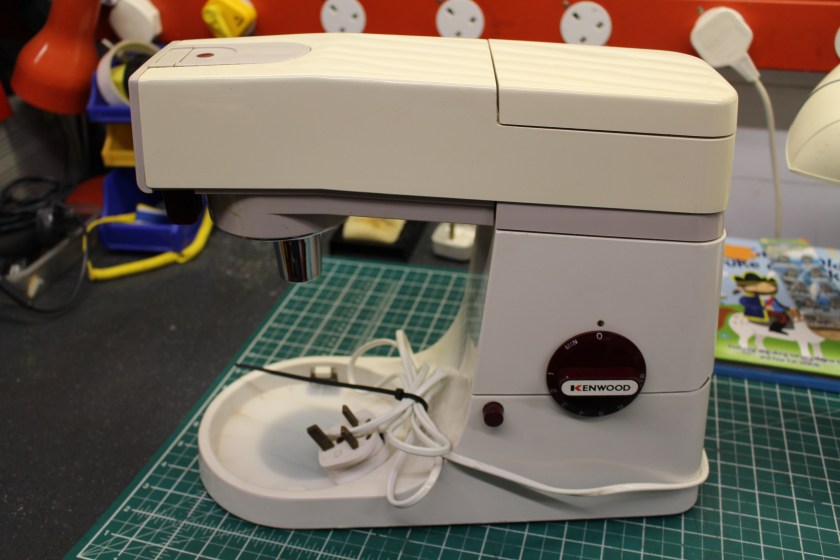
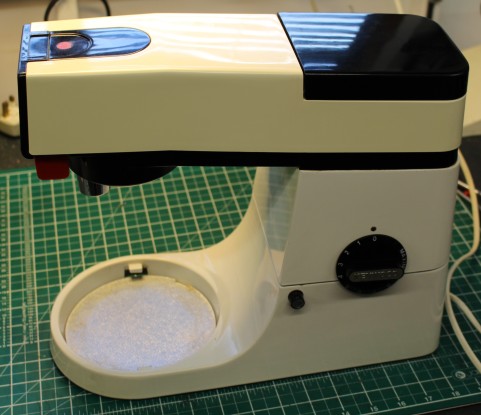
Smoky Kenwood Chef A901E

Another Chef enters the workshop with a smoking habit that’s hard to kick.

Top tips for keeping your Chef running smoothly, for longer:

  • Keep all moving parts free from dirt and old cake mix
  • If the feet are squashed, change them.  The gap allows airflow to the motor
  • Keep the hinge mechanism lightly lubricated
IMG_9144
FixItWorkshop, Worthing, May’19.  Kenwood Chef A901E (1980’s model)

This A901E Chef had a developed a smoking habit.  Due to age, one of the capacitors had failed on the speed control circuitry making a lot of smoke while in use.  An adjacent resistor had also split in half during the failure.

Despite a smoky situation, there was hope for the Chef.

Removing the motor on these mixers is pretty straightforward.  Just remove the blender accessory power take off cover and remove some screws.  Lift up the top half of the mixer on the hinge and you’ll get access to the base of the motor area.  After you’ve removed the belt, the motor should come out.  There’s a bit more to it actually, but there isn’t much holding that motor in.

The later A901E features a better speed control circuit than the earlier A901 and it’s also made on proper circuit board, rather than just soldered-together components.

With this machine, the correct repair kit was obtained and fitted, so the circuit was as good as new and wouldn’t smoke anymore.

I treated this Chef’s motor to new motor brushes since the old ones were worn.  I also fitted new feet, as the existing ones were squashed and one was completely missing.

I was about to sign the job off , when I noticed a small tear in the outer cable flex.  I couldn’t let the Chef out of the workshop like that, so I had to replace it with a new piece.

This slideshow requires JavaScript.

After some fettling, the machine was running like clockwork, once again.

Cost of replacement:  £000s.  Cost of repair:  £12.74 plus my time and several ginger nut biscuits.

A bit of 70’s fun: Sona J996 Coffee Percolator

An office find, escapes the scrap yard.

Despite the 1970’s kitsch-ness of the electric percolator, they are very good at making coffee and the delightful coffee smell you get when brewing-up is sublime.  Here’s an advert from the time.

Top tips for keeping your coffee percolator in good order:

  • Descale using a kettle descaling solution as needed
  • Keep the coffee strainer clear of debris
  • Make sure the lid always fits between the strainer and the percolator body

A colleague found this percolator while clearing out an abandoned office cupboard.  I suspect that this one might have been bought as a wedding present way back and had ended up in the office when someone had decided play the role of barista at work.

It was missing its power lead and was headed for the recycle bin, when I intervened.

The power lead needed was an obsolete design used on British appliances of the era and was similar in design to the more modern and current, IEC C13 or ‘kettle lead’.  However, modern kettle leads did not fit this percolator.

More drastic action was needed.  Luckily, I had an old appliance I no longer needed, so I scavenged a board mounted IEC C13 socket from it and replaced the one originally fitted.

After some soldering and a bit of jiggery-pokery, this Sona Percolator now brews coffee using an up-to-date power lead.

This slideshow requires JavaScript.

Cost of replacement:  £40.  Cost of upgrade: £0.

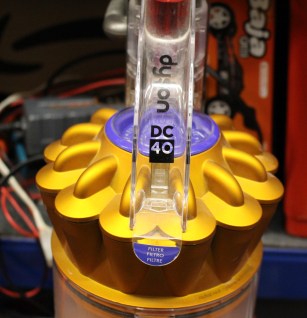
Dyson DC40 missing a beat

A small repair on a Dyson DC40 leads to a big improvement.

A powerful, easy to manoeuvre vacuum cleaner, that gets into every nook and cranny.  But not this one.

IMG_8891
FixItWorkshop, Worthing, May’19, Dyson DC40.

Three top tips for keeping your Dyson DC40 in rude health:

  • Keep all filters clean (wash or replace frequently)
  • Clean all rubber seals with a damp cloth to remove dust build-up
  • Occasionally lubricate moving parts of jockey wheel mechanism (springs and lever) with silicone spray

Do these things and your Dyson will love you forever.

I’m a bit of a sucker for Dyson products.  They are well engineered products from the school of function over form and in my opinion, objects of art.

This Dyson wasn’t very well when it was admitted to the workshop.  The owner had complained that the vacuum cleaner wasn’t picking up dirt and dust properly.  The beaters were not spinning either.

IMG_8890
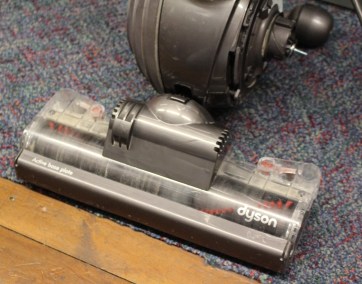
FixItWorkshop, Worthing, May’19, Dyson DC40 beater head.

The beater ‘head’ is attached to the main body of the vacuum cleaner and is held in place with a sliding clip.  The head can rotate and move to allow maximum control.  The beater roller is driven not via a belt from the main motor, but from its own smaller motor in the head unit.  So, there is an electrical connector between the main body and head unit.  As the beaters were not spinning, it seemed sensible to test the electrical connection.  Upon testing, it was not working.

The mechanism on this vacuum cleaner is quite complicated and relies on levers and joints working in harmony.  Dismantling the wheels, filters, brackets and covers around the motor revealed the problem.  The supply that feeds power to the beater head is routed around the motor and sliding lever mechanism and a broken cable was to blame for the beaters not spinning.

Access was difficult due to the design so rather than completely tearing down the body to replace the supply loom, I reattached the broken wire with some soldering and heat shrink to make a robust repair.

After carefully rerouting the cables and reassembling the body, wheels and beater head, the beaters spun once more.  Result.

This slideshow requires JavaScript.

After a new set of filters were fitted and a light service, the machine was as good as new.

Cost of replacement machine:  £000’s.  Cost of repair parts: £11.69 plus my time and two teas.

A Dyson DC34 Animal dodges the bin

A repair and top tips for keeping your Dyson DC34 running for longer.

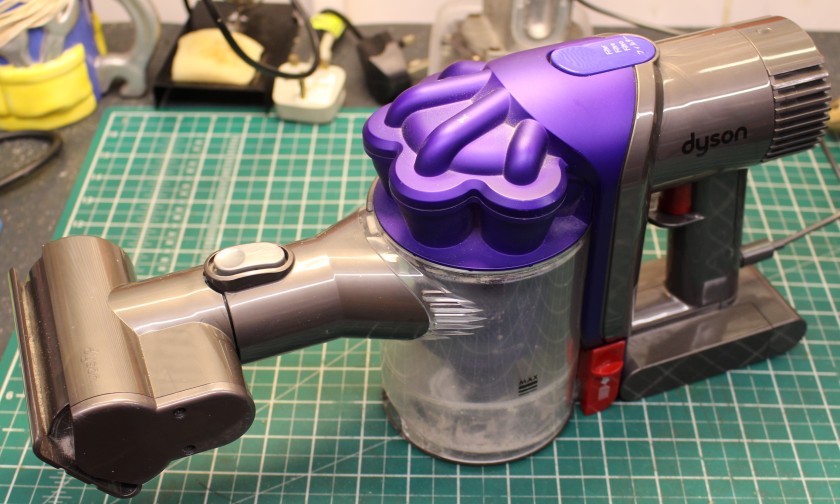
Every home should have one of these hand held dust busters.  Simple as that.

IMG_8853
FixItWorkshop, Worthing, May’19, Dyson DC34 Animal.

Why?  Because they are easy to use, easy to clean and last ages on a charge.

Top tips for keeping your Dyson DC34 running for longer

  • Keep the filter cleaned (wash regularly)
  • Remove any build-up of hair from the roller beaters
  • Keep all electrical connections clean (use WD40 or similar)

This one was admitted to the workshop with one fault, but the diagnosis revealed two problems.

When in use, the roller beaters would stop frequently and not restart.  The cure for this problem was to remove all the hair from the roller spindles and the internal motor belt drive, which was held together with a couple of screws.  Once all the hair was removed, the rollers worked much better, but not perfect.  A quick blast of air and a quick spray with contact cleaner into the motor and the rollers were once again, working as they should.

This slideshow requires JavaScript.

On a full charge, one of these Dysons should run for about 20 minutes, but this one didn’t.  The battery wasn’t holding the charge, so after a quick look online, a new one was purchased for just under £20.  Great value.

It felt really good to save another product on its way to the bin.

Cost of replacement:  £200.  Cost of repair:  £20, plus one cuppa, ginger cake and ice cream.

JD Bug Scooter gets a light service

A bit of TLC to bring a scooter back from the brink.

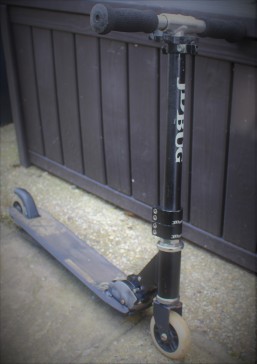
We were very lucky to be given a ‘micro style’ JD Bug scooter for one of the kids, by a kind neighbour.  It features mini wheels, a solid metal foldable frame, which makes for easy portability and height adjustable handles.  It’s easy to see why loads of kids have these scooters as they’re easy to ride and very manoeuvrable.

IMG_8481
FixItWorkshop, March’19, JD Bug Scooter.

This one had been well used, but had been kept clean and tidy.  However, before issuing it to the child concerned, it needed a few ‘bugs’ addressing.

First and foremost was the wheels.  Both wheels are fitted with standard skateboard bearings (a total of four).  Both wheels were noisy and tight when spun, which would affect speed and handling of the scooter.  Now, I might eventually change the bearings as they’re pretty cheap and easy to obtain, but for now, I just removed the wheels, popped out the bearings and regreased them, once I’d removed the dust cover.  Refitted, they sounded much better.

Next was the frame and the locking mechanism.  It was rattly and weighward which again would have affected handling.  After a light application of spray white grease and a small adjustment to the lock, the frame was much more rigid.

This slideshow requires JavaScript.

The last thing was the headstock, which is similar to those found on a bicycle.  This one sounded hideous and clearly had no lubrication whatsoever.  Again, access was straightforward and just involved basic tools, although I did have to dig out my 36mm spanner- serious stuff.  Just a couple of pinch clamps and two locking nuts held the headstock together and after a clean up with penetrating oil, an oily rag and some new grease, it was as good as new.

So after some light TLC, this scooter was ready for another child to enjoy, for little cash.

Cost of replacement:  £40.00  Cost of repair:  Some oil, grease and a bit of fettling, one cuppa.

Kenwood Chef repair: Real time video

A Chef repair gets it’s own video!

I carry out a few Kenwood Chef repairs a year and usually, they can be brought back to full health with simple tools and repair components.  I’ve not had a faulty Chef brought in to the workshop which hasn’t left ready for service.  Yet.

img_7876
Fixitworkshop, March’19, Kenwood Chef A901 with a repaired motor.

One common theme with all older machines is that the motor speed control circuitry can fail which either manifests itself with symptoms including, but not restricted to; electrical burning smells and smoke, the motor not running smoothly or not running at all.  While the failure of a Kenwood Chef may look spectacular when it happens, the repair is fairly straightforward, if you have some basic skills, tools and some patience.

This particular A901 came in with four faults; poor feet condition, cracked cowling, the speed control knob was loose and once I opened up the motor unit to look further, burned-out capacitors.

To some, this list of faults might seem a bit daunting, but it’s standard fare on a Chef of this age and to be expected after thirty plus years service.  Due to the excellent design of the product, the faults are all repairable with commonly available parts.

After about an hours’ work, the feet were replaced, the motor circuitry repaired and the replacement cowling refitted.  The speed control knob had come away from the motor body and only required the pin that held it in place ‘pressing’ back in to the housing, resulting in one happy mixer.

One of my aims on this website is to share my experience and best practice so for the first time, I made a video of the complete motor repair in real-time.  So, if you have a Chef to repair and twenty minutes, grab yourself some popcorn, a notepad and pen and enjoy.

Cost of replacement:  £150.00 and up.  Cost of repair: £30 plus my time and tea.

Karcher WV50 avoids the bin, just

An alternative, cheaper, motor fix.

My dad donated a rather sick Karcher WV50 window vacuum, water sucky-uppy-thing which he’d taken half way to the bin before thinking, I know, I’ll give it to Matt.

How thoughtful.

IMG_5930
FixItWorkshop, March’19, Karcher WV50 Window Vac, in bits.

The vacuum sucky-uppy-thing worked of sorts, but when operated, made a noise not to dissimilar to a distressed cat riding a trolley with wobbly wheels, if you get what I mean.  I wish I’d recorded it.

Anyway, opening up the WV50 was pretty straightforward.  Just several crossed-head screws held the two plastic halves of the unit together, revealing a simple electronic board, battery, switch, motor and fan with exhaust.

The principle of the WV50 is the same as any other domestic vacuum cleaner.  A fan drives air in one direction through a smaller hole (exhaust) creating a vacuum, in this case at a small wiper blade for glass cleaning.  Water is then drawn towards the fan, with the vacuum created and then diverted to a holding tank, for emptying later.

The tank on this product is quite crude and I suspect that should it be knocked over, the water within the tank could spill over in to the exhaust and in to the motor.  This is what I suspected had happened and caused the motor bearing on this device to wear excessively, causing the noise.

The cost of a motor and fan replacement on the WV50 was about £30.00 (where I saw them listed) but this would make the repair un-economical.  After an email conversation with Mabuchi, the makers of the motor, the original equipment K-280SA-3525, unique to the WV50, was no longer being made.

I don’t like being ‘beaten’, but having spent far too much time with batteries, bulbs and motors as a child than is entirely healthy, I realised that the casing and bearing on the K-280SA-3525 was pretty standard fare and if the spindle on our motor was OK, then all that would be required would be a new bearing.  It turned out that the spindle and motor brushes were OK, so I ordered a same size motor from eBay, via a very efficient and friendly Chinese electronics specialist with the intention of swapping the motor body and bearing over.

The motor arrived quickly and the transplant only took a few minutes.  Once reassembled, the motor and fan sounded like new once again.  A nice cheap fix, to keep this vacuum cleaning windows for another day.

I even made a short video, showing what I did.  Enjoy.

Cost of replacement: £50.00 (equivalent model)  Cost of repair: £1.50, some international emails and a couple of cuppas.  Nice.


A Challenge Circular Saw

A tool gets saved from the bin!

I had a slightly unusual request to do a ‘bit of soldering’ on a circular saw recently.  As I’m not one to say no to a broken item, I said “yes, I’ll have a look” as I was intrigued.

IMG_8361
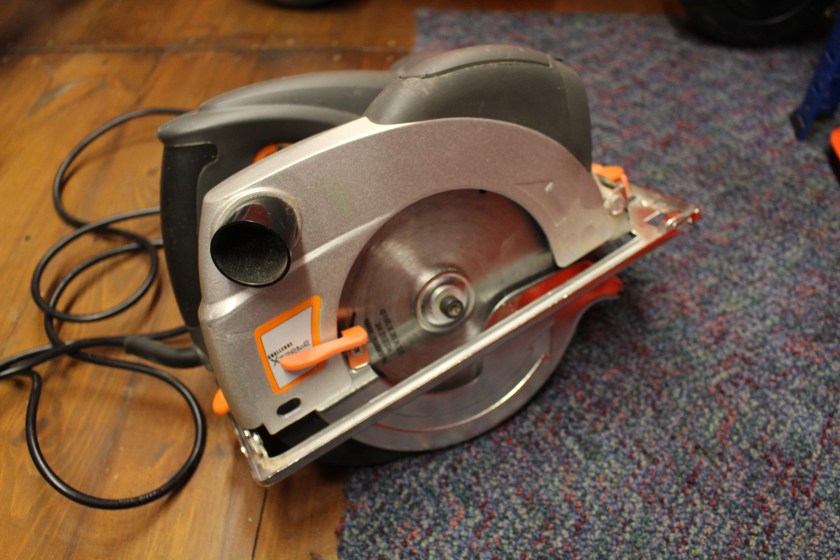
FixItWorkshop, March’19, Challenge Xtreme Circular Saw.

This Challenge Xtreme Circular Saw was working fine, but the spring-loaded safety guard had split at one of the ends and was now dangerous to use.

I guess this saw was originally sold at the ‘budget’ end of the market and some of the materials used on it were light-weight to say the least.  But having said all that, for light use, this saw was a very good tool with features like a laser to guide cutting.

The guard was made of a ‘mazak’ style alloy, which would have been pressed together at the factory and therefore quite difficult to re-attach.  Definitely not for soldering, welding or brazing.

I could have used a chemical metal compound as a glue or even epoxy resin, but in the end, I opted for making a simple couple of neat drilled holes with a small cable tie to bring the separated halves together, a neat mechanical and cheap fix to get the tool usable once more.  Sometimes, simple is best.

This slideshow requires JavaScript.

Cost of replacement: £40.00 Cost of repair:  One cable tie. One cup of tea.


Money, that’s what I want

A cool 1980s toy robot money box gets repaired.

Who doesn’t like a toy robot? I mean, everyone loves a toy robot, especially one with pop up eyes and one that eats coins.  No?  Well, you’re wrong if you don’t agree!

Money 2
FixItWorkshop, March’19, Tomy Mr. Money.

This is my own Tomy Mr. Money, which I’ve had since about 1988 ish, so it’s getting on a bit.  Like me.

Back then, I wasn’t that diligent about leaving batteries in situ for long periods and when I dusted off this piece of retro cool for my daughter to play with, we discovered that the passing of time had not been kind to the old battery or insides.  Which was a bit of a shame.

However, I wanted to show everyone that old toys are way cooler than new ones, so out with the screwdrivers, cleaning stuff and hammer (well, not the hammer) to see what could be done.

Luckily for me and Mr. Money, the battery compartment hadn’t fared too badly with just light corrosion to the battery terminals, which soon cleaned off with brake cleaner and some light filing to near good as new standard.

With a new AA battery installed, Mr. Money didn’t really respond that well to having money placed on his hand.  In years gone by, a coin placed on his hand would trigger his eyes to open, the hand to raise to his mouth, the coin to be eaten and lips to be licked, as well as doing a little side to side dance.  Mr.Money was now looking a bit arthritic.  Could it be that new money is a lot lighter than the 1980s money he was designed for or was it just that the battery corrosion had run deeper than first appeared.  I suspected the latter.

I took Mr. Money apart and found that the microswitch that triggers the mechanism was corroded and needed cleaning and that some of the moving parts also needed a quick brush up, all of which had Mr.Money back to rude health.

IMG_5190
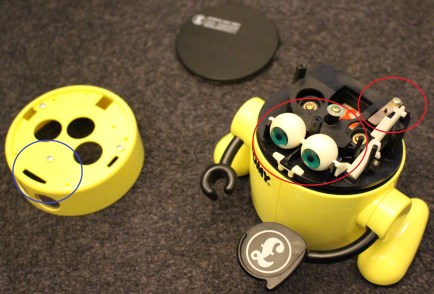
FixItWorkshop, March’19, Tomy Mr.Money, in pieces.

While doing the repair, I decided that it wasn’t obvious how the toy came apart and that some owners might decide to scrap theirs due to similar problems.  So, I decided to make a little slide show of the dismantling, to help others.  Enjoy.

Cost of replacement:  £ priceless/ eBay if you’re lucky.  Cost of repair:  One IPA beer.