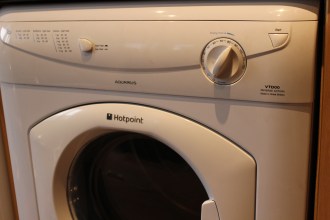
Hotpoint ‘Rumble’ Tumble Dryer VTD01

A noisy tumble dryer gets fixed cheaply

Strange noises from machines play on my mind.  None more so than when that niggling noise starts to get worse.  Noises like that usually mean two things.  Catastrophic failure and expense.

Time to disconnect from the mains and fetch the tool box.

The patient in the surgery this week is our own Hotpoint tumble dryer.  We avoid using it at all costs, but with miserable English weather and two children, getting washing turned around efficiently, ready for use is mandatory.  To be frank, I’d noticed the excess whinning bearing noise coming from the dryer for a few uses, but it was getting to the point where it was hard to ignore.

Electric hot air tumble dryers are pretty simple things.  They work by sucking cool air in, heating it up under thermostatic control and then blowing it in to a rotating drum.  The moist air is then expelled via a filter and then hose, to atmosphere.  Tumble dryer models of this kind will have the following:  A motor, heater, thermostat circuitry, timer and a drum.  There isn’t much to go wrong and many parts for UK tumble dryers are available, cheaply from places like eSpares.co.uk.  Usually, no special tools are required if you want to have a go at fixing your machine and I recommend you do of course.
IMG_7419
FixItWorkshop, Worthing, December’18, Hotpoint VTD01 Tumble Dryer.

After opening up the cabinet, access to the drum and motor was available by the side panel which was held in position with several self-tapping screws and hooks.  Care must be taken if you attempt something similar on your machine since there are plenty of sharp edges to watch out for.  This dryer features an AC induction motor (which has no motor brushes).  It has a spindle which runs through the motor with a pully one side to drive the drum via the belt and a fan the other to blow the hot air.  Removing the belt and spinning the motor by hand revealed the problem.  The spindle spun OK, but sounded rough.

Replacement motors are available at a reasonable £90 or so, but you know me by now, I don’t like spending that kind of money, unless I have to.

The motor is attached to the appliance with simple bolts and is removed easily.  The motor is held together with self-tapping screws, which are easily accessible.  Just two bearings feature in this motor; one at each end to support the load.  Both bearings sounded rough, but seemed not to be worn too much.  The bearings are standard items and it would be easy to find exact replacements from a bearing supplier (rather than replacing the whole motor), for under £20.  However, as this was my own machine, I went for cheaper fix, to squeeze more life out of what I already had.  With the dust cover popped off from both bearings, I cleaned both with isopropyl alcohol cleaner and then re-greased with quality high-melt point bearing grease.  Much better.

This slideshow requires JavaScript.

The motor re-assembled, re-installed back in the machine and it was time to switch on.  It now sounded as sweat as a nut.

If and when the bearings get noisy again (and they will eventually), I’ll replace the bearings with new ones.

Cost of replacement:  circa £200.  Cost of repair:  My time, two cups of tea, one custard cream, a bit of grease.  Not in that order.
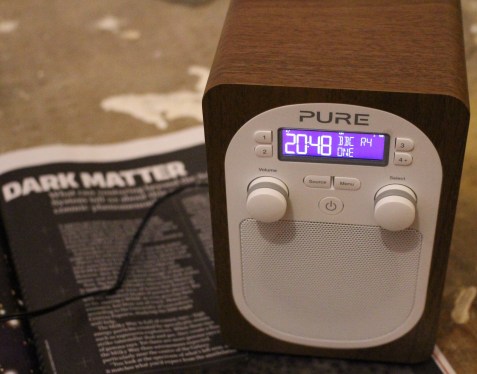
Non-starter: Pure Evoke H2 DAB radio

My own radio gets the workshop treatment.

Who wouldn’t love a new DAB radio for your birthday?  Well, that’s what I had this year and I was thrilled to receive this Pure Evoke H2.  After choosing a suitable location on my desk, I quickly unpacked it, plugged it in and…nothing.  Booooooo!

The display backlight appeared to glow a little, but that was it and I was missing Today on Radio 4.

IMG_7657
FixItWorkshop, Worthing, November’18, Pure Evoke H2 DAB radio.

To save a quite frankly dull story, the returns and replacement process offered by the company who supplied the radio was hopeless.  But, after 2 months, I ended up with a replacement radio, in addition to the one I already had.  The second radio worked, albeit with some fettling required to the speaker to make it sound ok (another story).

Time to dig out the screw drivers as I had nothing to lose.

Just 6 screws hold the back on and with these removed, the radio’s innards were exposed.  Now, I’ve made radios from kits in the past using components I can hold with my fingers, but with this radio, the circuitry was teeny-weeny and I would have to have some luck to fix it.

I was in luck.  The radio is made up like a sandwich.  The front fascia is screwed to the cabinet and the back, that I’d removed, was screwed to the cabinet, from the other side.  There are data-style cables between the two halves and one of them appeared to be loose.  I carefully pushed the connector ‘home’ and then re-applied the power lead and wouldn’t you know it, the display lit up and it burst in to life.  Now we’re talking.

Thinking I’d sussed it out, I screwed the radio back together and had about a week or two of unbroken service, until the screen froze and then nothing. Oh no.

Re-opening the back of the radio, I suspected that the tiny soldered pins on the back of the multi-way connectors on the data-style cables, had been dislodged.  I have average sized hands for a bloke, but I needed tweezers to get the connectors on during assembly.  I wonder how much it would have cost to add an inch or so to each cable, to make manufacture easy.  As a consumer, I would have gladly paid the extra penny.  I suspected that this is how the original fault came to be as it wouldn’t have taken much more than a shove in the wrong direction to break the delicate connectors, due to the short length of the internal cables.

This slideshow requires JavaScript.

Since this circuit board is a tiny stamped component affair, I had to be quick and neat with my re-soldering.  Each pin to PCB connector re-soldered, cables re-attached, back screwed back on and the radio worked once more.

Pure have a reputation for easy to use, excellent sounding products.  It’s just a shame they have seemingly penny-pinched on some of the internal gubbins on this model.  If yours develops similar symptoms, don’t give up, take the back off and have a look.

Cost of a new radio:  £40-90.  Cost of repair:  5 mins tinker time, one cup of tea.

SEG DVB Digital TV box

It went bang, ooops!

It’s important to talk about failure as we can often learn from it and this brief write-up is all about something which left the workshop, ready for recycling.  I made it go bang, sadly.

Remember TVs before the networks ‘went digital’? They had analogue tuners built-in, which received the signals.  With so many old TVs out there, manufacturers sold digital set-top boxes, which allowed an older TV to work with the new digital TV stations from about 2007.  Since then, manufacturers include a digital receiver within their TVs of course and this particular device now seems a bit of a museum piece.

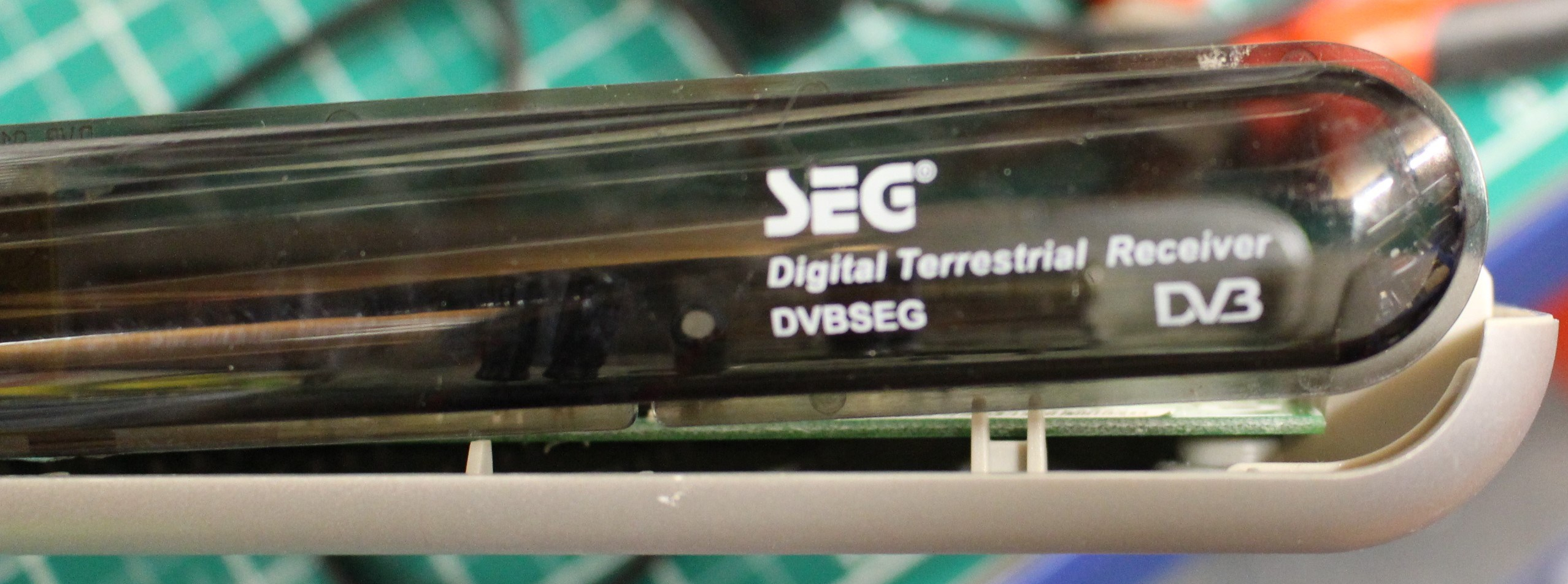
This SEG DVB Digital TV box had failed completely, so off with the lid.  Once open, the printed circuit board (PCB) was revealed.  The PCB on this device was made in two halves; one for the TV reception stuff and one for the power, the conversion of mains electricity to lower DC working voltages.  The power part of the board had some visible damage and it appeared that a smoothing capacitor had gone pop.

img_6865.jpg
FixItWorkshop, Worthing, November’18, SEG Digital TV box

As it happened, I had a similar device on the shelf I was gradually stripping for spares and was able to quickly identify a suitable replacement.  Once re-soldered in and powered-up, nothing happened!

Then I spotted an on-board fuse which had also failed, but I didn’t have one of these, so I decided to temporarily short the fuse connections to make a connection.  That’s when things got smoky.

I’d missed the fact that a small transformer on the PCB had a winding short on it, which had impacted on the rest of the components.  Bang.

This slideshow requires JavaScript.

Never mind.  Digital boxes are still available online and that’s what I did, I ordered a new one.

Although I didn’t win this one, it’s important to have a go and that’s the whole point.  If it’s not working to begin with, what’s the worst that can happen?

Cost of repair:  A new DVB box at about £20. 


Classic (asthmatic) Dyson DC01

A tired DC01 gets some TLC

Starting a new job is always fun and when a new colleague of mine mentioned that the office vacuum cleaner had packed up, I rose to the challenge.

I’m quite fond of Dyson products as some of you know, mainly because:

  • They’re well-engineered, by engineers
  • They’re designed to be repaired easily with simple tools, which is better for everyone
  • Parts are readily available at reasonable prices

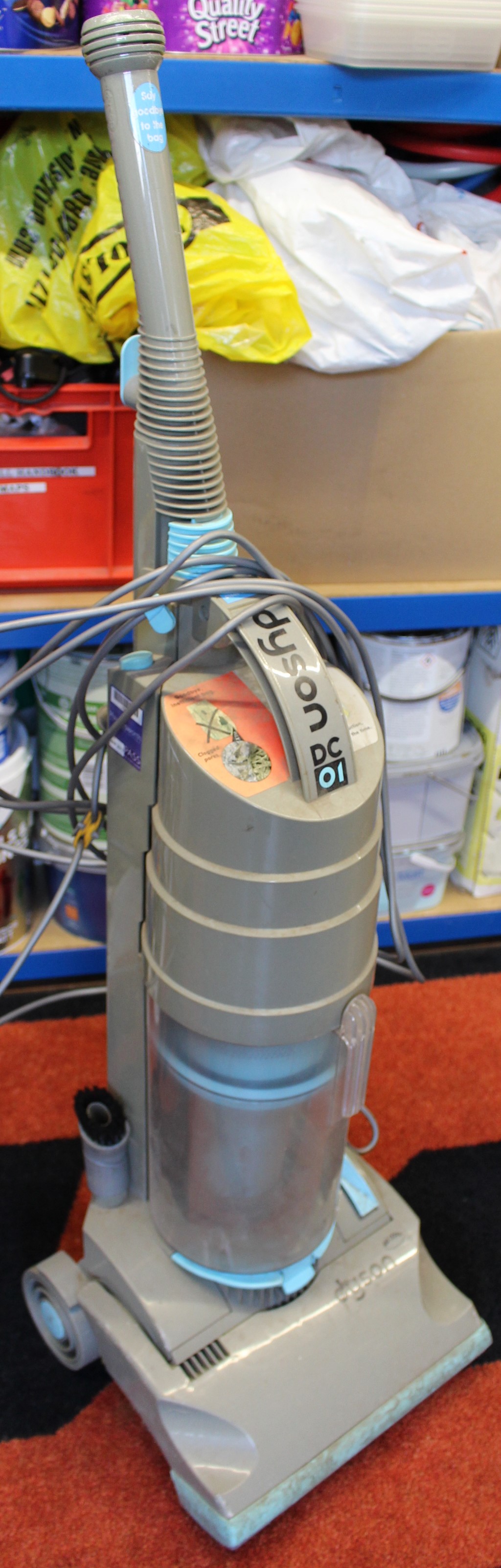
The DC01 was launched in the early 90’s and was Dyson’s first market clean-up, competing with the established market leaders.  Although this machine is over 20 years old and Dyson no longer supports it directly, reasonable quality pattern parts are available on eBay.  If you have one, love it and keep it going.

IMG_7425
FixItWorkshop, Worthing, November’18, Dyson DC01

This one is actually an ‘Antarctica Solo’ model (grey and light blue instead of yellow), which commemorated Sir Ranulph Fiennes’ solo trek across Antarctica and raised money for Breakthrough Cancer.  It had been abandoned and was moments away from the skip.  I felt quite sorry for it.

Faults reported included; no suction, excess noise and smell!

The first thing to check on the DC01 is the filters, as like many other Dyson products, people forget to clean or change the filters.  Both filters were totally choked and full of all sorts of detritus.  A quick shake out and wash with warm soapy water and they were as good as new.  Following that, I inspected the seals around the join between the cylinder and the main body.  All the seals were dirty, so a clean up and quick spray with silicone spray and they were as good as new.  Great.

The noise seemed to be coming from the front beater/ rollers which usually means, noise bearings.  The beater on this model uses a two bearing set up.  One was fine, but the other was seized.  As I didn’t want to spend any more than I needed, I cleaned the bearing, after removing it and the dust cover, re-greased it with LM High-Melt Point grease (general automotive stuff) and it was ready to roll and beat again.


This slideshow requires JavaScript.

Once the filters were dry and re-installed, the Dyson ran like new again.  Very satisfying.

Cost of replacement:  £15 second hand, £100’s for an equivalent-ish new model.

Cost of repair:  Patience, washing up liquid, two cups of tea.

Silent Singer Sewing Machine Pedal

A classic Singer foot pedal gets repaired.

My mum’s got an old electric Singer sewing machine which is about 40 odd years old.  Singer sewing machines are well supported generally and parts are readily available, but I find it’s sometimes fun to try and find the cheapest way to fix something myself.

IMG_6870
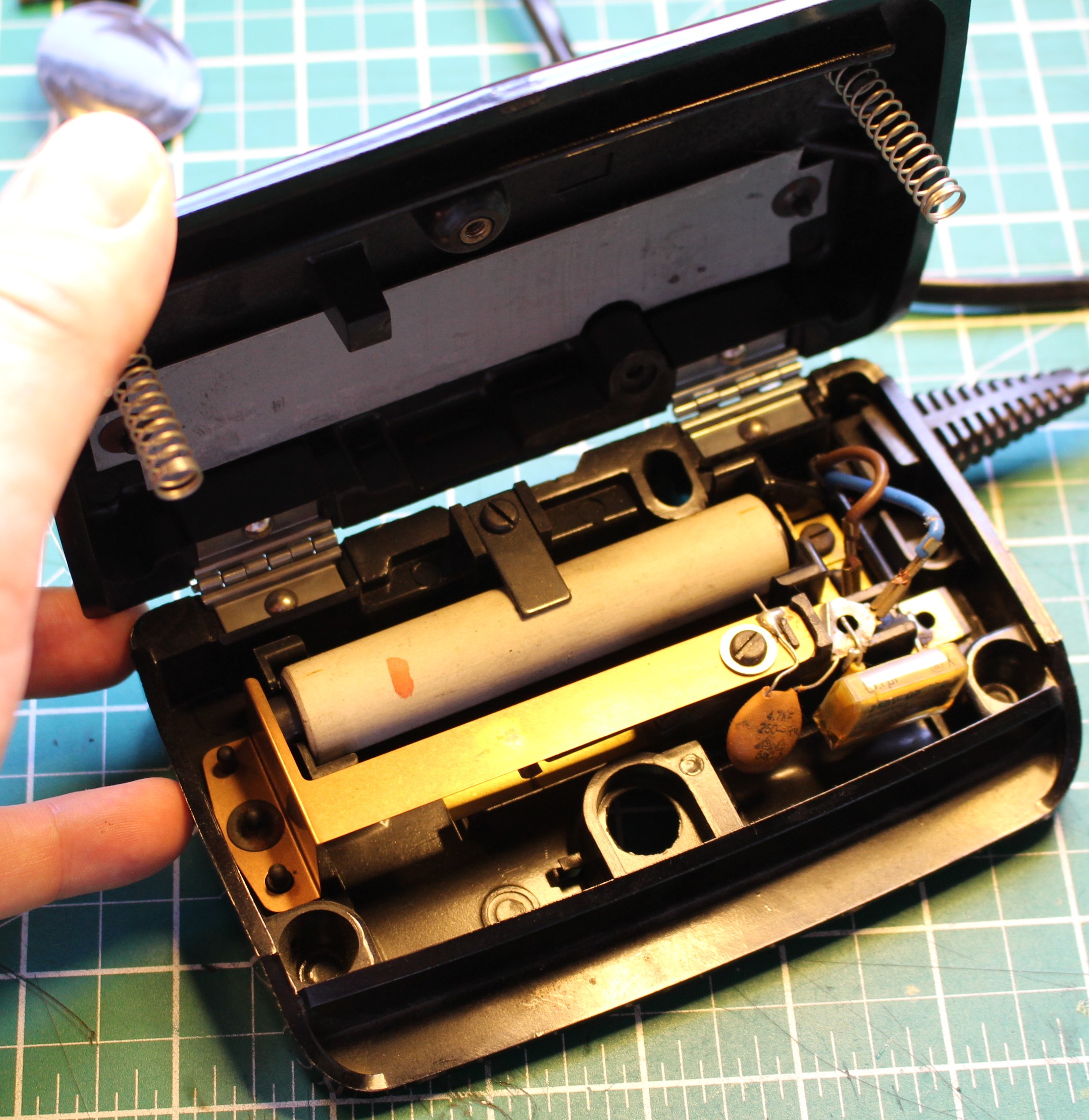
FixItWorkshop, Worthing, November’18, Singer Sewing Machine Foot Control Pedal

The foot pedal on this machine went pop and smelled horrible after.  The machine then stopped working, oh dear.

The pedal is of high quality construction and easily better than any generic replacement on the market, so it was definately worth saving.

Opening up the pedal was just a few screws, which then exposed the whole mechanism.  The mains resistor was in tact and seemed to test with resistance.  A good start.  The contacts were in good condition as was the rest of all the components, except for the mains input capacitor, which has spectactularly failed and split open, a common problem on older mains capacitors.

Repair kits are readily available for about £5, but that seemed expensive to me!  Using the existing capacitor as a guide, I found a suitable component on eBay for £2.09 delivered.  That’s more like it.

The capacitor I used was:  Film Capacitor, 0.1 µF, 250 V, PET (Polyester), ± 5%, R60 Series (from eBay).

Here’s a little slide show that I hope will help others fix their pedal, should it fail.

This slideshow requires JavaScript.

With the old capacitor cut out and the new one soldered in, the pedal was ready to run again.  Sorted.

Cost of a replacement:  £15-30 for a generic part.  Cost of repair, £2.09, 1 cup of tea.

Elna SP foot pedal went bang

Elna SP foot pedal to the metal

On the back of a previous article about a repair I did on the rather wonderful Elna SP sewing machine, a reader got in touch.  She was a genuine sewing aficionado and had several top of the range current machines, but she used the trusty Elna SP for many smaller jobs, where the other machines didn’t quite cut it.

All Elna SP machines are getting on a bit and parts are either re-manufactured, scarce or secondhand, if you can find them.  Having said all that, a well-maintained Elna will run for many years and last much longer than new metal on sale now.

IMG-1971
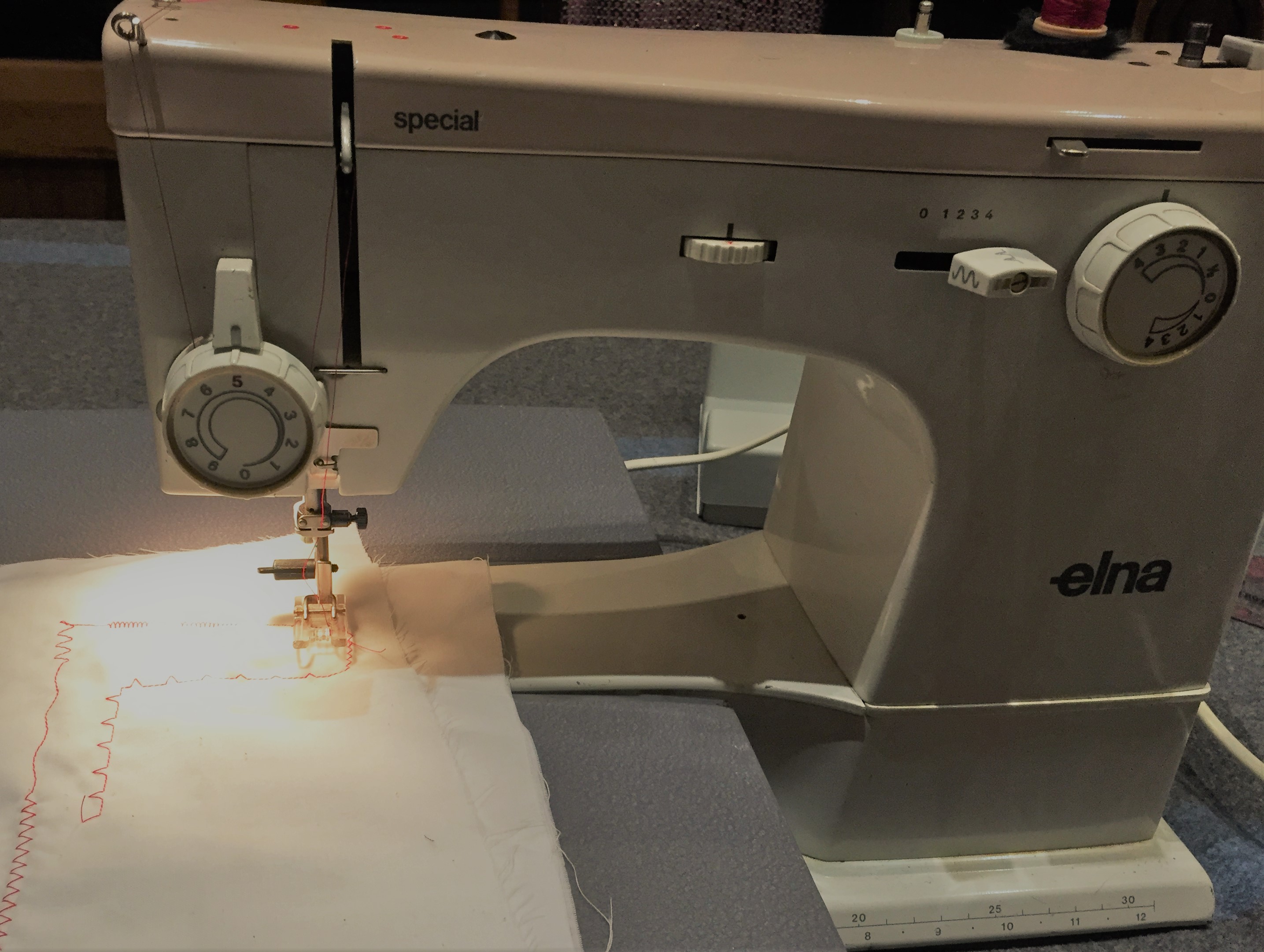
FixItWorkshop, Worthing, November’18, Elna SP Special, in action

The foot pedal on this machine had gone pop, bang, finito.  It smelled terminal.

Knowing that parts for this machine are rarer than hens teeth and I do like a challenge, I took on the job.  I’m based in Worthing, West Sussex and the machine was located in Scotland, so after a short wait, the knackered pedal arrived in the post.

The pedal is held together with four small self-tapping screws and came apart easily.  The reason for failure was two-fold.  The copper leaf contacts had arced excessively and caused major pitting in the contact strip (see slide show) and the probably ensuing resistance had caused the main resistor to overheat, causing the winding to fail.

This slideshow requires JavaScript.

The contact surfaces were easy-ish to fix, or rather breathe new life into as all they needed was cleaning and re-shaping.  The resistor was a bit trickier to mend.  Getting hold of a replacement was going to be near impossible, so the only thing to do was to try and repair it.  Without that particular style of resistor, of that value, it wouldn’t work again.  Luckily, there was some excess resistance wire on the thing and I managed to twist it in to the broken section.  Soldering was not an option, since the wire was an alloy that wouldn’t take to solder and in any case, these things get hot in normal service.  I twisted both ends of the break to form a new section, while maintaining the same length of windings on the resistor, essential if I was to match or get close to the original specification.  Difficult.  Luckily, after a few goes, I managed it and the applied a little heat-conducting (and therefore dissipating) paste to the join.

With the pedal reassembled, I was only able to test it with my meter, since the sewing machine was far too heavy to post.  The pedal tested as a closed circuit (OK), which was a result.  I then had to wait for the pedal to be collected, taken back to Scotland and tested.  Fortunately, my fix worked and the machine sprang in to life, without a hitch or missed stitch.

Now, a word of caution with this one.  This is NOT the best way of mending something like this and all I’ve probably done is prolong it’s life a little longer.  There are generic sewing machine pedals that would work with this machine and will be fine, when this one fails in future, but that’s not the point.  The main thing is that something that was broken is now working and even if it’s not the best fix, at least it will run for a bit longer.  Happy days.

Cost of replacement: (generic part) £15-30.  Cost of repair, my time, a bit of solder and several cups of tea.

Alesis (DM Lite) Drum kit without kick

Alesis Drum Kit gets a cheap repair.

A neighbour of mine is a talented musician in a local band and also teaches school children various instruments.  Some of his students learn the drums, which is most parent’s nightmare as any notion of a peaceful evening is shattered.  Luckily, electronic drum kits are an excellent way to learn with headphones, while keeping happy parents and neighbours.

IMG_5963
FixItWorkshop, Worthing, November’18, Alesis DM Lite Electronic Drum Kit

IMG_5964
FixItWorkshop,  Worthing, November’18, Alexis DM Lite main drum module

This kit was missing several beats and was hampering learning, so time for a visit to the workshop.  I’m no musical instrument repair specialist, but I thought that the drum kit must use electrical contacts, switches and rudimentary electrical components and I was right.

Two faults were reported; The kick/ foot pedal was intermittently not working and one of the drum pads was hardly working at all, unless you hit it with a sledge-hammer.  Time to see what was going wrong.

First up was the faulty drum pad.  Opening up the back of the pad was simplicity itself, just a few screws held the back to the pad.  Sandwiched between two halves was a sensor, a bit like a piezo flat speaker, similar to the type found in many toys with sounds.  I guess the principle here is that vibration detected by the piezo sensor is converted to analogue variable voltages by the drum kit’s circuitry.  While apart, I noticed that some of the copper detail tracks on the printed circuit board which had a standard 3.5mm jack socket (to allow a connection back to the rest of the kit) had cracked.  Looking again through my magnifying glass revealed quite a bit of damage, probably as a result of many Keith Moon wannabes.  Testing these tracks with my meter confirmed an intermittent fault, so out with the soldering iron, to repair the connection.  Plugging the pad back in, it was ready once again for more drum solos.

This slideshow requires JavaScript.

Next up was the dodgy kick/foot pedal.  As the with the drum pad, the pedal would cut out intermittently.  A few screws held the pedal together, so only basic tools required.  See the slide show below for an idea of the construction.

This slideshow requires JavaScript.

The fault with the pedal was similar to the drum pad.  Some of the copper detailing around the 3.5mm jack socket had failed and required some careful soldering.  I say careful, as applying too much heat at once would, likely as not, melt the casing of the socket.  One had to take care.

Once soldered, the pedal was much better.  I didn’t get a full 10/10 repair with the pedal since I think there was wear on the kick sensor, but it was an improvement none the less.

Cost of replacement:  £lots.  Cost of repair, my time, two cups of tea and some solder.


Concord Transformer-T ‘Ejector’ Child Seat

A Concord Transformer T Ejector Child Seat

It’s been a while since I wrote anything on my blog and for that I apologise.  The lack of writing doesn’t mean that the workshop has been gathering dust, far from it.

Ages ago, a former colleage of mine asked me to look at a Concorde Child Seat, which seemed to be automatically adjusting to it’s maxmimum height setting, in an ‘ejector’ seat style.  This kind of action is OK for 007, but no good for a family trip to the seaside.

Child seat repairs are not my usual thing, but since this one was unusable, what did I have to lose?  These seats are normally well over £140.00 too, so it seemed like a good idea to have a go.

The Concord Transformer-T features a neat trick in that it can adjust it’s height to suit the growing child, with the touch of a button.  This is especially handy when different children share the same seat.  Up and down height settings are achieved by a ‘Transformer’ (the toys) style of action, controlled by a gas damped srump strut, similar to that used on hatch back tail gates.

IMG_20180731_114735
FixItWorkshop, Worthing, November’18, Concord Transformer-T

This seat’s gas strut seemed to go to maximum height, without warning, extending seat in an ejector seat style.  Time to dig out some tools.

The seat’s cover came off easily, thanks to to some hook and loops around the plastic backing.  Lucky as the cover on this seat had some dubious stains.

Once off, several T20 Torx screws removed and a cable operated plunger to a button on a gas strut was revealed.  This seemed like a good place to start.  Despite the premium price tag, the inner workings of the seat seemed quite flimsy, I assume to minimise weight and to comply with safety standards.  The moving headrest, back support and centre arms all moved on a scissor action mechanism, which seemed to working fine.

Disconnecting the cable/ button/ lever involved a T20 Torx screwdriver and 10mm spanner.  Once removed, there was good access to the button on the end of the gas strut.  It appeared that the button was working just fine and one could manually adjust the size of the seat with a finger.  Interesting.  Time to inspect the adjustment of the cable and lever mechanism.  Luckily, there was adjustment on the cable and lever and after a little fetling, the mechanism was restored.


This slideshow requires JavaScript.

Price when new:  £140.00ish.  Cost to repair, 30 minutes tinker time, 1 cuppa and a ginger nut biscuit.

A flying barbecue problem

A rusty barbecue lives to cook another day.

My dad kindly donated an elderly Homebase Sorrento gas barbecue a few years ago and each summer since, it’s cooked a good few bangers and steaks in the garden.  Nice.  However, during the winter this year, the barbecue nearly met an unfortunate end.  The barbecue is always kept lightly sprayed with WD-40 when not in use and always covered with a generic tarpaulin, to keep the rain out.  However, one particularly windy day during the winter of 2018, the cover that was meant to protect the outdoor cooker turned in to a handy sail and briefly lifted it a few feet in to the air and then down again with a crash.  Oh dear.

IMG_5736
FixItWorkshop, May’18, Worthing, Homebase Sorrento/ Campingaz Eldorado.

At first glance, all appeared to be well but on further inspection it seemed that the gas burner within the main ‘charcoal’ area had taken quite a hit.  Years of use and damp storage had taken their toll and the rusty burner within had finally shattered and was no longer in good serviceable condition.  In fact, using the barbecue in this state could literally be explosive, since the gas would be flowing out all over the place, potentially un-burned.

Not holding out much hope for spares, I took to Google to see what parts were available for the nearly 20-year-old appliance.  It turns out that there are many spare parts available for gas barbecues, from spare handles to gas valves to replacement grilles, including burners of just about every variant.  With a bit more research, it appears that my Homebase Sorrento is in fact a re-badged Campingaz Eldorado.  As Campingaz is a well-known brand, the burner was readily available at a very reasonable £23.00, including delivery from Hamilton Gas Products www.gasproducts.co.uk.

Hamilton supplied the parts quickly and the part fitted as easily as the existing one, as it was a like for like spare part, more or less.  I had to cut-off the existing screw, as it was beyond help and replace it with something similar, once fitted and the height adjusted with a washer and nut or two, the burner was once again ready to cook.

This slideshow requires JavaScript.

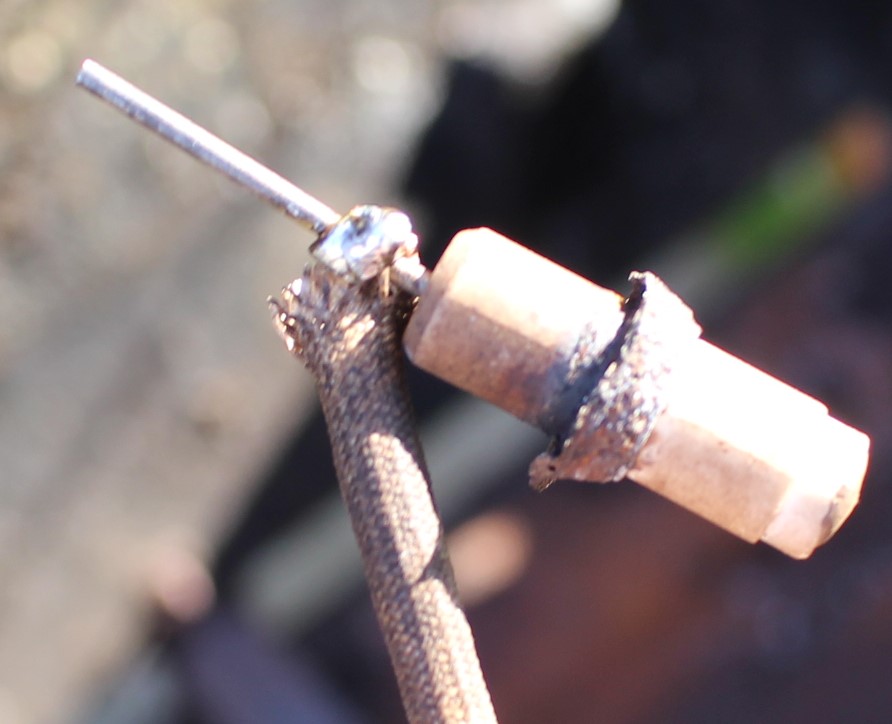
However, before I could sit back with a cool beer and admire my work, I decided to tackle the piezo push-button ignition, which had stopped working a while ago.  The wiring had broken away from the main spark anode and to be honest, even I nearly binned it.  I hate to be beaten by silly problems like this, so I soldered the wire to the base of the spark anode and then re-attached the bracket back to the barbecue.  After a little tinker time, the spark was close enough to light the gas, pretty much every time.  I was well pleased!

IMG_5743
FixItWorkshop, May’18, Worthing, Homebase Sorrento/ Campingaz Eldorado.  Re-attached wiring.

So, if your gas barbecue needs parts, don’t assume it’s not worth repairing.  There is a wealth of direct replacement and generic spares that will get yours working again, cost effectively.

Cost of a replacement barbecue:  £100 upwards (although the range could be as dramatic as £30- £5000).  Cost of repair:  £23.00 for the burner and £1.00 for the nuts, bolts and washers (which I had already).

Re-vamped Micro Mini Scooter (just for fun).

A Micro Mini Scooter repair, just for fun!

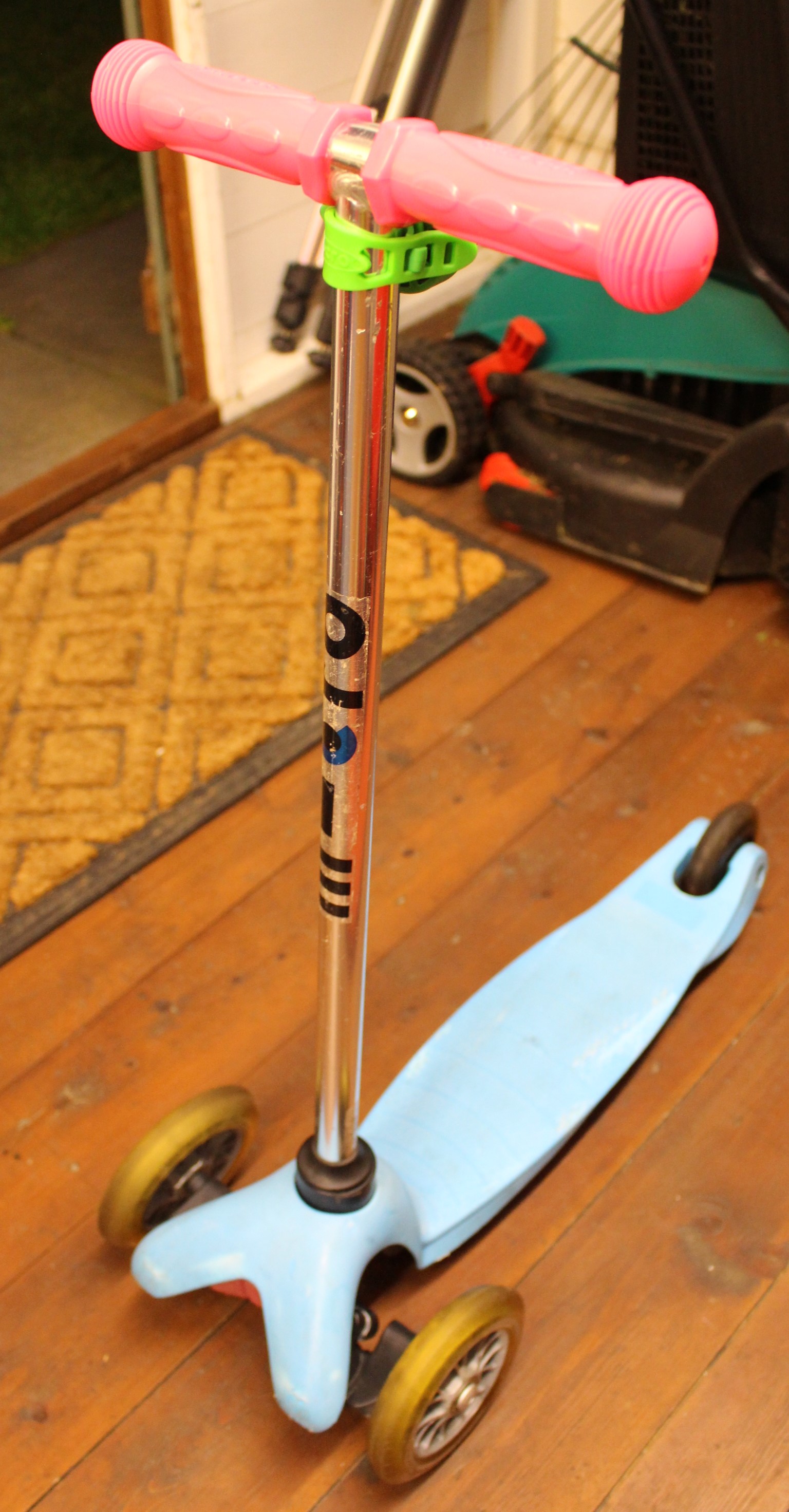
I really had no idea that Micro Scooters have been a ‘thing’ for the last few years and as a result, there are lots to choose from on the second-hand market.  We picked up a ‘bargain’ for our oldest daughter for a princely sum of £5.00 via a local Facebook For Sale page.  With hindsight, it was overpriced.

Just about every part of the scooter was either nasty or plain broken.  The handle bar grips were missing, the wheel bearings were all shot to pieces, the steering mechanism seized and the rear brake was missing.  The back brake on this scooter type, I’ve since found out, have a habit of snapping off with hard use, so that should have been the clue to the low, low price.  But if you read these pages, you know me, I like a challenge.

First step was to address the static wheels.  An Allen key holds the wheels on to the stub-axels at the front of the scooter and there’s something similar on the trailing wheel.  The bearings on our wheels were beyond a re-grease as they’d appeared to have spent their entire life at the bottom of The Channel.

This slideshow requires JavaScript.

Luckily, the bearings are easy to replace and good-quality generic items are available on eBay for under £5.00 for a whole set (6 bearings, 2 per wheel).

Next came the handlebar grips.  Ours were missing and again, generic ‘copy’ grips are available on eBay which are perfect for the job and are half the price of the original equipment.  While I was shopping on eBay, I also found an original Micro Scooter bell.  Just the job.

IMG_5715
FixItWorkshop, May’18, Micro Mini Scooter, new handlebar grips and bell fitted, prior to painting.

The steering mechanism was next and all it needed was a good clean up and light lubrication with some plastic-friendly white PTFE grease, readily available from Toolstation.

This slideshow requires JavaScript.

The shabby foot plate area was once baby-blue but had since faded and had evidence of scrapes.  It looked a bit sorry for itself.  I decided to address this by giving surfaces a good clean up and then key with wire wool.  A couple of coats of good quality plastic primer and then a couple of coats of vinyl black paint, which now gave the scooter quite a ‘presence’.  I then decided to improve the foot plate ‘grippy-ness’ by applying a custom grip tape design.

This slideshow requires JavaScript.

Before re-attaching the foot plate back to the chassis, the brake needed to be replaced.  As with some of the other fixings on the scooter, the brake’s fixings were so rusty, they needed to be drilled out and replaced.  Luckily the new original equipment brake came with new improved fixings which fitted perfectly.

This slideshow requires JavaScript.

Thanks to the cool dudes at Alleyoops, Worthing for their help and advice www.alleyoopsskates.co.uk.  The UK Micro website is also very good as it lists spare parts www.micro-scooters.co.uk/spares-support.

Micro Mini Scooter (AKA ‘Triggers Broom’) renovation spend, May’18:

New good quality bearings                                                        eBay                      £4.15

Generic copy Micro Scooter handlebar grips                         eBay                      £9.75

Genuine Micro Scooter bell                                                        eBay                      £7.78

Paint and sundries                                                                        Shed                      £2.00 (approx.)

Grip Tape (customised to fit)                                                       Alleyoops            £8.00

Genuine Micro rear brake                                                            Alleyoops            £8.99


Total                      £40.67

I know what you’re thinking… for £40 more, I could have bought a brand-new scooter and saved myself the bother.  At times, I did question my own sanity.  But what we now have is a perfectly serviceable, one-off that no one else will have.  Can you put a price on that?!