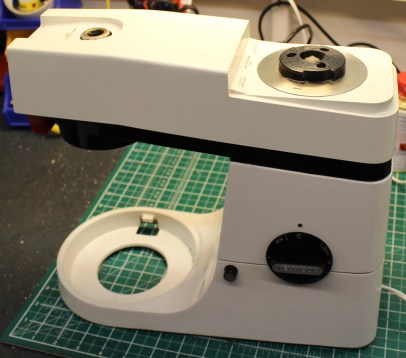
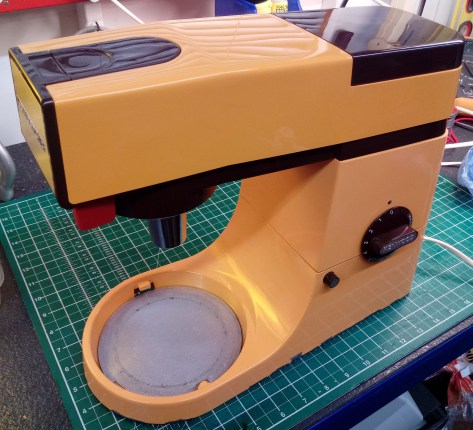
An orange Kenwood Chef A901! I mean, what’s not to like?

More orange please!

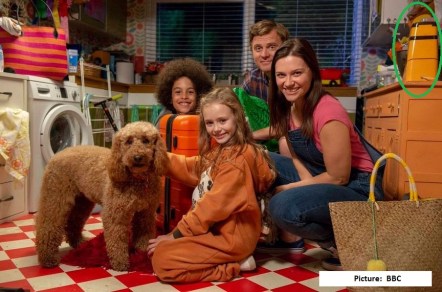
Why oh why oh why are more kitchen machines not orange?  I mean, just look at this beauty.  Rare-ish and as a Chef spotter, I think the only time I’ve seen another is on the kids’ TV program, Waffle the Wonder Dog on Cbeebies, here in the UK.  Do you have one in another funky colour?  If so, please send me a picture!

An orange Chef in the workshop:  It was like Christmas had come early.
IMG_20191209_213850
FixItWorkshop, Worthing, December’19, orange Chef A901.


Make and model: Kenwood Chef A901 (orange)

Fault reported: No go

Cost of replacement: About £300

Cost of parts: £13.74

Hours spent on repair: 2

Tools needed: Cutters, screwdriver, soldering iron, multi-meter, cleaning tools

Sundry items: Light oil

Repair difficulty: 5/10

Cups of tea: 1

Cheesecakes: 2
Capture
FixItWorkshop, Worthing, Kenwood Chef Major in Orange.  Super rare?

The Chef had actually been working for a living since it provided daily assistance in the production of artisan cheesecakes, being sold at a local market.  Recently it had decided to start a smoking habit and then go on strike leaving the owner in a bit of a muddle and customers with rumbling tummies.  That simply wouldn’t do.

Anyway, on with the repair. Opening up the casing revealed the problem straightaway.  One of the capacitors had failed and a resistor had burned out, leaving a failed circuit.
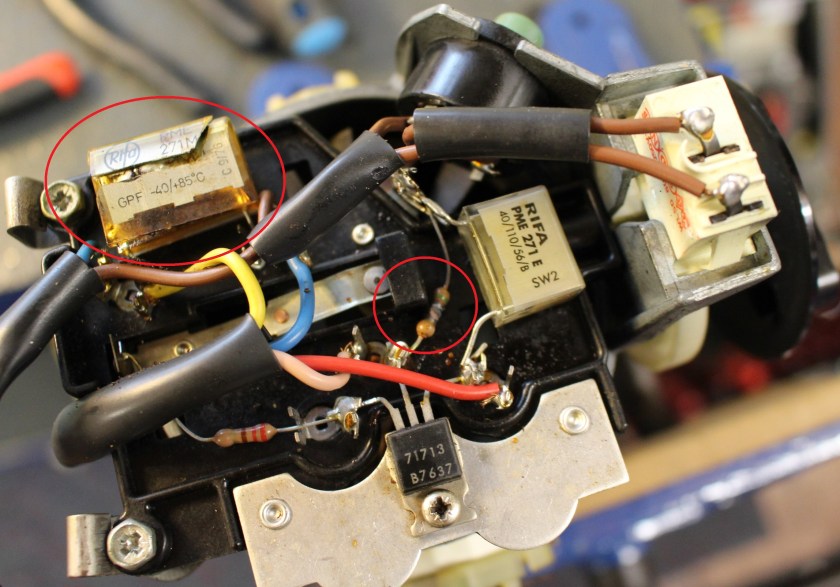
IMG_7870 cap
FixItWorkshop, Worthing, December’19, A901 failed components.

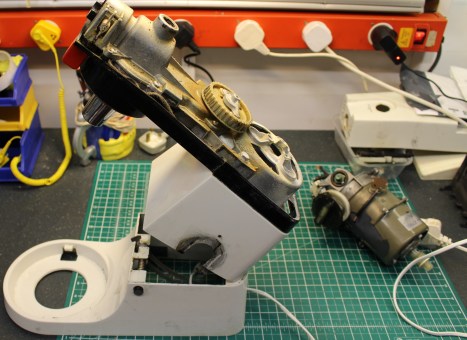
With a decent repair kit bought (from eBay), I replaced all components relating to the speed control circuit, which made the motor run again.  I also replaced all the machine’s 5 feet, since the originals had long since gone to mush, something they all do with age. Since the motor was out of the unit, I took the trouble to adjust the motor’s end float and oil the bearings, for ultra-smooth running.  Very satisfying.
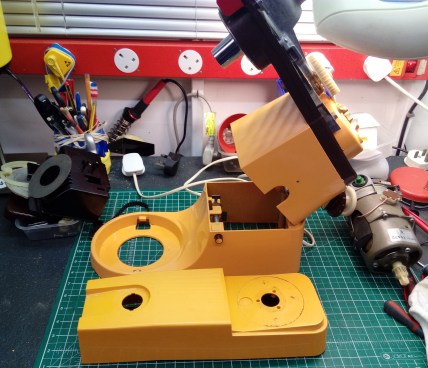
IMG_20191202_210500
FixItWorkshop, Worthing, December’19, orange Chef in bits.

With the casing all back together, I gave the machine a light T-Cut and polish to make it look as good as new and despite its 30-odd years and the odd bit of flaky paint, I think you’ll agree- it looks fab.
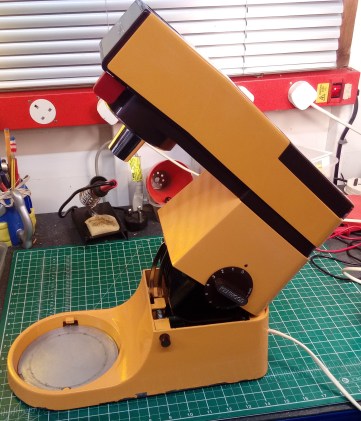
IMG_20191209_213838
FixItWorkshop, Worthing, December’19, orange Chef A901, open, looking fab.

PS, thanks to Andrew for supplying the very yummy scrummy, lime cheescakes.


Check your plug! A simple Miele PowerLine Vacuum Cleaner repair

Mains plugs lead a hard life, make sure yours are safe. If they are damaged, replace!

Before and after…

A quick 15-minute job, with a satisfying result.

Sometimes, it’s not a complicated fault preventing an otherwise good machine from working.  It’s just a case of taking the plunge and getting stuck in as the owner of this vacuum cleaner had proved.

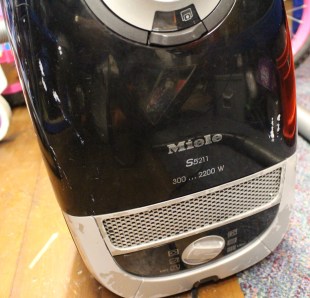
Make and model: Miele PowerLine Vacuum Cleaner

Fault reported: Not running/ occasional sparks(!)

Cost of replacement: About £139.99

Cost of parts: £0.00

Hours spent on repair: ¼

Tools needed: Cutters, screwdriver and soldering iron

Sundry items: Silicone spray, T-Cut

Repair difficulty: 1/10

Cups of tea: 1

Biscuits: 1 Ginger Nut


IMG_0300
FixItWorkshop, Worthing, November ’19, Miele S5211 Vacuum Cleaner.

Sometimes the simplest things are the best.  This machine had been working well when sparks began coming from the mains plug.  The owner had reacted quickly by turning off the power and then removing the plug from the wall socket.  Good job.

The owner then bought a new plug from a local hardware shop to replace the damaged (cracked) plastic plug fitted.  She then fitted the new plug to the vacuum cleaners’ flex but nothing happened when she switched it back on.  Frustrating!  It’s reassuring to hear that folk still bother to get screwdrivers out and attempt a repair.  It makes it all worthwhile.

When I saw the vacuum cleaner and heard the back story, I immediately inspected the plug wiring and spotted that a bit of insulation was still trapped on the live connecter, preventing the electrical connection.  30 seconds with a pair of cutters and a small flat blade screw driver and the machine was working again.

Me being me, I then decided to give the Miele’s plastic casing a quick polish with T-Cut and wax, to bring it up to the correct standard.

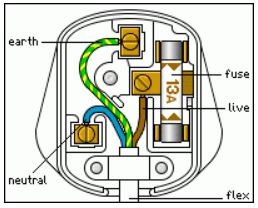
It made me think:  How often do people change plugs these days?  Not often.  So, if you’re wondering what the correct position of the wires should be, it’s this (UK specification).

Capture
FixItWorkshop, November’19, UK plug – not my image.

General hints

  • Make sure all screws are tight
  • Ensure the cable grip clamps the cable insulation
  • Don’t trap wires in between the casing

If in any doubt, consult a friendly shed-dweller or spanner spinner.

Genuine or pattern parts? A Dyson DC40 gets a little tune-up.

Genuine or pattern parts? What to do!?

Article 100!

It’s a dilemma sometimes.  Should you always fit genuine replacement parts or is it OK to fit quality aftermarket or pattern parts.  My answer:  It depends.

Make and model: Dyson DC40

Fault reported: Torn hose and loss of suction

Cost of replacement: About £200.00

Cost of parts: £16.53 (hose and filters)

Hours spent on repair: 1

Tools needed: Screwdrivers

Sundry items: Silicone spray, PTFE spray, rag

Repair difficulty: 2/10

Cups of tea: 2

Biscuits: 1 McVities Gold Bar

A mate of mine contacted me to ask if it was worth fixing his 6 year old Dyson DC40 and as always, I said yes it was.  A couple of days later, it was working again, like new.

IMG_0446
FixItWorkshop, November’19, Dyson DC40.

The DC40 is still supported by Dyson and parts are readily available direct from them.  Problem is that, as my mate did, the price of some spares (although quite reasonable actually) can put some people off, which means that serviceable machinery can end up at the local dump, prematurely.  Which is a shame.

This is where pattern parts can help.  Often, aftermarket manufacturers will make spares for popular models and the advantage of these is that they are often much cheaper than the original part.  However, it’s not as simple as that.

I’ve fixed 100s if not 1000s of things and have used and continue to use a mixture of genuine original (often called OE or Original Equipment) and pattern parts for different reasons.  Assuming original equipment parts are the best, here are my thoughts, in no particular order, to help you if facing a similar dilemma.

In favour of pattern parts:

  • They can make a repair viable, financially
  • Parts can be available, long after original parts become obsolete
  • They can provide enhanced features that were not part of the original design

In favour of genuine/ original equipment parts:

  • They will fit exactly as the specification will be to the original design
  • They maintain manufacturers warranties, where applicable
  • They normally last well and perform as expected

As a further example, I will only fit genuine water pumps (on car engines) but will fit pattern air filters.  Water pumps must work within very exact performance tolerances whereas air filters, although important, don’t so much.  It’s a personal thing at the end of the day.

Back to the repair.  This Dyson wasn’t picking up dirt and the extension hose was torn, so a new hose was ordered from a supplier on eBay for under £10, a genuine part was over £25.  The hose just clicks out and in, so all that was required was a small flat bladed screwdriver to remove and refit the hose.  Nice and easy.

The next job was to sort out the lack of suction.  As with all Dysons with a problem like this, I always check filters.  As suspected, both filters were expired and needed to be replaced as they were too far gone to be washed.  Again, pattern part filters were available on eBay for under £7, genuine ones were much dearer.  All new parts fitted well and soon the vacuum cleaner was breathing easily again.

Another issue with the DC40 is the switch lever which diverts suction from the beater head to the hose, which was sticking on this machine.  A quick clean up and a small spray of silicone spray on all the moving parts had it all working again.

This slideshow requires JavaScript.

I always clean-up the beaters on any vacuum cleaner in for a service and this one seemed to have half a head of hair stuck in it, which would have impeded performance.  The hair was so bad, I had to remove the beaters (just one screw) and cut off the hair with a knife.

With all the remedial work completed, the Dyson ran well proving once again that it’s usually worth repairing, rather than replacing.


Dyson DC25 with various problems

Another Dyson dodges the dump

An email dropped into my inbox about a poorly Dyson DC25, that needed a bit of a clean up.  I said no problem, I’ll take a look.  What turned up was a vacuum cleaner that needed a bit more than a quick clean up with a J-Cloth.

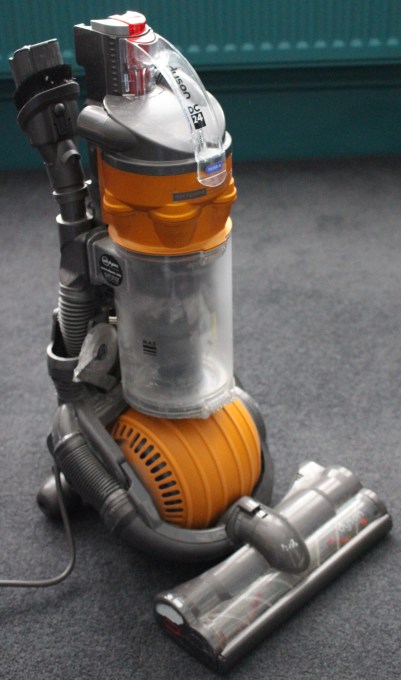
Make and model:  Dyson DC25 (blue/ grey)

Cost of replacement:  £N/A, price when new £300

Cost of parts:  £6.89 (plus my time)

Hours spent on repair:  2.5 (plus testing)

Repair difficulty:  5/10

It soon became apparent, that the Dyson was quite ill.

Here’s a summary of the problems:

  1. The mains cable flex was split, exposing the internal cables risking electric shock
  2. The roller beaters would not spin
  3. Suction was limited

None of these features were useful in vacuum cleaner, so out came the screw drivers.

The mains flex damage was about 90 cms from the handle end, so rather than replacing the whole cable at about £30, I decided to shorten the one already fitted on the Dyson.  This involved removing three screws on the reverse of the handle to expose the wiring.  From there, the broken flex could be cut-out and the sound part of the flex, reattached to the Dyson’s wiring.  See below.

This slideshow requires JavaScript.

The DC25 features a roller-ball, enabling the beater head to twist and turn in to tight spots on the floor.  This means that mains power must navigate the various joints and hinges on the way from the main body to the roller beaters.  A quick test revealed that the power was not getting through.  After removing one of the side covers, there was evidence of a previous repair.  One of the mains cables had broken and had then been twisted back together.  Clearly, an improvement was needed.  Using a section of repair cable, a small joint was soldered back in to place with some mains-rated heat shrink around the connection for insulation and reinforcement.  See below.

This slideshow requires JavaScript.

The beater head also needed a good clean, which meant a strip-down and re-build.  All parts were cleaned, inspected and reassembled.  During that process, a small break in the beater head wiring was found, repaired and put back together.  See below.

This slideshow requires JavaScript.

Finally, the machine needed a good clean up.  The main cylinder was washed, the filters washed (although I later decided to replace these) and the main seals on the vacuum system, cleaned and silicone sealed.  See below.

This slideshow requires JavaScript.

During clean up, the spigot-yoke that holds the roller ball in place on one side was found to be missing.  Luckily the owner had kept this and dropped it back to me to re-fit.

This Dyson was on the brink, but with a little bit of spanner-time, it’s now ready to serve many more years.


Gaggia Espresso Machine with a nasty blockage

A Gaggia Espresso machine gets a rebuild.

Home coffee machines are very cool.  Home espresso machines are even better as they’re the closest you can get to a coffee shop brew, in my opinion.  Due to heat, water and coffee mixing up on a regular basis, they need ownership with care for long life.

IMG_9039
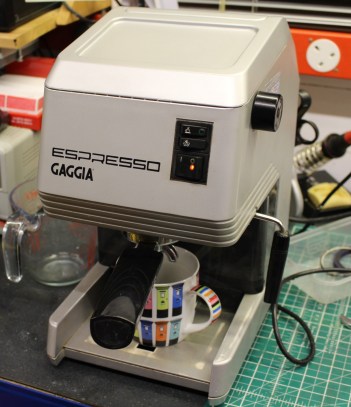
FixItWorkshop, Worthing, May’19, Gaggia Espresso Machine.

Top tips for longer coffee machine life:

  • Use filtered water, especially if you live in a hard water area
  • Clean the tank regularly
  • Keep all rubber seals, especially those around the main coffee making area, clean with a damp cloth

Someone got in touch with a machine that was a few years old, but had once made a lovely cup of coffee.  The owner had used it daily but recently it had begun to leak and not perform at its best.  The machine had also been to a UK repair specialist, but sadly, they couldn’t solve the problems.  I always test appliances when they arrive to confirm the fault and as expected, water came out of places it wasn’t supposed to.

I’ve worked on a few of these machines, so I know the drill.  Remove the lid, make a note of the wiring connectors, the pipes and remove the bolts holding the main boiler in place.  I also ordered a service kit (new seals) for a reasonable £7.99.

The main boiler separates into two halves which reveals the main boiler chamber and exit for hot water.

This boiler was in poor condition and years of corrosion and scale had built up and was probably blocking the main group head, the bit where you attach the group handle/ filter bit to make coffee.

Time for more dismantling.  The group head is held in position with a couple of screws, but years of corrosion had taken their toll and this head was going nowhere.  Great care was needed as the soft metal is easily damaged.

Thinking about this a bit more, I decided to cut a screw thread into one of the water holes in the head and use a bolt to lever the group head apart.  It worked.  Once off the head revealed loads of debris and scale.

The next job was to give all parts a thorough clean, re-faced with wet and dry paper as needed and use new seals as part of the reassembly.

Once back together, the boiler was reinstalled and reconnected.  After a few blasts of fresh water through the machine, it was ready to make its first proper brew.

This slideshow requires JavaScript.

Cost of replacement:  £100-300.  Cost of repair:  £7.99, my time, one tin of elbow grease, one cup of coffee and a ginger nut.


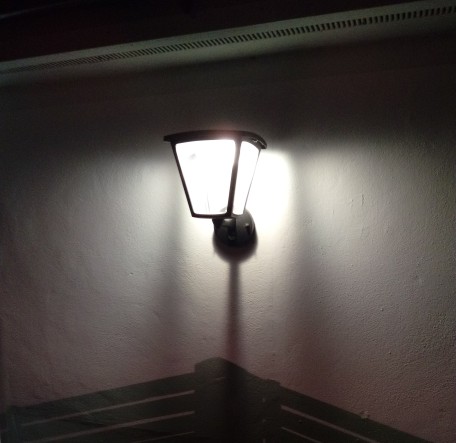
Leave the light on…

A Philips outdoor wall lamp with a major case of built-in obsolescence, gets a cheap fix.

A mate of mine mentioned that his outdoor wall light had given-up-the-ghost, despite not being more than three years old.  He’d put them up around his house as part of an extension and exterior restoration project.  The trouble was that despite only being a few years old, the product now seemed to be discontinued.  This meant that, should the lamp need to be replaced, he would need to replace all of them (three in this case) to keep them matching.  Annoying quite frankly.

IMG_20181112_194358.jpg
FixItWorkshop, March’19, Philips outdoor wall light, working.

He’d read that the bulb within the Philips lamp was not replaceable, in which case a faulty lamp would render the whole thing broken, which seemed very daft to me.  Items made in such a way that prevents even the most basic of repair get me very annoyed.  Sometimes an item is developed in such a way for safety reasons but I suspect that most of the time, the motive is just pure greed.  It’s such a shame.

At my mate’s house, over a cup of tea, I removed the lamp from the wall to take back to the workshop, to see what Philips had been getting up to.

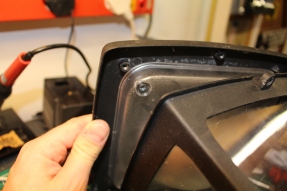
Opening up the casing was straightforward, just a few simple screws and retaining nuts holding the casing together, before finally revealing the bulb itself, under a lamp diffuser.

IMG_7609
FixItWorkshop, March’19, Philips outdoor wall light, lamp unit.

The bulb/ lamp unit itself appeared to be a custom/ bespoke disc light, that wasn’t user serviceable.  It had blown and there was evidence of scorching on a few of the LEDs, linked in series, indicating the failure of the entire circuit.

I couldn’t find any replacement disc LEDs suitable for the lamp from any of the usual sources, which I expected.  It could be that Philips can supply a replacement disc, but this was not evident on their website.

Not wanting to be beaten by a bespoke part, I thought about what else might work, within the lamp’s enclosure, to have the same effect.  I had a spare GU9 LED bulb, about the same brightness, sitting on the shelf, left over from another project which was going spare, so I set about fitting it in the space.

The generic GU9 bulb, available from most hardware shops, fitted in the existing disc mounting bracket, with a small modification and once connected to the lamp’s circuitry, worked well, albeit with a slightly warmer glow.

In case anyone else has the same problem, I made a little video of the repair.  I hope it gives others inspiration if faced with a similar problem.

Cost of replacement (with something similar): £50.00.  Cost of repair:  £1.50 for the bulb and a couple of Belgian beers for my time.


Karcher WV50 avoids the bin, just

An alternative, cheaper, motor fix.

My dad donated a rather sick Karcher WV50 window vacuum, water sucky-uppy-thing which he’d taken half way to the bin before thinking, I know, I’ll give it to Matt.

How thoughtful.

IMG_5930
FixItWorkshop, March’19, Karcher WV50 Window Vac, in bits.

The vacuum sucky-uppy-thing worked of sorts, but when operated, made a noise not to dissimilar to a distressed cat riding a trolley with wobbly wheels, if you get what I mean.  I wish I’d recorded it.

Anyway, opening up the WV50 was pretty straightforward.  Just several crossed-head screws held the two plastic halves of the unit together, revealing a simple electronic board, battery, switch, motor and fan with exhaust.

The principle of the WV50 is the same as any other domestic vacuum cleaner.  A fan drives air in one direction through a smaller hole (exhaust) creating a vacuum, in this case at a small wiper blade for glass cleaning.  Water is then drawn towards the fan, with the vacuum created and then diverted to a holding tank, for emptying later.

The tank on this product is quite crude and I suspect that should it be knocked over, the water within the tank could spill over in to the exhaust and in to the motor.  This is what I suspected had happened and caused the motor bearing on this device to wear excessively, causing the noise.

The cost of a motor and fan replacement on the WV50 was about £30.00 (where I saw them listed) but this would make the repair un-economical.  After an email conversation with Mabuchi, the makers of the motor, the original equipment K-280SA-3525, unique to the WV50, was no longer being made.

I don’t like being ‘beaten’, but having spent far too much time with batteries, bulbs and motors as a child than is entirely healthy, I realised that the casing and bearing on the K-280SA-3525 was pretty standard fare and if the spindle on our motor was OK, then all that would be required would be a new bearing.  It turned out that the spindle and motor brushes were OK, so I ordered a same size motor from eBay, via a very efficient and friendly Chinese electronics specialist with the intention of swapping the motor body and bearing over.

The motor arrived quickly and the transplant only took a few minutes.  Once reassembled, the motor and fan sounded like new once again.  A nice cheap fix, to keep this vacuum cleaning windows for another day.

I even made a short video, showing what I did.  Enjoy.

Cost of replacement: £50.00 (equivalent model)  Cost of repair: £1.50, some international emails and a couple of cuppas.  Nice.


Morphy Richards smoky heater

A heater with a broken motor gets a clean up…

I like the classic, function-over-form design of this heater.  Simple, clear, chunky controls and nothing included that isn’t needed.  Less is usually more.

This 1980s heater, although very well made and clearly designed with longevity and repair in mind was a little bit, er smoky.

IMG_8365
Fixitworkshop, February’19, Morphy Richards fan heater.

It appeared that the fan wasn’t running and the smoke was coming from old dust which had settled inside the machine.  I don’t think that the heater had been used in many years.

The heater came apart very easily, just three self-tapping screws holding the sides together to the main shell.

On first examination that the shell was out of shape and that it had come in to contact with the fan itself, forcing it to far down the motor shaft on to the motor body.  So, all that would be needed would be reposition the fan and re-shape the outer heater shell, a simple fix then.  Not quite.

The motor did not spin easily and even with a little penetrating oil on it, it was turning slowly, with the mains applied.

The motor was an induction type, with no brushes and didn’t obviously have anything restricting the motor’s spin.  I know that even apparently clean motor parts can have deposits of unseen oil and muck that can stop an otherwise good motor from working properly.  In situations like this, I tend to use brake cleaner or similar to break down the dirt.  Once cleaned, just a couple of drops of sewing machine oil on the moving parts and that usually cures things.  I was in luck and after performing a mild service on the motor, it was spinning at full speed once again.  Quite literally warming.

This slideshow requires JavaScript.

With the parts all back together, the heater was ready to run for many years to come.

Cost of replacement:  £15.00    Cost of repair:  £0.00, one cup of tea and a Bourbon.

Another smoking Kenwood Chef A901E sorted in time for Christmas…just

Another Kenwood Chef gets the treatment in the Workshop

How about another Kenwood Chef story?  I know I’ve covered this machine a few times now, but I’ll try and make it as interesting as I can.  I just LOVE Kenwood Chefs.

IMG_7700
FixItWorkshop, December’18, Worthing, Kenwood Chef A901E on the bench.

A customer got in touch with me via the FixItWorkshop ‘contact us’ link asking if I could fix his family’s much beloved Chef.  While last in-use, it started smoking and smelling terminal.  How could I refuse.  I’m located in Worthing, but the customer was based in North London, quite a distance for a repair and would have been usually cost prohibitive using the Royal Mail.  However, using local drop-off points, carriers such as Hermes and DPD offer (slightly slower) courier services for about £7.00 one way, which starts to make more fiscal sense.  This is what we did.

I wish I’d taken a photo of the box the Chef came in, because the customer had clearly gone to a lot of effort to make sure it was well protected!

On with the repair.

The Chef has been in production many years and although they can often appear similar on the outside, they do vary on the inside, depending on the year of manufacture as small tweaks and improvements are made.  Evolution, rather than revolution, usually the backbone of any successful design.

The A901E is different from the previous A901 as it features an electronic speed controller, rather than a centrifugal affair.  While the later design is an improvement, it wouldn’t deter me from buying an earlier model; the improvement is small.

The A901E still features similar components to previous models which can and do fail, especially with age.  The subject here is about 30 years old, give or take.

IMG_7678
FixItWorkshop, December’18, Worthing, A901E, motor removed.

The motor on the A901E comes out quite easily; first remove the motor cover, remove the mains cable (disconnect first of course), remove the top cover, belt, then the four screws holding the motor in.  The motor then pulls down from inside, out through the gap left by the hinge.  Easy.

The motor circuit board showed traces of component catastrophe with dust and dirt left by exploding components.  Nasty.  Pre-empting the fault, I ordered a repair kit before I’d taken the machine apart, together with replacement feet as the ones on this machine were knackered.  The kit includes capacitors, resistor and triac as these are the main components that tend to fail.

These kits are available on eBay and are worth the money as they are often cheaper than buying the components separately and they contain instructions for newbies.  Here’s a little slide show showing the process.

This slideshow requires JavaScript.


With the kit fitted, the motor re-installed, mains reconnected, the Chef ran well again, this time without burning or smoking.  However, all was not well as the speed control was a bit wobbly at lower speeds, which was just plain wrong.  Having worked on a good few Chefs, this problem is usually down to excess end-float on the motor spindle.  Working with the motor still in situ, the motor fan, which controls end-float could be adjusted with an Allen key.  Sorted.

Just the replacement feet to fit and after a quick clean-up, the Chef was reassembled, ready to go home.

A top tip for you.  If you intend to replace the feet on your machine and you probably should if they are old as they go hard or fall apart, then soak the area around the feet recesses with WD-40 or similar a day or so before as this will make getting the remnants of the old feet out, much easier.

Cost of a replacement:  £400 up.  Cost of repair:  £12.65 plus my time and tea.

Classic (asthmatic) Dyson DC01

A tired DC01 gets some TLC

Starting a new job is always fun and when a new colleague of mine mentioned that the office vacuum cleaner had packed up, I rose to the challenge.

I’m quite fond of Dyson products as some of you know, mainly because:

  • They’re well-engineered, by engineers
  • They’re designed to be repaired easily with simple tools, which is better for everyone
  • Parts are readily available at reasonable prices

The DC01 was launched in the early 90’s and was Dyson’s first market clean-up, competing with the established market leaders.  Although this machine is over 20 years old and Dyson no longer supports it directly, reasonable quality pattern parts are available on eBay.  If you have one, love it and keep it going.

IMG_7425
FixItWorkshop, Worthing, November’18, Dyson DC01

This one is actually an ‘Antarctica Solo’ model (grey and light blue instead of yellow), which commemorated Sir Ranulph Fiennes’ solo trek across Antarctica and raised money for Breakthrough Cancer.  It had been abandoned and was moments away from the skip.  I felt quite sorry for it.

Faults reported included; no suction, excess noise and smell!

The first thing to check on the DC01 is the filters, as like many other Dyson products, people forget to clean or change the filters.  Both filters were totally choked and full of all sorts of detritus.  A quick shake out and wash with warm soapy water and they were as good as new.  Following that, I inspected the seals around the join between the cylinder and the main body.  All the seals were dirty, so a clean up and quick spray with silicone spray and they were as good as new.  Great.

The noise seemed to be coming from the front beater/ rollers which usually means, noise bearings.  The beater on this model uses a two bearing set up.  One was fine, but the other was seized.  As I didn’t want to spend any more than I needed, I cleaned the bearing, after removing it and the dust cover, re-greased it with LM High-Melt Point grease (general automotive stuff) and it was ready to roll and beat again.


This slideshow requires JavaScript.

Once the filters were dry and re-installed, the Dyson ran like new again.  Very satisfying.

Cost of replacement:  £15 second hand, £100’s for an equivalent-ish new model.

Cost of repair:  Patience, washing up liquid, two cups of tea.