Minimum Cash for a Maxi Micro Scooter

A Maxi Scooter Gets a Refresh!

Before and after…

This is exactly the kind of job that I should have done with my daughter, but I had to do this repair in secret on this occasion as the scooter was to be a present for her.

Birthdays can be expensive times, but Dad is a shed-dwelling-repair-mad-penny-pinching fiend and it means that his children’s presents don’t need to be new. Take this Micro Maxi Scooter. £129.99 when new, second-hand for £10. Wheelie good value.

However, a £10 Micro Scooter isn’t going to be as fresh as one costing £129.99 is it, so time for a few service items and light renovation.

Make and model: Micro Maxi Scooter

Fault reported: Tatty, noisy wheels, brake rattles

Cost of replacement: About £129.99

Cost of parts: £16.68 (bearings, grips and tassels)

Hours spent on repair: 1

Tools needed: Allen keys, screwdriver, drill

Sundry items: Silicone spray, PTFE spray, rag

Repair difficulty: 3/10

Cups of tea: 1

Biscuits: 0 (I was being good for a change)

This slideshow requires JavaScript.

It’s amazing what a bit of spit and polish, mixed with a little elbow grease can achieve. A rattily, untidy Micro scooter that might have end up at the tip prematurely is now as good as new, thanks to some time spent and basic new parts, which only cost just over £16, or just over 10% of the value when new.

Rattily wheels

The four wheels on this model can take a pounding as kids take their scooters off kerbs and through puddles, just as they should. But the small bearings that allow the wheels to spin freely and smoothly can suffer with age and wear. Due to sensible design, the bearings fitted are readily available online and a complete set can bought for a fiver. After removing the wheels using an Allen key, the old bearings simply pop out using a large screwdriver and the new ones can be pushed in using your thumbs or a small vice. If you do this job yourself, don’t forget to clean all of the surfaces with a rag and something like WD40.

Tatty grips

The grips on older scooters can get mucky and after oil and sunshine have worked on them, they tend to suffer with discolouration and cracking. Again, the handle bars are a standard size and you won’t have any trouble sourcing the official replacements or aftermarket replacements

Noisy brake

The brakes on these scooters tend to become noisy with use as the small steel rivets rust and become lose with time. Although this issue doesn’t affect operation generally, it sounds horrible. On this scooter I decided to drill-out the existing rusty rivets and after a quick clean up, replace them with some alloy alternatives. These look better and will last much longer.

During this repair, I couldn’t do much about the chipped Micro Scooter logo, but even a new one would end up like this example after 5 minutes use!

A very satisfying repair and something any parent could do with their kids at home using basic tools.

Is 12 years too long to keep a toothbrush?

A Braun Oral-B electric toothbrush gets a new lease of life.

Let’s just clarify one thing straightaway; I’m talking about an electric toothbrush with changeable brush heads.

I was given an Oral-B/ Braun electric toothbrush as a birthday present years ago, which when you think about it, is a bit of a strange thing to receive as a gift.  Maybe the gift contained a hint?  Back then, these toothbrushes were not cheap, starting at about £60.00 if I remember correctly.  Today, a new equivalent is quite a bit cheaper.

In the time I’ve owned it, it’s had about 40 new brush heads and it’s just about to start it’s third non-replaceable battery.

Make and model:  Oral-B/ Braun 3756 931 41306

Fault reported: Battery won’t hold charge

Cost of replacement:  About £20.00

Cost of parts:  £6.60

Hours spent on repair:  1

Tools needed:  Small flat-bladed screwdriver, soldering iron

Sundry items: None

Repair difficulty:  5/10

Cups of tea:  2

Biscuits:  2 Gingernuts

Electrical items with non-replaceable batteries are so annoying.

A message to manufacturers:  There’s simply no excuse for it as all batteries are replaceable.

In my experience, items with ‘non-replaceable batteries’ contain entirely replaceable items.  The batteries might not be standard ‘AA’ items, but there’s a host of online suppliers that are ready to supply just about any power cell for any application, you name it, usually for a reasonable price that costs-in for the repair process.

This slideshow requires JavaScript.

Now, I don’t know how long one of these toothbrushes is meant to last, but as a long-term test, I thought it would be interesting to find out.  After the first battery died, I decided to take the toothbrush apart, to see what was going on inside.

As you can see from the photos, there’s more within than one might think.  There’s a switch, charging circuit, timer circuit, over-pressure circuit, gearbox, motor, mini crankshafts and a battery.  Not to mention all of the tiny connecting parts all neatly engineered to work together, reliably.  It’s a small work of art really.

It makes me very sad that most of these toothbrushes will end up in landfill, after a few years.

The designers had clearly designed this toothbrush as a disposable item as the battery, despite being readily available from spares suppliers, was hidden, out of sight, under all of the gubbins.

To extract the battery (a simple nickel cadmium item) a full dismantle was required, in this order.

  • Prise off the top collar
  • Prise off the bottom cap
  • Pull out the main mechanism
  • De-solder the main pressure switch, charging coil, LED, and some other joints,
  • Take PCB off of battery carrier,
  • Split battery barrier from the main motor area
  • Remember the polarity of the battery, negative near the coil (a misleading ‘+’ there)
  • Reassembly, with the new battery is the same in reverse.  See pictures for hints.

Twelve years down the line and now on its third battery cell, the toothbrush is still going strong which proves that with a little tinkering, disposable items can be repaired and made to last longer.

It’s just a shame that Braun, the manufacturer, decided to ignore any notion of consumer maintenance.


A broken massage belt, with a happy ending…

An Invitalis Massage Belt gets a simple repair at the workshop.

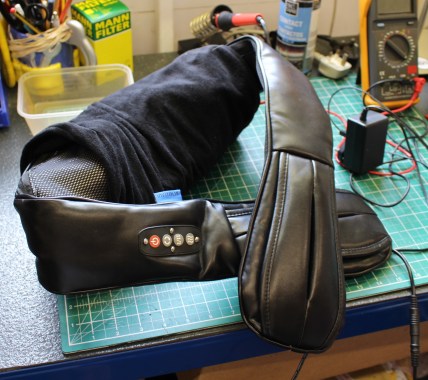
I was asked to repair a personal massage belt recently, which had developed an annoying habit of cutting out, mid-treatment.  Over email, I confessed that I did not know what a massage belt was, but was reassured that is was used to treat lower back ailments and nothing more personal.  Phew.

Make and model:  Invitalis Vitalymed Flexi massage belt

Fault reported: Cutting out

Cost of replacement:  About £40.00

Cost of parts:  £1.29

Hours spent on repair:  1

Tools needed:  Small flat-bladed screwdriver, soldering iron

Sundry items: None

Repair difficulty:  2/10

Cups of tea:  1

Biscuits:  1 Goldbar


IMG_9894
FixItWorkshop, Worthing, August’19, Invitalis Vitalymed Flexi massage belt.

These devices are sold on Amazon and are usually available at events, such as the Ideal Home Exhibition and alike.  This belt offers the wearer a lower back massage by means of two rotating arms with smooth spheres, hidden behind a soft pad.  The spheres also emit infra-red, if required.

I don’t know much about this kind of thing, but I had noticed that the power cable for the belt was a standard female 12VDC connector, used on many types of domestic equipment.

With the power applied and with some wiggling, the belt would occasionally come on and then fail, indicating a loose connection.  The trick here was to find out where.

The belt is zipped together and access to the wiring was easy.  The belt’s power connector ran to a switch/mode box and then on to the motors and other gizmos within (see photos in slideshow).

This slideshow requires JavaScript.

After cutting into the cable, testing continuity, I found two problems; A break within one of the cable cores and a faulty female power connector.  Luckily, connectors like this are abundant and a quick look on eBay revealed lots for under £2, delivered.  As it happens, I bought a high-quality connector and flying lead, intended for a CCTV camera, to fit the belt.

The last step was to reconnect some good cable, reconnect the new connector and make good with soldered joints and heat shrink, to keep everything nice and tidy.  Before I solder things, I always make sure I’ve not cross-wired anything, by proving continuity with a multimeter.  In the past, one has been known to blow things up by not taking this sensible approach!

After reassembly, it was just a case of powering up and switching on.  Gladly, I hadn’t crossed any cables and it now worked again, happily ever after.

Old school iPod Nano battery replacement

Apple really don’t want you to get into their products- but they’re not alone.

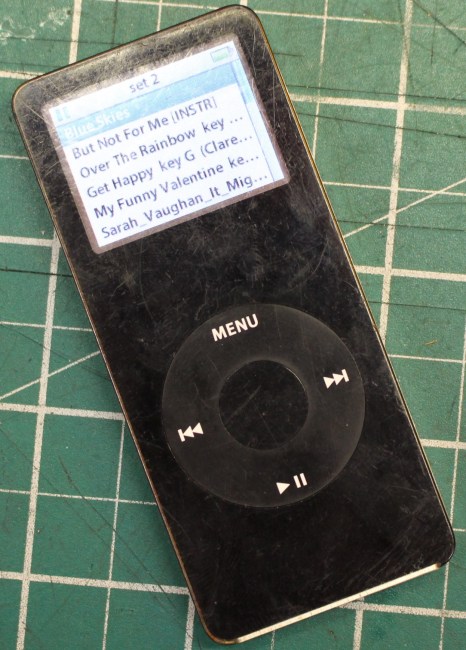
We have two Apple products in our house from the early 2000s; one iPod Nano 1st generation and the 1st generation iPod colour.

IMG_9910
FixItWorkshop, Worthing, August’19, Apple iPod Nano.

Apple tech polarises opinion as it’s always premium priced and is quite locked-down to ‘Apple only platforms’.  Some people love the ease of use that their products seem to offer, others get frustrated with the lack of integration with other products.

Despite being an Android house, we keep the iPods as they are quite robust, but due to age, battery life has recently become an issue.

Make and model:  Apple iPod Nano

Fault reported: Battery not holding charge

Cost of replacement:  eBay, loads out there

Cost of parts:  £8.00

Hours spent on repair:  1

Tools needed:  Spudger, small flat-bladed screwdriver, soldering iron

Sundry items: None

Repair difficulty:  4/10

Cups of tea:  1

Biscuits:  2 (Custard Creams)

Let’s just get it out of the way now.  Apple really don’t want anyone opening up their devices and it was a wrestle to open up the casing, without snapping something (the iPod, not one of my nails or something).

The battery in the Nano is situated beneath the metal cover, which must be removed using a spudger.  A spudger is a small lever with a fine edge that can be used to gently open up small, usually plastic, push-fit, ‘clicked-together’ things.  Spudgers are kind of disposable and I always seem to break one on each job.  I must look out for a strong, stainless steel item.

Using the spudger on the Nano isn’t easy, since (as I later found out) all of the metal tangs located around the metal casing, dig in to the plastic face.  Trying the separate the two halves is a real battle and there’s a real risk of damage should you use too much force.

After a good 15 minutes of wrangling with the Nano, the casing popped off.

This slideshow requires JavaScript.

The battery on this model uses a small fly lead which is soldered to the main PCB, again more evidence to suggest that Apple had no intention of making the Nano’s battery replaceable by most users.  Extreme care had to be taken with the soldering too since the PCB’s components are so close and small, making it too easy to use too much heat, causing irreparable damage.

I took my time and was able to fit the new battery (push fit) and solder the connections OK.

The cover popped back on and fortunately, the screen lit up once more, when the menu button was pressed.  Phew. Tea time.


Imaginext Super Hero Flight Gotham City

Good thinking Batman, but I have a safety dilemma with a repair.

During a recent Toy Doctor surgery at a Dad La Soul/ Tot Rockin’ Beats event http://www.totrockinbeats.com/dad-la-soul I attempted a repair on a kids toy that I couldn’t get working in the two hours we had, so I asked if I could take it home to the workshop where I have more tools at my disposal.  Good thinking Batman.

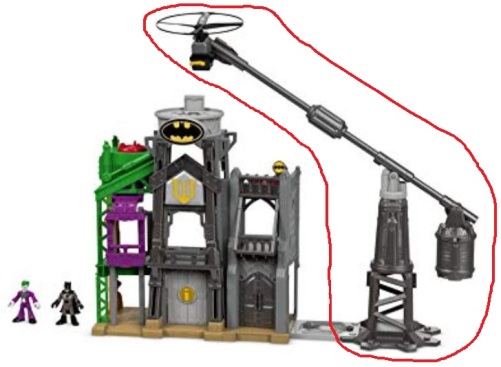
The Imaginext Super Hero Flight Gotham City (catchy title for a toy) was much loved, but the flying bit (circled in red below) had stopped working and no longer did anything when switched on.  No fun without the flight bit.

Imaginext Super Hero set
FixItWorkshop, Worthing, August 2019, Imaginext Super Hero Flight Gotham City. Image: Google/Amazon.


Make and model:  Imaginext Super Hero Flight Gotham City

Fault reported: Not working

Cost of replacement:  £45.00 approx.

Cost of parts:  £0.00

Hours spent on repair:  About two hours- although to be honest, I lost count with this one

Tools needed:  Cleaning cloths, small fine file, soldering iron

Sundry items: Contact cleaner

Repair difficulty:  6/10

Cups of tea:  4

Biscuits:  10, maybe the whole pack, I lost count (Custard Creams)

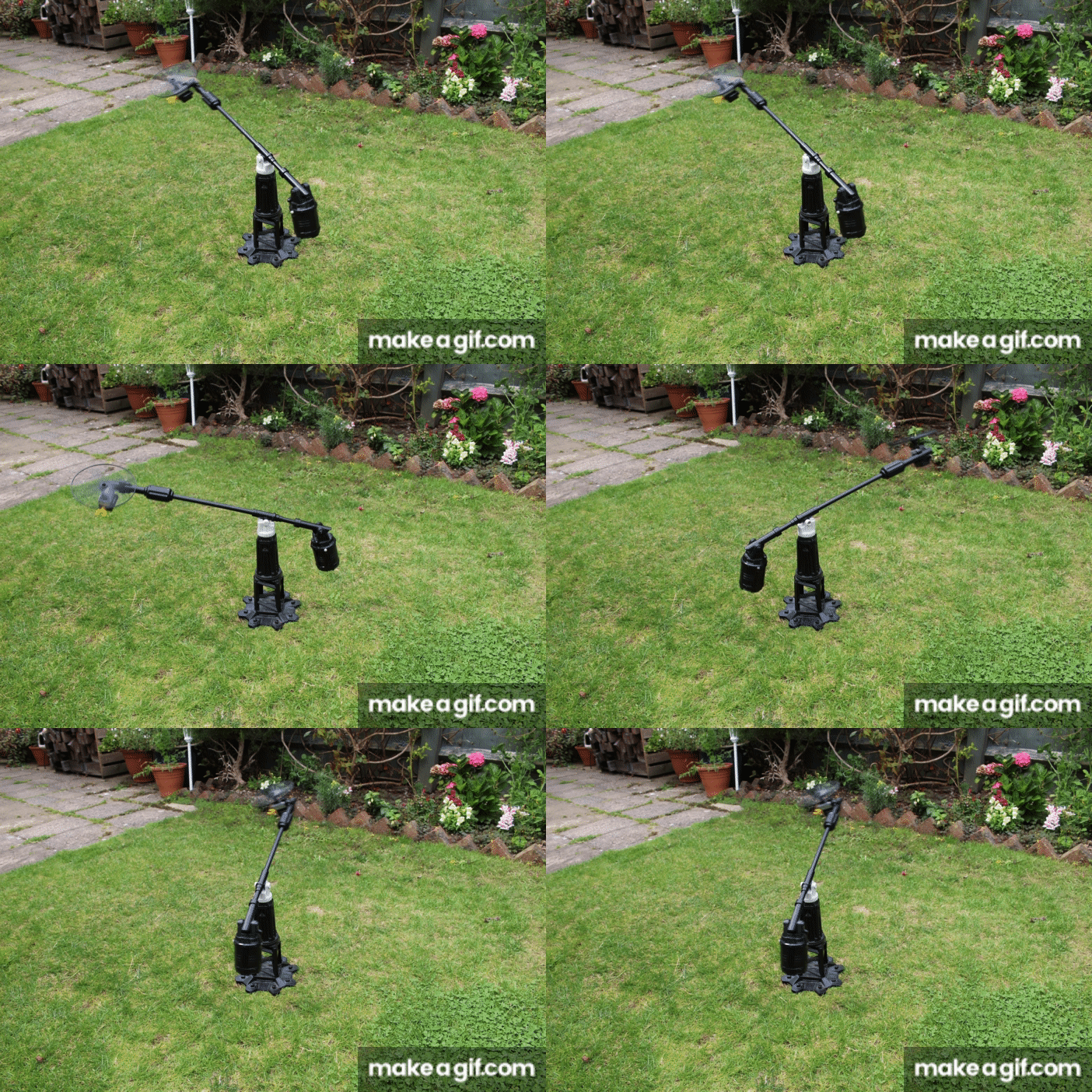
The battery-powered flying thing on a weighted boom should fly about in a circular fashion and be controlled by the city platform, presumably by remote control from the main city bit.

Upon opening up the battery compartment, the problem revealed itself.  The previous batteries had leaked and the spillage has corroded the battery terminals.  No bother I thought, just a matter of cleaning-up the metal surfaces and we’d be back in business.  How wrong I was.  Even with new batteries installed, nothing happened, how very dissapointing.

No, it wasn’t going to be that easy and that was the theme for the rest of the repair.  Everywhere I turned, whether it was trying to open up the casings, inspect wiring or generally take something apart, I was going to be met with glued shut fixings and more problems.

This slideshow requires JavaScript.

Construction on this toy was very strange.  Surfaces on the casing were sometimes glued and screwed together, very odd, and I guess that method must have been used due to production time and cost saving.

The wiring between the flying bit and base checked out OK and the motor spun when I applied some charge briefly to the terminals, so that all seemed fine.

Upon opening up the gubbins where the switch was, the problem with the toy presented itself.  The mini printed circuit board had suffered from battery leakage corrosion and was shot.  Whatever it was meant to do was in the distant past.  So, this toy was for the WEEE skip, as there was no chance of getting a replacement.

Well, hang on a minute, we don’t give up like that do we.

I decided that I could make the toy work albeit without the printed circuit board by re-wiring the motor, using the existing loom and switch, so that the motor and therefore helicopter bit worked as it should.  This would mean that once the switch on the base of the unit was turned on, the helicopter would start and it would not be possible to turn it off without grabbing the moving base weight first.  It clearly wasn’t designed like that, but I had at least got it working again.

This slideshow requires JavaScript.

So, here was my dilemma:  Give up with something I couldn’t get a part for or get it working again, albeit with a removed (percived) safety feature, so that the toy could still be enjoyed.  I went with the latter as I thought that the danger was negligable.

Batman_toy(1)
FixItWorkshop, Worthing, Aug’19, flying high, once again.  Always read the safety label.

Was I right?


Why are some spare parts more expensive than a complete product?!

I struggle to buy a replacement part for a reasonable price.

I’ve been meaning to do a little article on this problem for a while and I apologise in advance if (you’re still reading) this seems like a rant.

Why-o-why-o-why are manufacturers still allowed to price spare parts dearer than a complete product?

IMG_20190810_102348
FixItWorkshop, Worthing, Aug’19, Triton Cara and Enrich Showers.

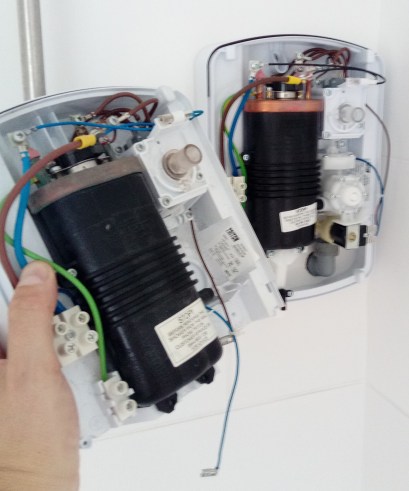
Recently our electric wall shower gave up the ghost and tripped the electrical breaker in the fuse cupboard.  Not great when it happens mid-wash.

The shower was a few years old and registered with the manufacturer for support for things like recalls and so on.  I had fitted the shower myself and it it had been a reliable product until this point.

Out with the screwdrivers and multimeter.

The 8.5kW heating element is split into two circuits, one for half-power and one for full.  Most people would use full power, but you might be able to get away with using it on half or economy mode in summer, when the water feed is generally warmer.

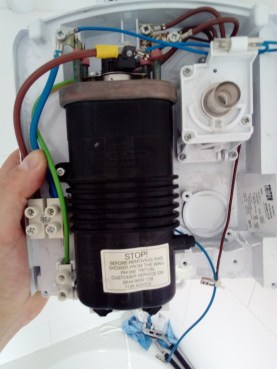
All micro switches seemed to be working OK, which was a bit of a shame actually as it meant that the heater can was probably faulty.  It was.  Half the heater can tested OK, the other half was dead.  Oh dear.

IMG_20190810_102404
FixItWorkshop, Worthing, Aug’19, Triton Cara heater can.

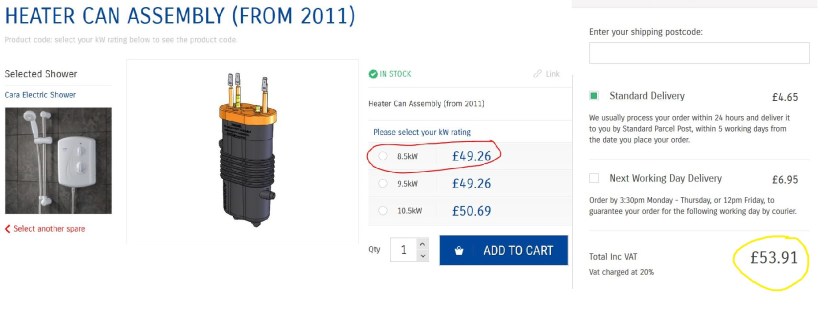
After visiting some shower spares suppliers and the manufacturers’ own website, I discovered that the spare part I needed wasn’t cheap at over £50 delivered.  I saw some advertised for £70 on some third-party sites.

Price of part
FixItWorkshop, Worthing, Aug’19, Triton Cara replacement heater can spare part.  Price sourced from triton.co.uk, correct 10/08/19.

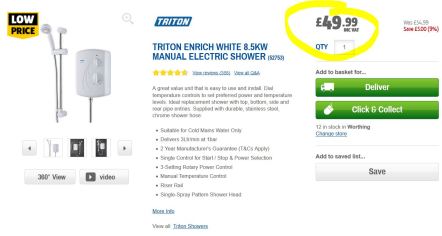
I was fuming.  Why so expensive?  I mean, you’d have to be out of your mind to part with your hard-earned cash on a spare part like this when you can buy the whole unit for less.  See below.

price new
FixItWorkshop, Worthing, Aug’19, Triton Enrich/ Cara – new price listing.  Price sourced from Screwfix.com, correct 10/08/19.

The Cara shower has been replaced by the Enrich and is basically the same product, by another name.  Therefore, the high price of the spare part in this instance cannot be blamed on low manufacturing volumes as the showers are still made, are widely available and have been in production for a long time.   Something is ethically wrong with Triton’s spare parts pricing policies.

Now, I don’t want to beat-up Triton, they’re not alone and many manufacturers do the same, but there are now many forward-thinking companies out there getting it right.  Maybe Triton will revisit their spares listings.

Despite my natural leaning to repair and recondition, I had to admit that simple logic won the day and I bought a whole new unit from Screwfix.  The Enrich shower fitted exactly where the Cara had been and worked perfectly.

I thought about this situation long and hard and decided that for this type of appliance, a spare part should not cost more than 30% of the current retail price.  In this instance, I would have been prepared to pay about £15.00 for a spare part. 

In a world where we need to encourage people to repair appliances (and anything else) manufacturers need to facilitate a reasonable and proportionate spares back up service.  It’s as simple as that.

Still, there is a bright side to this tale.  The old shower’s solenoid, mixer, control knobs and switches all work fine and I’ll keep those as spares to be used again in a shower or something else that comes along.

Blinking GHDs!

A pair of GHD 3.1B hair straighteners gets fixed

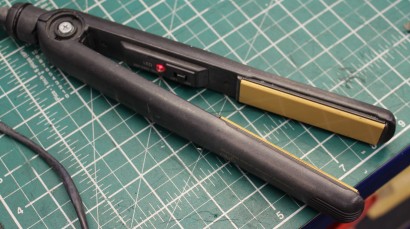
GHD hair straighteners are not something I’ve ever had the need to use, but they are seemingly very popular among the long-haired kind, none the less.  There are cheaper alternatives out there, but devotes tell me that the ceramic plates seem to have a better finish and run hotter for longer, all essential features for taming unruly curls.  So they tell me.

IMG_9909
FixItWorkshop, Worthing, August’19, GHD 3.1b hair straighteners.

Make and model:  GHD hair straighteners 3.1b

Fault reported: Buzzing noise, not warming up

Cost of replacement:  £97.00

Cost of parts:  £0.00

Hours spent on repair:  About an hour (ish)

Tools needed:  Cleaning cloths, small fine file

Sundry items: Contact cleaner

Repair difficulty:  4/10

Cups of tea:  2

Biscuits:  1 (Ginger Nut)

Someone got in touch to ask if I could fix their GHDs and to be frank, I’ve had mixed success with these repairs in the past as in general, the newer the model, the harder it is to fault-find and subsequently order parts for, something I find very frustrating.  However, the 3.1bs discussed here are pleasingly old-school.

Dismantling these GHDs involves just one small cross-head screwdriver and one small flat blade screw driver, none of your fancy Torx heads here, thank you very much.

Strangely, the GHDs made a disconcerting buzzing noise when switched on, which to my fairly trained ear sounded distinctly 50Hz-like.  That means that the mains electricity feed was causing some component to ‘arc’ or resonate- the buzzing noise, in plain English.

Fearing imminent catastrophe, I unplugged the GHDs and went to work.  The main PCB is pretty simple on the 3.1b.  Most of the solder joints were OK, but some of the joints around the switch had discoloured, showing that heat had built up, indicating a problem.  To be on the safe side, I re-soldered all the joints to avoid a dry-joint situation.

The buzzing noise still prevailed.  The switch seemed to be the next logical place to look and being of quality, the designers had provided easy access to the switch mechanism via a small metal cover with sprung tangs.  A quick bit of jiggery-pokery and the switch was in bits.

The problem was revealed in an instant.  Both switch contacts and corresponding wipers were burned and needed re-finishing and cleaning.  A quick whizz with a fine file and clean with special electrical contact cleaner and the switch was as good as new.  Since the GHDs were already in pieces, I gave the same clean up treatment to the 3600 flex mechanism, as a precaution.

This slideshow requires JavaScript.

So, this set of GHDs were saved from the bin, ready to straighten locks once more, thanks to a few basic tools and cleaning.  Very satisfying.


That thing just eats money!

Tomy (UK) /Robie (US) Mr. Money repaired in the Workshop

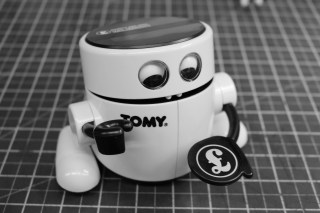
I have a real soft spot for novelty toy robots that actually do something.  I think I’ll make a point of collecting more.

IMG_9795
FixItWorkshop, Worthing, August’19, Tomy/ Robie Mr. Money.

Make and model:  Tomy (Robie in U.S.) Mr. Money  children’s money box

Fault reported: Not eating money

Cost of replacement:  N/A

Cost of parts:  £0.00

Hours spent on repair:  About an hour

Tools needed:  Cleaning cloths

Sundry items: Contact cleaner

Repair difficulty:  3/10

A lady got in touch with me on the back of an article I wrote a while ago about a faulty Mr. Money toy robot money box.  My Mr. Money had gone wrong as I’d left an old battery inside which had then leaked.  A major clean-up and tinker was then required to get it working again.

This particular Mr Money belonged to the lady’s husband and was to be ‘given to him again’ as a 40th birthday present.  What a nice thought.  The only problem was that Mr. Money had stopped working long ago; put away and forgotten about.  He needed bringing back to life.  Perhaps there was a hidden message to the husband to save for something?  Who knows.

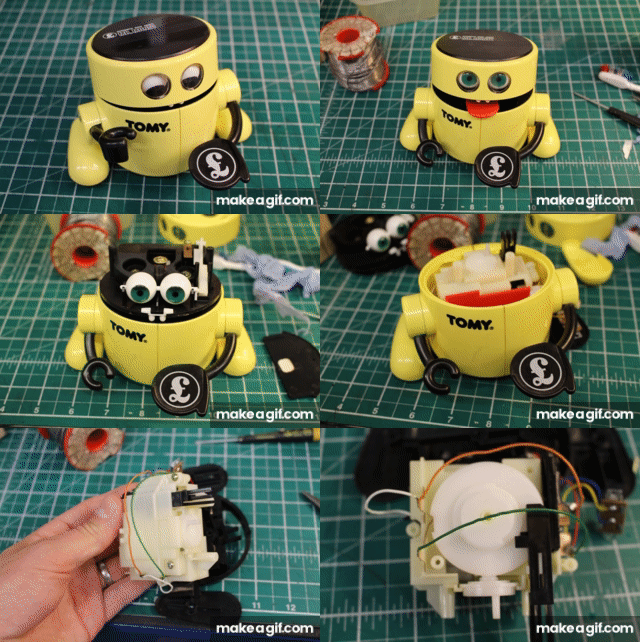
Mr_Money_Quick_Strip

Mr. Money arrived well packed at the workshop and I wasted no time in taking him apart.  There was no evidence of battery leakage or accidental Cadbury Button ingestion and he was generally in good condition with no bits broken off.  A good start.

Mr. Money is getting on a bit and when taking apart any toy, let alone one that’s over 30 years old, one must be careful not to accidently snap-off any lugs or tangs that hold things like casing and levers together.  Very tricky.  It’s not something I usually attempt after a day at work, when I’m shattered.

After some rooting around in the depths of the mechanism, I noticed that the ‘limit switch’ was a little dirty and that some of the contacts needed a little clean.  Using some fine cloth and switch cleaner, all metallic switch surfaces and battery connections were cleaned up and with a new AA battery installed, Mr. Money worked again.

Being 30 years old, there’s no silly use of electronics or other USB excesses which are, I think, ‘over used’ on modern toys.  It all adds up to something which can be repaired with basic tools and parts.

This slideshow requires JavaScript.

I carefully reassembled the workings, casing, switches, arms, head, eyes and lid.

Mr. Money was ready to feast.

After testing a couple of quid through the Mr.Money’s eating cycle, I was happy for him to start his journey home.  I hope he gets used regularly and never put away in a box again.


Tone-deaf VTECH Singing Nursery Rhyme Book

VTECH kids toy gets a little help.

We love a musical singing book toy, don’t we.  They’re great for encouraging children to form words, read and follow a narrative.  We have a few of these and they’re all great fun, all the time the batteries hold up.

We’re not so fond of musical books when they seemingly start by themselves, at one o’clock in the morning, when there’s no one else in the house.  Very creepy.

Make and model:  VTECH Electronics Singing Nursery Rhyme Book

Fault reported: Poor sound quality

Cost of replacement:  N/A

Cost of parts:  £0.00

Hours spent on repair:  About 10 minutes

Tools needed:  Small file, cleaning cloths

Sundry items: Contact cleaner

Repair difficulty:  1/10

IMG_9559
FixItWorkshop, Worthing, July’19, VTECH Singing Nursery Rhyme Book.

This toy was a hand-me-down and had enjoyed a few years of use already, before it came in to our household, but it was in good condition and still has many more years left in it yet.

Recently though the singing emanating from the book was becoming a bit off-key and to be frank, rather than bringing joy the noise coming from the toy was enough to induce nightmares.  I keep a ready supply of rechargeable ‘AA’ batteries in this house and after popping out the old ones, the new ones fitted, I assumed all would be well, but not so.

Despite fresh power, the singing was still horrible and wobbly.  A quick test of both sets of batteries (old and new) revealed that the original batteries were fine and that something else was at play.

Time to delve a little deeper.

Galvanic corrosion can occur when two different metals in close contact with each other, chemically react.  The corrosion forms a barrier, in this case between the electrical contacts of the toy and battery to form a resistance.  This means that the toy, with the corroded contacts, wouldn’t get the full power it needed.

There was some minor corrosion on the contacts that needed a quick clean with some cloth and contact cleaner, something I keep on the shelf for such an occasion.

This did the trick and with the original batteries fitted, the toy was back on song once more, ready for another performance.

Small home improvements…

A loved children’s toy house with the longest house number ever, gets glued back together.

On the last weekend in June 2019, I decided to do some home improvements, on a small scale.

My kids are lucky; they have their own stash of toys to play with, at members of our family’s homes.  This means that we travel a little lighter when visiting.

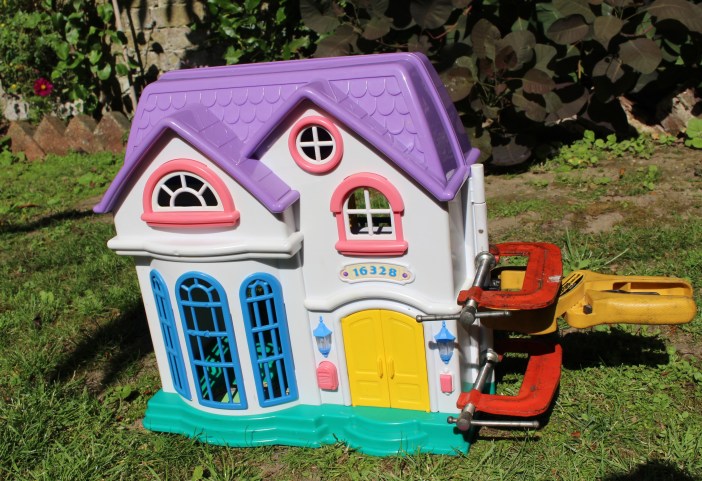
My mum had reported that the toy house (pictured below) had developed a case of plastic wall subsidence and had started to literally, fall apart.  Time for site clearance or wall ties?  Nah, just a few drops of glue and a dose of patience.

Make and model:  Generic toy (there’s no maker’s mark on it, it’s that good)

Fault reported: Broken hinge

Cost of replacement:  £haven’t a clue

Cost of parts:  £0.00

Hours spent on repair:  About 10 minutes

Tools needed:  3 X clamps

Sundry items: Some Gorilla glue

Repair difficulty:  1/10

IMG_9665
FixItWorkshop, Worthing, June’19, Toy House

Kids toys usually lead a hard life and many, sadly, have short lives.  I see loads of dumped toys at our municipal tip which could, with a little love, be fixed-up to be enjoyed once again.

With so much in the media about our collective love affair with plastics and how long the material stays in our environment and food-chain, I think it’s important to preserve what has already been made for as long as possible, for its original purpose or to be re-purposed.  That way, plastic things will avoid being sent to landfill, for longer.

The toy house in question is not a high-end product and the materials and finish used are not the finest available, but that doesn’t mean it isn’t fun to enjoy.  I mean, most of the windows open, the front door has working lights and the whole thing opens up to reveal a two-floor mini wonderland.  I mean, what’s not to like?

The opening up bit was the problem.  The main hinge that holds both halves of the house together had become semi-detached.

It would have been easy to call it a day with this one, but as my youngest daughter had recently taken a shine to it, I decided that all the broken hinge needed was; glue, some clamps and patience.  Gluing plastic is tricky as some glues react badly, depending on the type of plastic, which unless you’re someone who has Masters in Plasticology, is hard to work out for most diy’ers.  It’s a bit of trial and error and with this repair I decided to use Gorilla glue, rather than a 2-part epoxy resin as I had a bottle of that open already.  I’m afraid, it wasn’t very scientific with this fix

With the two halves of the hinge lined up, a dab of glue in the right places, I used three clamps, spaced along the hinge to hold it in place while it glued.

Now, this toy will always be delicate and will never be quite as strong as it once was, but at least it can now be enjoyed once again and more importantly, it won’t be going in the bin.