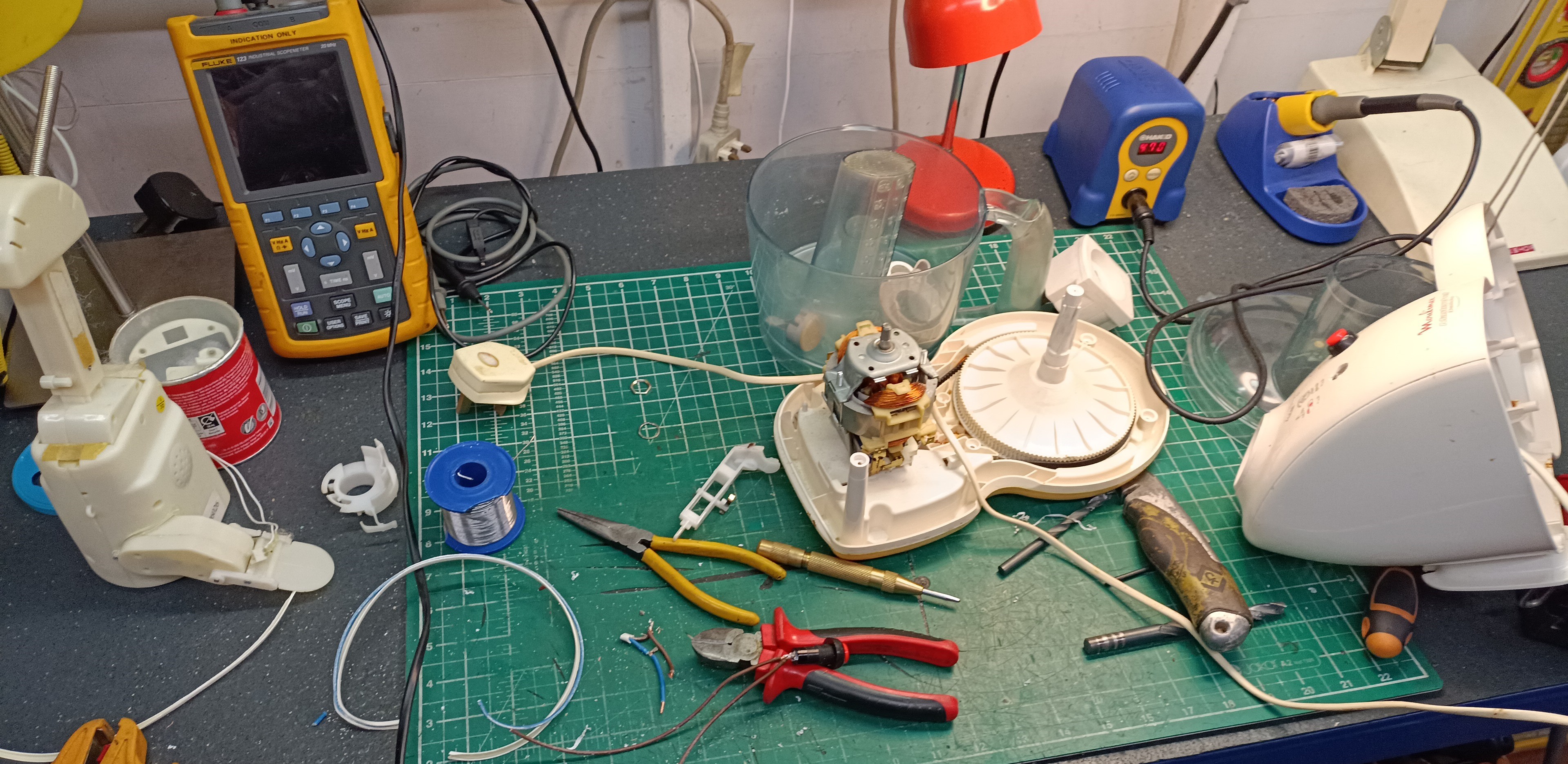
Moulinex magic in the workshop

Economically unviable, virtually no manufacturer support, practically zero second hand value. I’ve had worse machines through the workshop.

It’s not always about the cash…Better crack on.

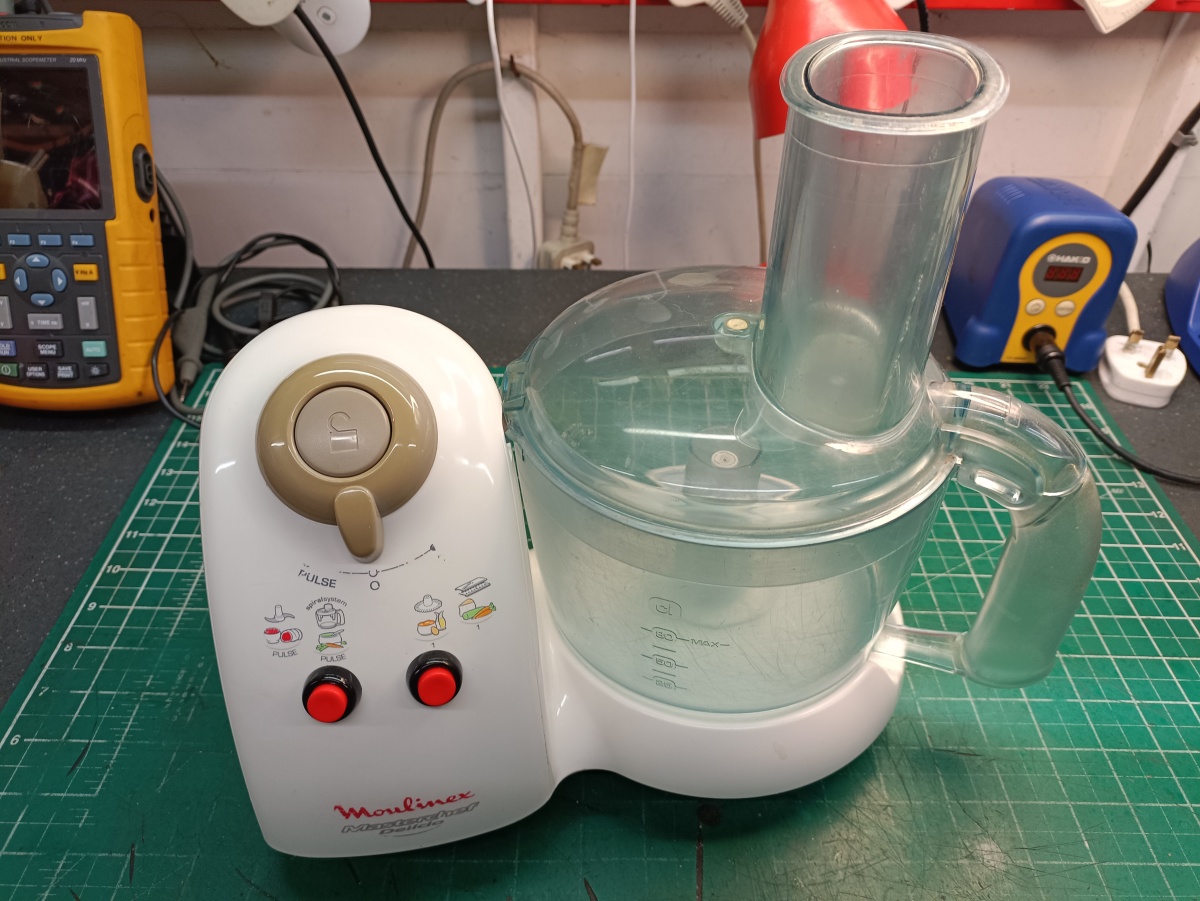
Make and model: Moulinex Delicio (food processor)

Fault reported: Broken switch

Cost of replacement machine: £40.00 – £50.00 for an equivalent

Manufacturer support (in the UK): 0/10

Cost of parts (for this repair): £ under a tenner, including all parts, but not labour

My time spent on the repair: 1 hour

Tools needed: Small knife, pliers, small screwdrivers, soldering iron

Sundry items: Cable, heat shrink

Cleaning materials: Silicone spray, contact cleaner, wipes

Repair difficulty: 5/10 (fiddly)

Beverages: 1 tea

Biscuits: 2 ginger nuts

Bad language: 2/10

It must start early.  An attachment to inanimate objects, a personification if you will, of machines and their mechanical feelings.  Maybe it starts with teddy bears, Lego people or Matchbox cars. Of course, deep down I know that machines do not have feelings, but I do sometimes find it hard to simply give in with something, and throw it away. 

I don’t think that it’s a coincidence that many classic cars, rescued from the crushers’ teeth, tend to have a ‘face’.  Indeed, designers can often hit on a million-seller, if they get the ‘face’ right.  Think VW Beetle, Morris Minor and Mini. Perhaps these shapes bring back childhood memories of a favourite cuddly toy, which might translate to them being taken care of better and cherished for longer.

Anthropomorphism, the attribution of human traits and tendencies, is something many of us experience, but us repair nerds seem to take it to another level.  I’ll have to think of a catchy name for it.

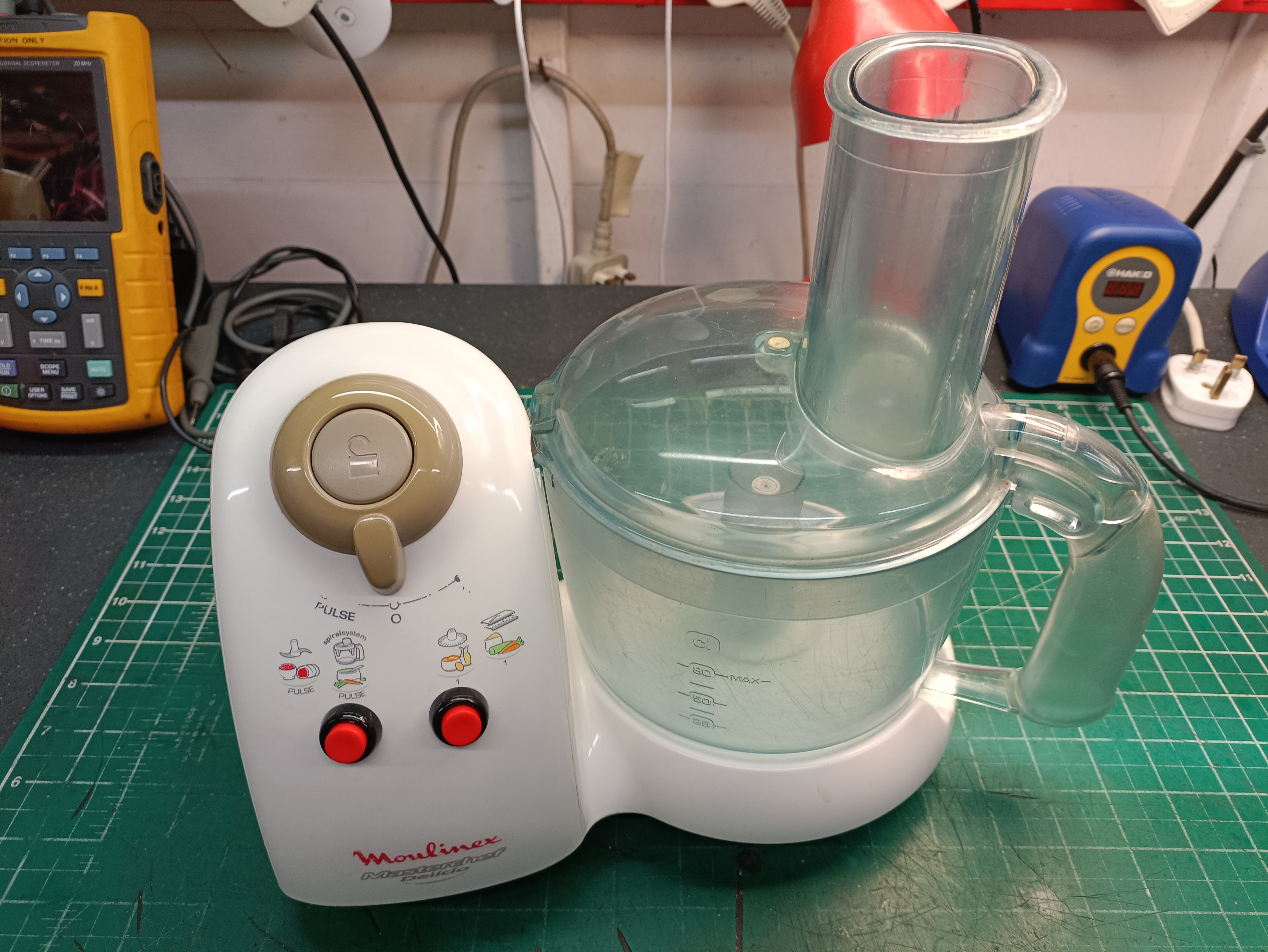
All this has reminded me about a recent such situation where my mum asked me if I could fix her broken Moulinex Delicio food processor, if it wasn’t too much trouble. 

The condition I ‘suffer’ from certainly doesn’t run in families and my mum was at first, ready to recycle the thing. But remembering all the cakes made with it over the years, especially ones made with my two daughters, seemed to put a different complexion on matters. So, I took the mixer away with me and put it on the workshop shelves, awaiting some attention.  At least there were other machines alongside, to keep it company.

Many food mixers tend to be large, heavy and bulky affairs which is OK for many, most of the time, but if you can’t manage the weight of something like an eleven kilo Kitchenaid Artisan every time homemade brownies are called for, something like this little light-weight Moulinex is ideal. So, two compelling reasons to keep the mixer; it’s lack of weight and some fond memories.

The problem was that the main on/off switch didn’t seem connected with the rest of the machine and to make things more complicated, the integral lid-lock was operated with the same button.  This part is therefore quite important since it might prevent one from shortening their fingers, by not allowing the spinning blades to ever come in to contact with wondering digits.

Now, I’m sure that this all seemed rather lovely in Moulinex HQ at the time, but small plastic switches connected with several thin moving parts combined with knocks and scrapes in a kitchen, is not going to end well.  As a matter of fact, Moulinex offered the offending switch assembly as a spare part until recently, so they must have known that the design was a bit iffy.  Sadly, I missed the boat and despite several attempts, I couldn’t find a replacement part anywhere. eBay revealed a couple of similar machines with faults, so it was back to the drawing board.

3D scanning and printing makes low-volume, but high-quality production a reality, and it’s really something that I need to get into, as I often have the need to copy rare, obsolete parts.  In time, I will. 

In this case, I did consider using one of the many online UK companies now specialising in this kind of thing, but the costs did not warrant it in this instance, so a new strategy was required.  I’ve spent many hours of my life browsing parts like this in catalogues, so I decided that a repair should be possible for under £10.00, using readily available, generic switches. Yes, that should be my budget challenge then, do the whole job for a tenner or under and since it was a family affair, no charges for labour!

The Delicio is a simple machine; no variable speed controller, just a single speed operation controlled either by latching or push-to-make switch.  It gets the job done quickly and without fuss. After a quick trawl of eBay, I opted for two small round, red button in black bezel switches with solder tags.  The switch series I opted for was available in push-to-make and latching, bingo!  And at £5.98 delivered, a total bargain.

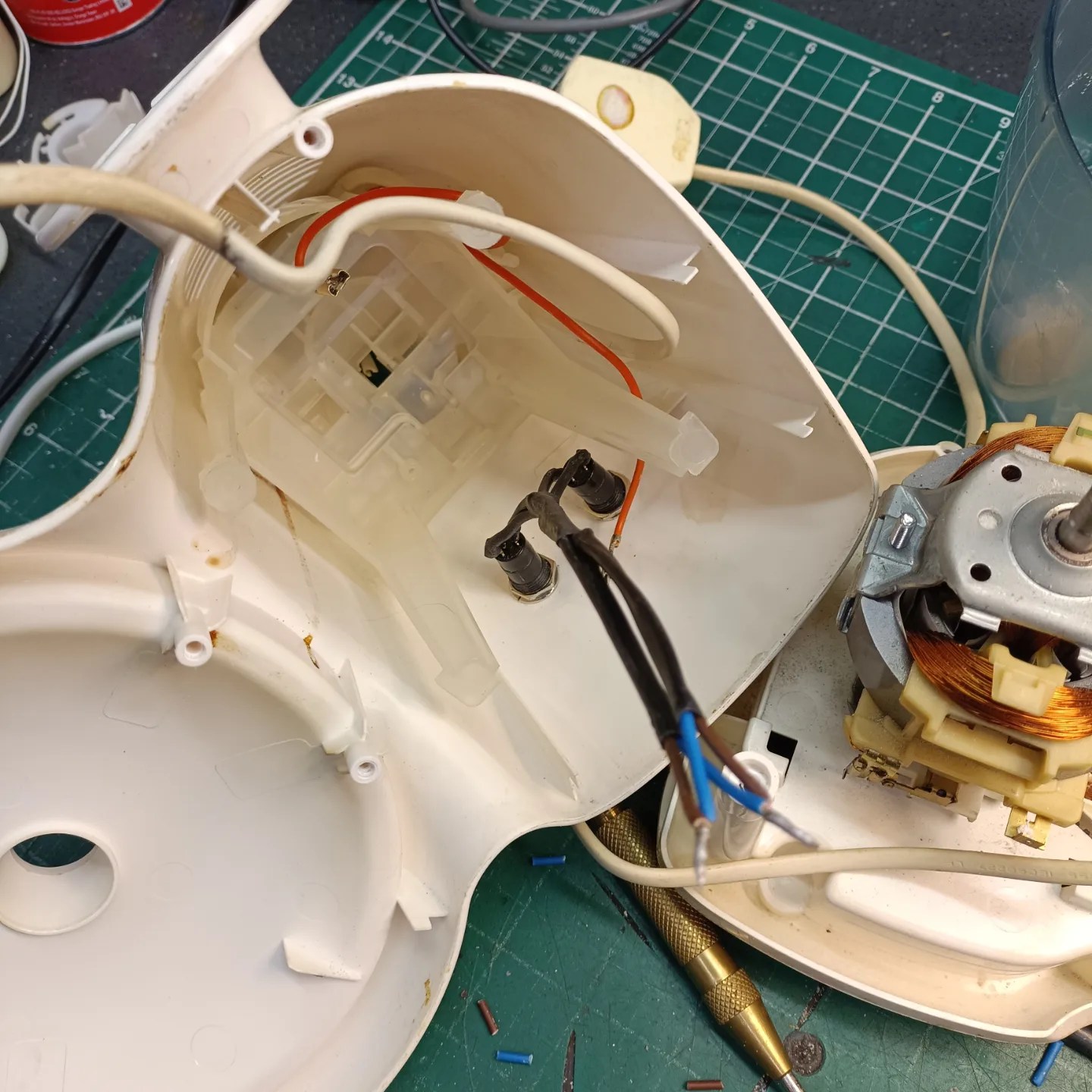
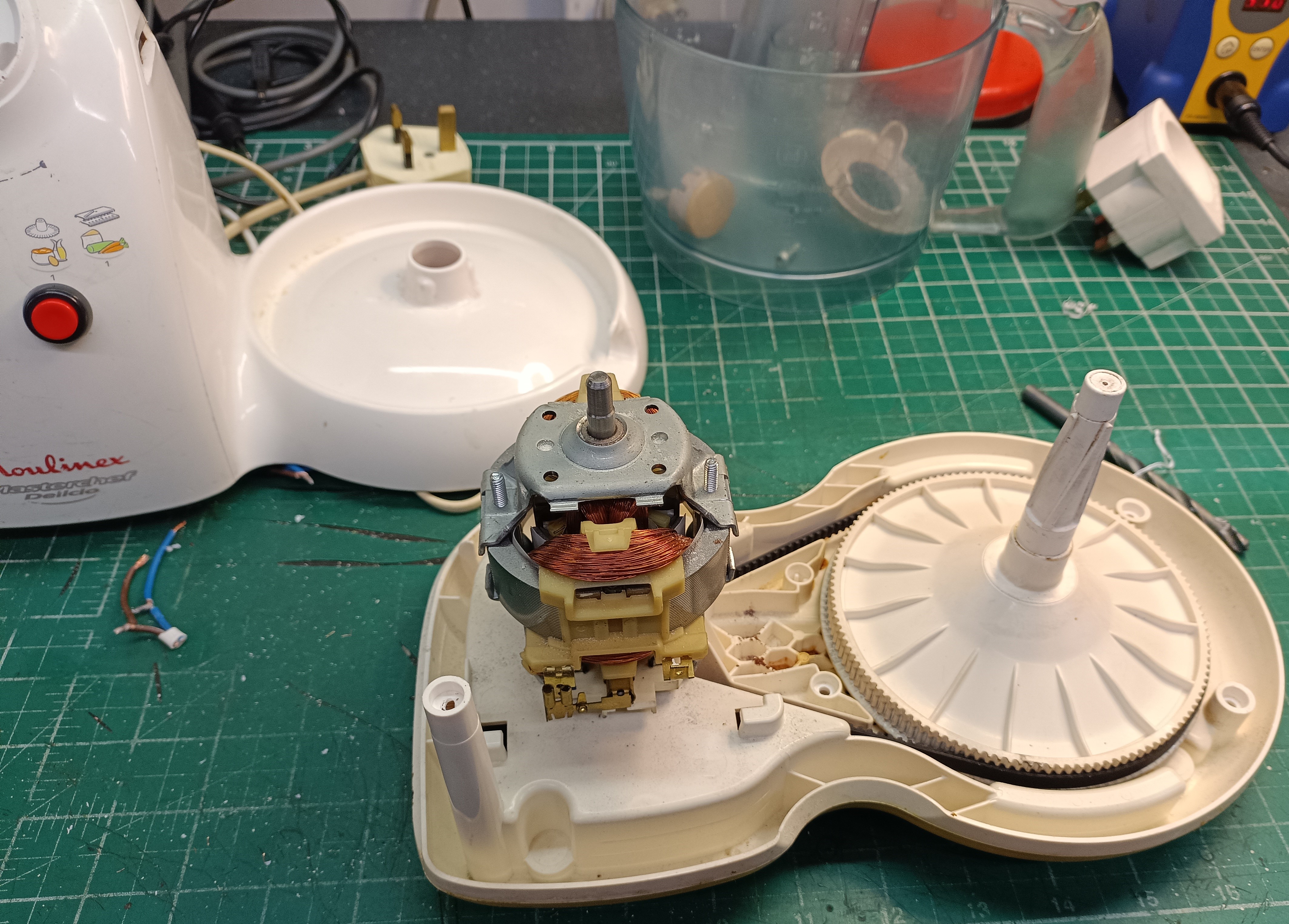
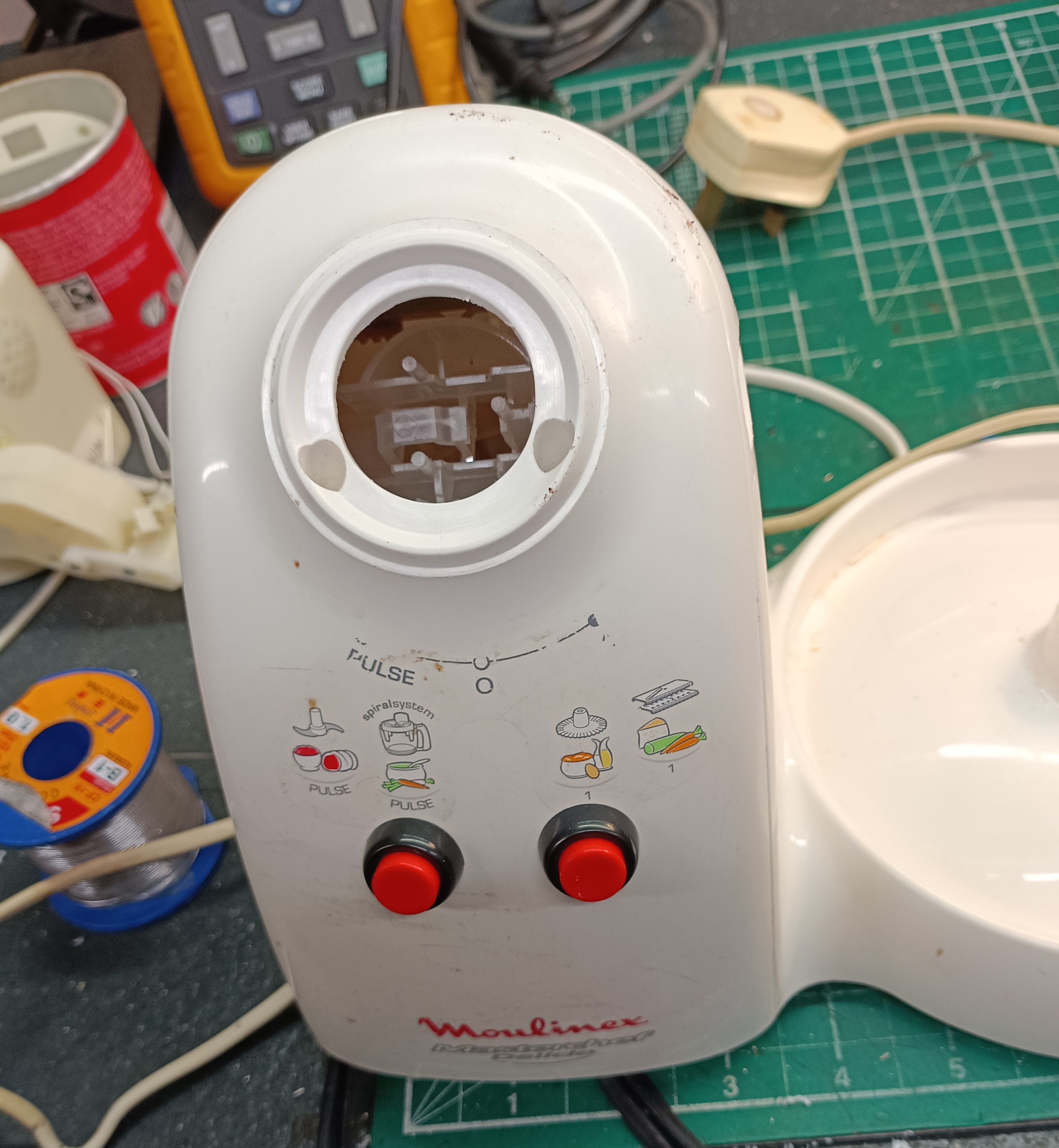
There’s something quite satisfying in selecting an item, taking it apart and then modifying it by way of repair, improvements or both, in such a way that differs little from its original design.  Subtle modifications or improvements, that the casual observer will never notice. If you look closely at the photos, I managed to line up the new buttons with the old printed text, to match the operation. Lucky.
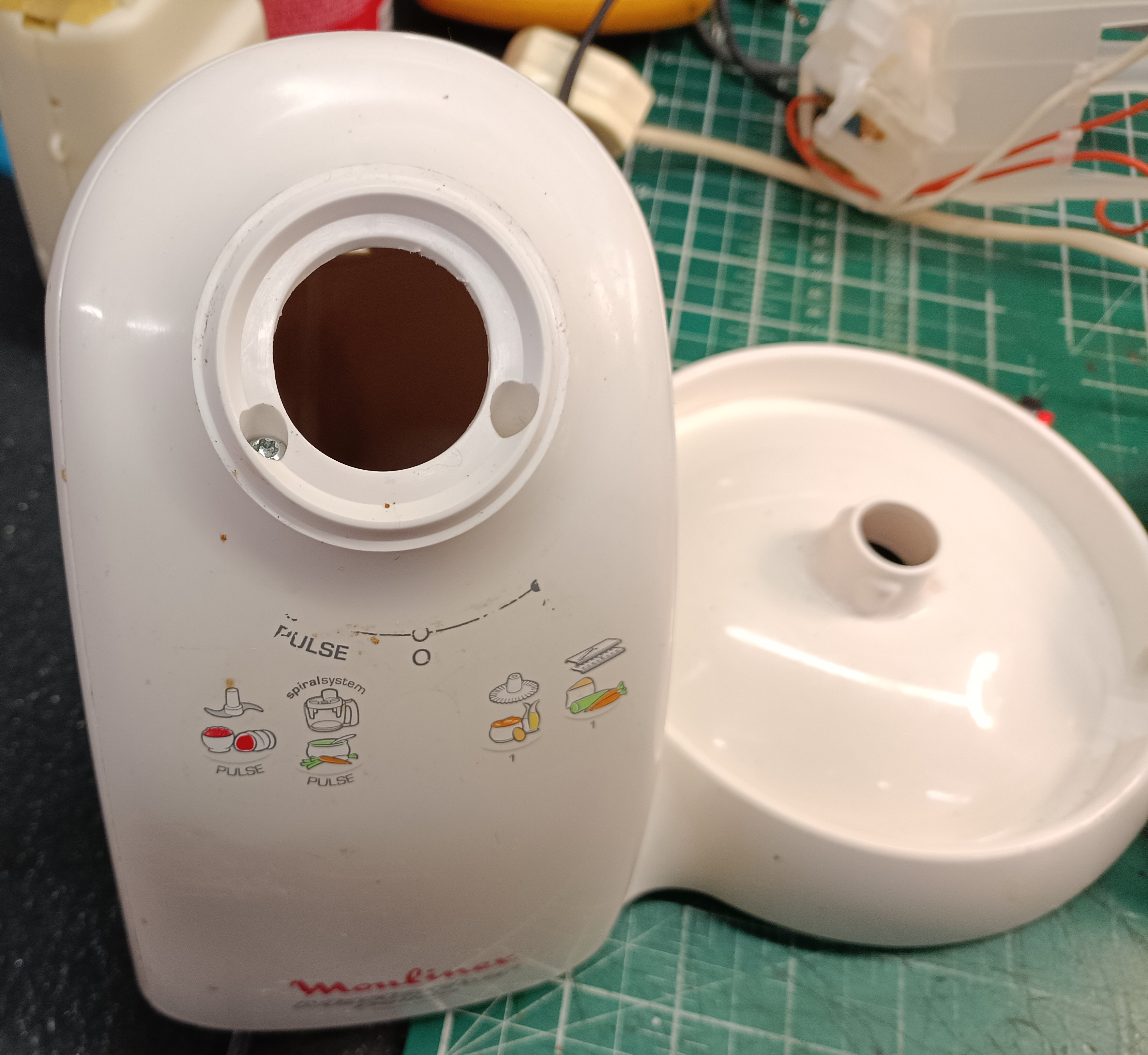
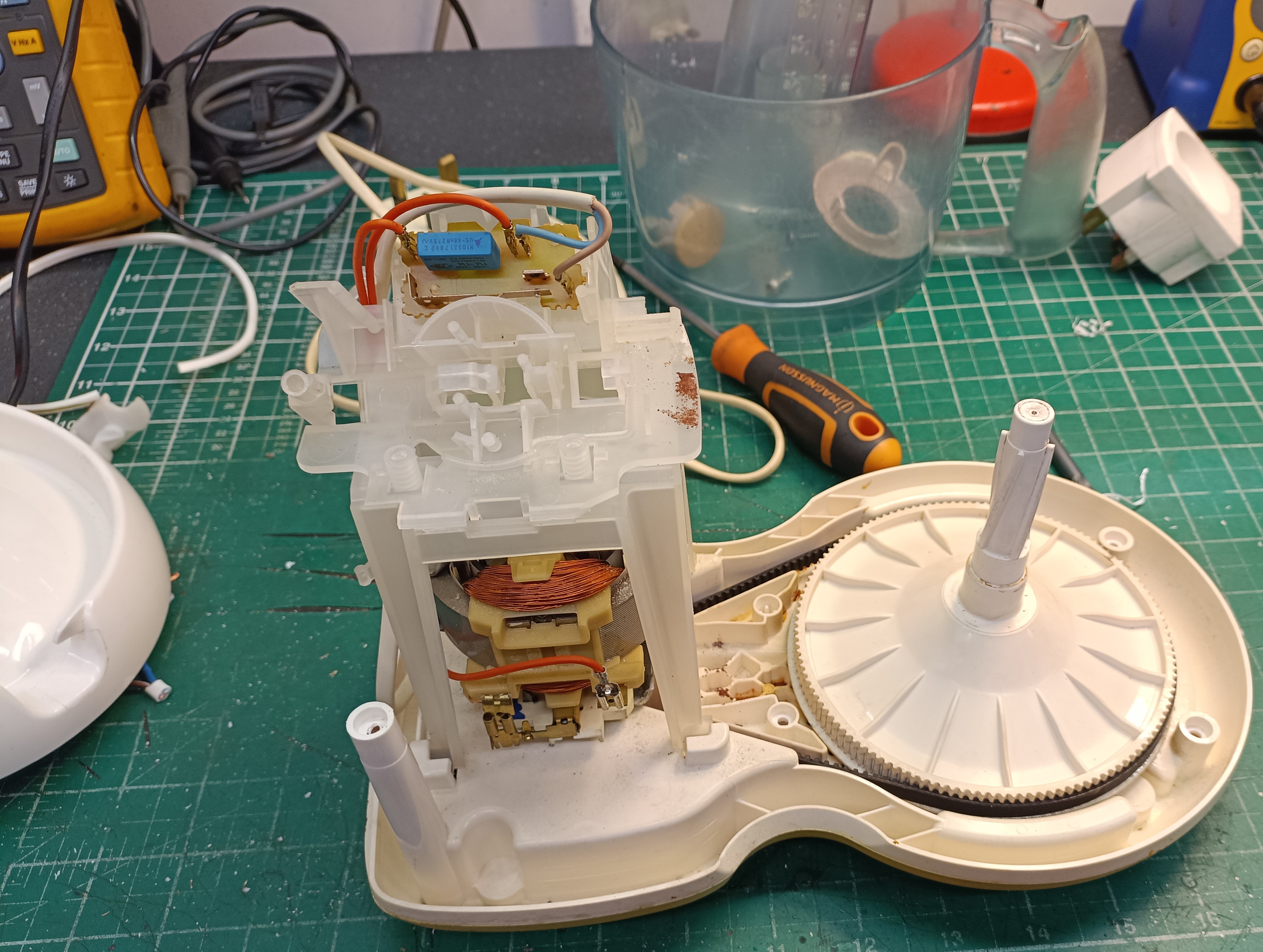
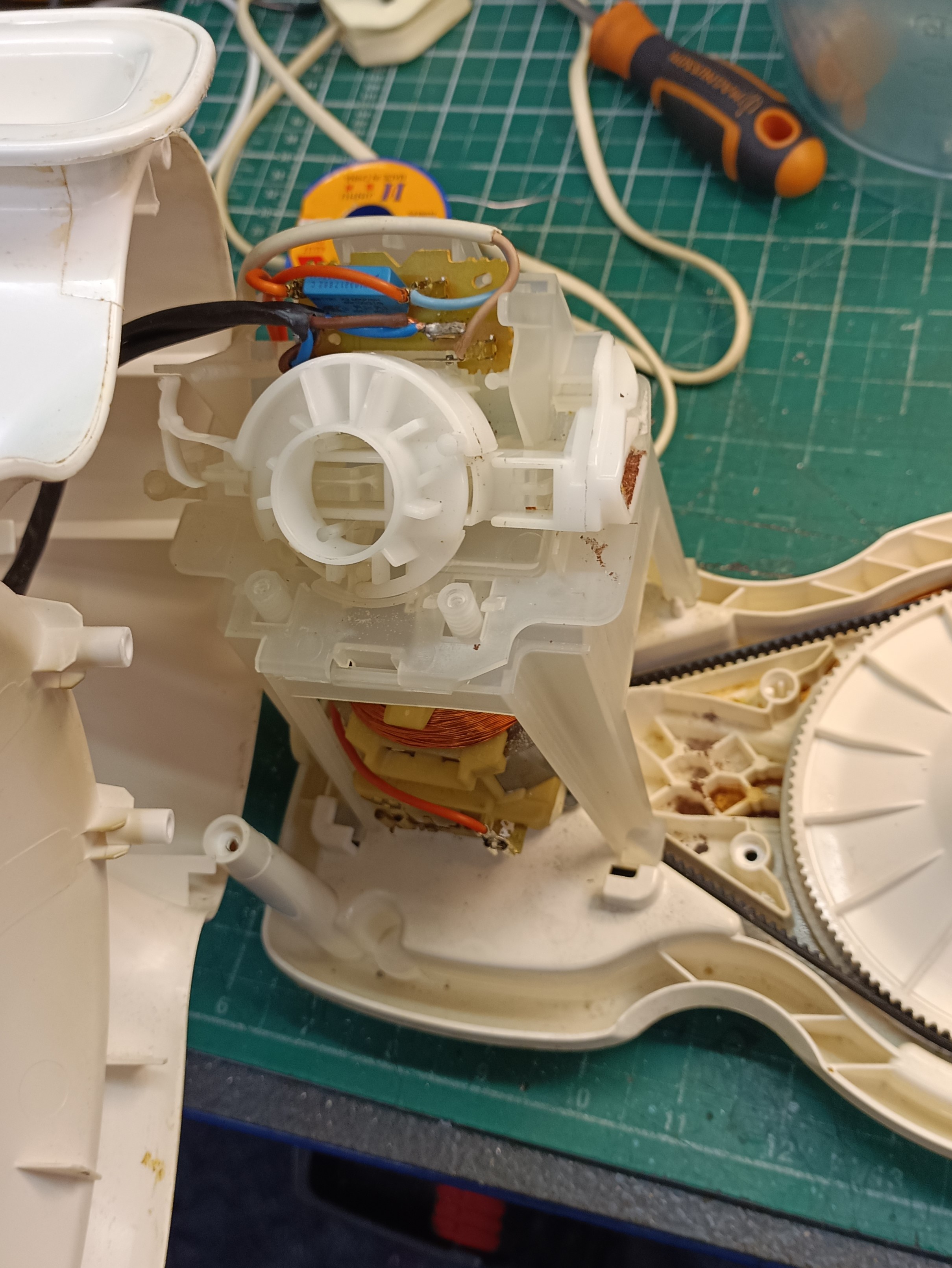
I won’t describe the repair in detail, suffice to say that I found a suitable location for the new switches in the machines’ chassis, drilled out the holes and then fitted them in place with the nuts supplied in the switches’ kit. No special tools required for this job really, just a selection of standard screwdrivers, some 0.75mm wire, heat shrink, cutters and a 12mm drill bit.  I already had some cable, I connected the new switches to the existing wiring harness, by-passing the original.

I was able to retain the original switches’ interlock by keeping the original switch in situ with a little epoxy resin.  This ensured both safety and the original aesthetic.  See what you think in the photos. I was quite pleased with it.

I completed the repair within an hour, which I almost forgot to report, included a wipe over and polish. And I managed it on only one cup of tea with a couple of my favourite ginger nuts.  Oh, and I didn’t go over budget. Any chance of a Vicky sponge, mum?!

Gaggia Classic machine wakes up to smell the coffee.

A Gaggia Classic Coffee Machine repair…

A simple repair…. That’s what I thought when a friend asked if I could look at his Gaggia Classic Coffee Machine, which had developed a nasty little leak when in use.  The coffee wasn’t all that good either, due to the lack of pressure available, caused by the leak.  In short, it needed attention.

IMG_3616
FixItWorkshop, Oct’17, Gaggia Classic Coffee Machine, with a leak.

The owner had already bought a repair kit consisting of the main seals/ gaskets that commonly fail, so I thought no problem, take to pieces, replace seals, happy days.  Er, not quite.

Once I’d stripped the machine down, pretty straightforward on these machines, the bare parts were exposed, which revealed the problem.  After being fired up briefly, not to make coffee I’d like to point out, water could be seen escaping from the boiler unit, a alloy bodied lump of metal, split in two halves, held together by 4 screws.  The boiler, as the name suggests, heats the water up with one heating element  and creates steam for the steam wand, with another element, all part of the same module.

After separating the boiler halves, I traced the leak to a faulty gasket, but crucially, one side of the mating faces was heavily corroded and unlikely to re-seal with a new part fitted on its own.  Remedial action was required.

This model is a few years old and a replacement boiler is still available on a few websites and prices vary from £40 to £60 at the time of writing, so at that price, starts to make the cost of repair unviable.

I decided that the face with the corrosion had enough material to withstand loosing some, so went about sanding the worst of the corrosion away before gradually moving on to  smoother and smoother sandpaper.

Because Gaggia Classics are fairly common, I decided to video this repair process as I suspect the corrosion affects many machines with age and just fitting a repair kit won’t cure the problem on its own.  See below.  I hope it helps anyone else with the same machine facing the same problem.


Once I was happy with the new finish, I fitted a new gasket and reassembled the boiler.  After putting it all back together, I purged several tanks of water through the system to remove debris, before attempting a cup of coffee.  Once filled up with my favourite Lidl coffee, the machine performed well once again with no leaks and the end product tasted great.

Cost of a new machine:  £249.00.  Cost of repair:  £4.50, plus time.


Cheap Tesco DVD player

This cheap and quite frankly nasty DVD player came in as a dud unit.  No lights on, nothing.  To be frank, not even I thought it would cost in to repair it, since the owner told me it didn’t cost more than £20 in the first place.

Never mind, off with the cover and a quick poke around with the multi-meter revealed no power coming from the transformer within the unit.  This converts high voltage from the mains to lower, safer voltages for the player.  On this DVD player and many others I’m sure, the internal processes are broken up in to ‘cards’.  On this unit, there’s a power card, a logic card for the motor drive and a video card for the picture.  Closer inspection of the (cheap and horrible) power card revealed several faulty components, which had failed catastrophically.  At first glance, I suspected that the cost of replacing individual components wouldn’t cost in and that sadly, this DVD player might be headed for the bin.

Fear not!  With the power of Amazon, I was able to find a generic suitable DVD power card via China that fitted, with a small amount of wiring for £5, delivered.  Job done.

Here’s a video of the fix.


Dyson DC33 repaired in the workshop

A Dyson DC33 gets treated to a new motor

Conked out Dyson DC33

This Dyson presented with a pretty terminal case of ‘no go’.  The owner had run this relatively new machine in to the ground with little maintenance so it was little wonder what happened next.

Whilst in use, the machine spectacularly went bang and tripped the main fuse board of the house.  The noise and following smell was quite something I was told.

The owner had nearly rushed out and bought a new machine and was budgeting between £300 and £400 for a replacement.

IMG_3207.JPG
FixItWorkshop, Worthing, Feb’17. Dyson DC33 motor replaced

I was glad I could help since I was fairly certain I knew what the problem was without seeing it.  After giving the cable, switches and casing a visual inspection, it was time to delve deeper.  The filters were in poor condition and the general smell of it indicated that overheating had been an issue, probably leading to premature wear on the motor.

With the motor out, the true extent of the damage became apparent.  Both motor bushes had worn away to nothing and part of the brush holder had broken up inside the motor, probably while it was running, causing the noise.

I suspect that the owner had ignored the warning signs of burning smells and occasional cutting out (as the thermal overload circuitry performed its fail-safe role).

Being only a few years old, the owner had a couple of options; either replacing the faulty part with a genuine Dyson replacement (a very reasonable £40) or pattern motor kit with filter pack for under £25.  The owner chose the latter on the basis of the machine’s age and the fact that both filters in the machine were also ruined.

The job took an hour, including testing before the machine was back performing its cleaning duties once more.

A note to all vacuum cleaner owners (that don’t take bags):  Keep your filters cleaned every couple of months or so.  Your machine will last much longer if you do.

fixitworkshop.co.uk repair service and blog

The diary of a tinkerer: Stories, advice, tips and sometimes the odd failure to inspire your own repair.

The diary of a tinkerer: Stories, advice, tips and sometimes the odd failure to inspire your own repair.

Update July 2023:

Matt Marchant is also appearing in Retro Electro Workshop, on Yesterday Channel and UKTV Play, alongside Rob Howard and Shamil Joomun.

  1. I write about things I fix and even those I can’t
  2. I offer a repair service for a small fee
  3. I occasionally volunteer at Repair Café and similar events in Sussex and surrounding area

The tinkerer at FixItWorkshop.co.uk is Matt Marchant

I love repairing things and hate throwing things away that can be saved. There’s far too much waste in the world.  Many things that can sometimes appear unrepairable, are indeed repairable, with a little tinkering. I want to encourage people who doubt their own ability to repair their things, to give repair a go.  After all, if ‘that thing’ isn’t working, grab a screwdriver, take it apart and investigate.  What have you got to lose? I’ve been tinkering with bikes, cars, coffee machines, toys and vacuum cleaners and pretty much anything that can be dismantled since I could hold a screwdriver.  I’ve worked for BT as a senior engineer, and I’ve studied design, business and electronics. Enjoy the repair diary of a tinkerer.  I hope it gives you a nudge to repair your broken thing.  If you can’t, I might be able to help.

Scroll through articles on repairs, views and news.