Inside The Real Repair Shop 13

This time, Matt discusses false-friend eco products…

One lives and learns and if there’s one thing I definitely know now, it’s that the good people of Worthing (at least) really do love their bread makers! 

Back in August, in the spirt of light-hearted environmental consumer advice, I offered my thoughts on what I deemed to be ‘pointless products’ and crumbs, did I rattle a few bread bins!   Almost 4 amiable souls took the time to share their thoughts on the subject too, extolling the virtues of their trusted kitchen friends. Some even shared a few photos of their finest loaf creations; the most exquisite that I have ever seen, it must be said.  At yeast, most of you saw the funny side I think, but others thought that I was being a little childish. So this article will be a little more proven, I hope.

To those who rose-up, a little browned-off by my distaste for these machines, I say this; it was only a bit of half-baked fun.  You’ve really got to roll with it!

Turning to more serious matters. When it comes to our current environmental issues it seems more than ever that some campaigns, propaganda, even official advice, must be taken with a pinch of salt.  Of course, I too am a consumer of online adverts, original articles and general broadcast media and I find myself increasingly starting to doubt that one can have one’s cake and eat it. Right, enough of the baking buns, sorry, puns.

Despite the typical British Summer we’ve been enjoying here in the UK, it’s been Armageddon on the continent.  And, if you’ve been watching any mainstream news these last few months, you would have seen European reports showing newly designed weather maps with splashes of ferocious oranges, blood-reds and deathly maroons, possibly designed by The Terminator, telling us the World is boiling.

Is it all part of a ‘big plan’ to discourage would-be travellers from taking polluting flights to far-away, warmer climes? Are all the ‘wild’ fires, naturally occurring? Whatever your views on climate change, it would seem that broadcast messaging is nudging us to stay home, stay indoors and don’t move. Remind you of anything? 

Anyway, assuming you’re still with me (thanks by the way), I certainly don’t claim to have expert knowledge on environmental change, CO2 emissions, the latest breakthroughs or Government policy. However, I do have a sprinkling of knowledge on most of these things, enough to say that we have a global population of over 8 billion humans (and rising), many living in or gaining ‘Western lifestyles’ (food production, transport, devices to state a few), so it doesn’t take the mind of Einstein to realise that we’ve had an effect on our environment since we began farming, and that effect is probably speeding up in a way that evolution hasn’t seen before. So, before you rush out to buy the latest energy saving, connected device made far, far away, I urge you to consider something else too.

In The West, we import thousands of tons of electrical items, well anything with a plug on it, from The Far East.  Phones, tablets, toasters, kettles, pop-corn makers (to name a handful) are all made thousands of miles away, and are sold at affordable prices for us to enjoy, the very next day if you like! Also, you can’t seemingly buy any of these things without it being Internet connected, not even a bread maker! This is good news for retailers, but are items made at a price (not quality), in far-away, out-of-sight factories, shipped all around the world, really a good thing for us?  Is the latest ‘online ready’, eco-device, always better for the environment? Is it ever a smarter, greener choice to ditch what you have, in order to do the ‘right thing’ by our planet.

Combine the complicated product route to market ‘journey’ with a short life expectancy (or very planned obsolescence), with a lack of in-country repair support, and the whole thing starts to sound like an environmental disaster. Doesn’t it?  Some say that the average smartphone’s life is comparable to a pair of jeans, scary when you think about it. And what about the giant computing power; Petabytes of storage, precious metals, the air conditioning, and land that the data warehouses around the world use to make all the connectivity possible? It’s all starting to sound a bit bleak, really. 

Years ago, when I was a young BT apprentice, Dave, (a wise colleague and friend of mine) once said that the trouble with the world now is that it’s ‘gone global’. We all laughed at the time, but now I’m older (and maybe a little wiser), I actually see what he meant.

Our thirst for the latest and best has generated a throw-away culture for sure, and if we carry on, deep down, we all know where it’s headed.  But the tech stable door is well and truly open, and you, nor I, would favour heading back to 12th Century lifestyles. No one I know would want to turn off YouTube, Instagram, TikTok and Twitter (to name a few).

Social media is a great way to keep in touch, but don’t forget how the platforms pay the bills. As a brand, or if you have the cash, social media gives virtually instant connectivity to the minds of folk most likely to part with their hard-earned money. It’s a powerful conduit to nudge minds, to influence behaviours and to extract pound from your pocket. Judge me as you will, but I suspect that many people, with a specially targeted, guilt-inducing, tear-jerking, warm-hug, ‘we’ll make it all better again for you’, advert could be made to ‘do the right thing’ and buy just about anything today! Dial-in some world-poverty, environmental damage, and little war, and buyers are putty in the brand’s hands. As with all sales pitches, there’s always a catch… don’t believe the hype!

Back in workshop-land this month, it’s been a right-old assorted bag of customer requests!  I’ve had quite the mix of items in for repair. Lamps, toys, vacuum cleaners and a CD/ radio to name a few, but despite the variation, there are common themes that link all these items together, in a good way.

Spares were easily available, the item’s design allowed for disassembly and reassembly and I could see individual components with my own eyes! The technology was not out-of-date, it didn’t need an upgrade and it was all still as relevant today as it was at the time of purchase.

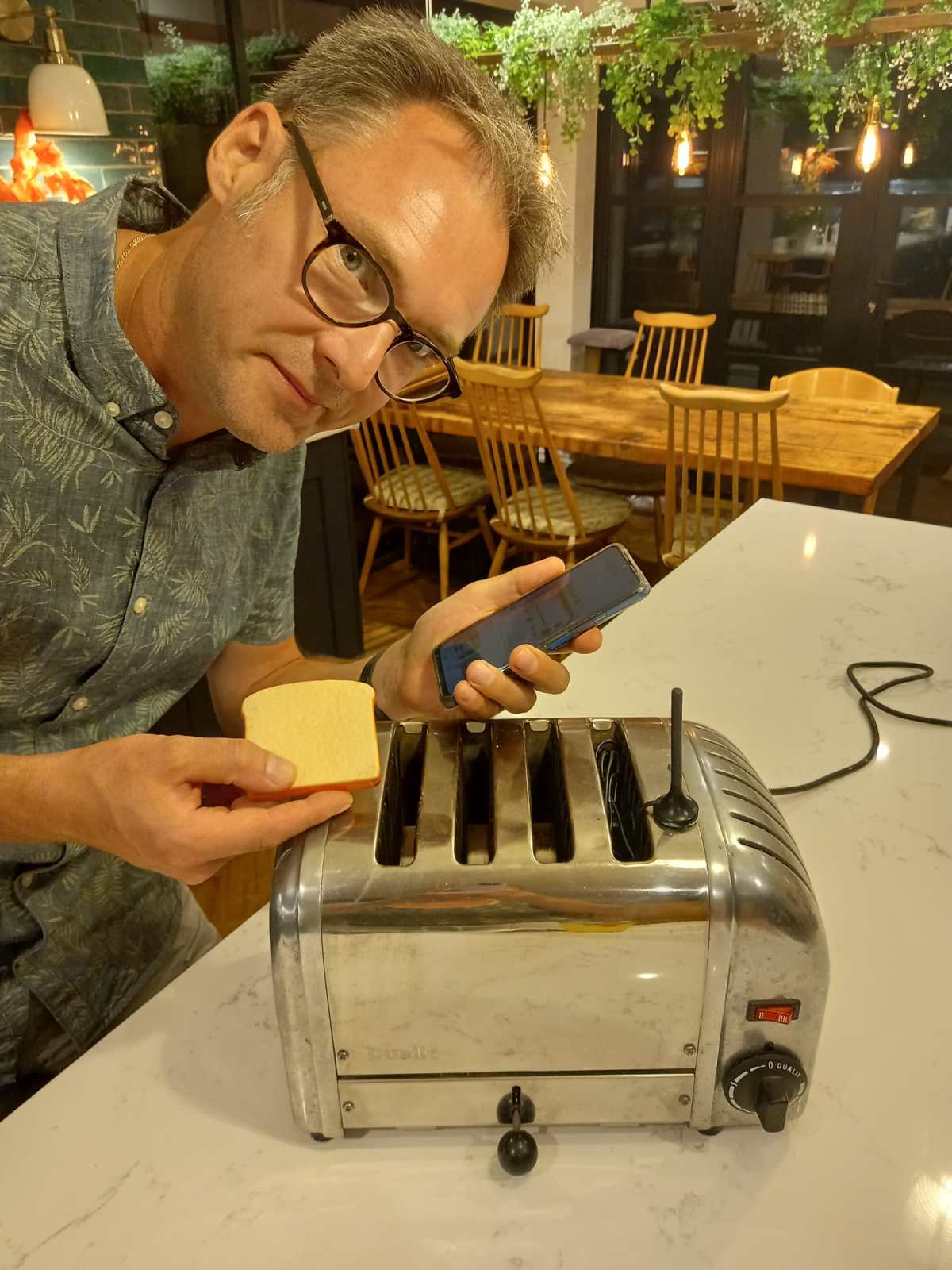
A good talking point with friends for sure, but a ‘connected toaster’ that links to your smartphone is probably not a good idea. The Internet bit inside will no doubt fail before the rest of the appliance, and how many WiFi devices do you think will exist in even 5 years? It’s therefore likely that something like this probably won’t last longer than a smartphone. And in my experience, these things are rarely supported by the manufacturer in terms of spare parts.  If they have any kind of post-guarantee support, it’s usually not economically viable to bring the item back from the brink.

How to wrap this up then? More than ever, it seems, we all lead busy lives and the vast majority of us are connected to various platforms via our phones, at some time. Indeed recently, on our family holiday this summer, I saw many people from all countries, busy on their phones, by the pool, at mealtimes and even in the sea, throughout the day. Now, I’m not saying that I don’t check my phone, but social media can be like a sugar-rush, addictive for many, and advertisers know this. This means that now, more than ever, it’s possible to link your likes, news, political interests, friends’ network and viewing habits to new products likely to match your spending profile. 

If you’ve watched environmental content on YouTube, or have bought solar energy for example, Google knows that you’re likely to be concerned about climate change. Many of us are.

I’m an aspiring optimist, and as a big believer in new technology and global, visionary projects, if delivered by our best engineers, I think we can at least help curb the negative effect we’re all having on the planet.

Eco-inspired, connected-products can make us feel like we’re doing our bit, but clickbait purchases of short-sighted lithium powered gadgets and cars, with limited or no support, can only be bad news.

If it works, and is useful, don’t chuck it out.  Maintain your stuff and enjoy all the life an item has to give.

The most environmentally sustainable and cheapest products out there, are probably the things you already have.

Matt.

PS, don’t forget to check out Retro Electro Workshop on UKTV Play.

Inside the Real Repair Shop 9: Do we ever own our own stuff?

Matt takes a shallow dive into the notion of stuff, ownership and value. Something ‘light’ then.

You may recall adverts on tele and in the glossies a few years ago from prestige watchmaker Patek Philippe, often featuring a father and son relationship, implying that one never really owns one of their watches, but merely has custodianship of it until it’s passed on to the next generation.  That’s great for the son or daughter inheriting a posh watch at the appropriate time, but please spare a moment for the poor sod, still paying for it!  Anyway, this all got me thinking about our relationship with stuff.

I live in deepest West Worthing, Sussex, UK and we’re surrounded by charity, house clearance and general second-hand shops everywhere, amongst the upmarket coffee shops and tiny ‘living room’ pubs.  Could be a lot worse, I guess!  To ‘Magpie Matt’, it’s brilliant news, as I’m always on the lookout for interesting items, especially if they look like they can do with some tender loving care.  Don’t you seek out broken and damaged items?  No, just me then.  One can save a lot of money by buying second-hand, but it’s only good value if you really need it.  The downside is that I often return home with ‘a thrift shop bargain’ when I only popped out for a pint of milk.  Great for the local economy, but, I fear that our home office has become a museum for too many ‘interesting items’!

Matt with his sandwich toaster.
FixItWorkshop, Worthing, July’22 – vintage items and a relic(!)

There’s a backstory for every item for sale, and I often wonder if it would be interesting to list the narrative behind every charity donation, a bit like we see at those auctions for famous paintings and jewellery, so that the customer might form more of a connection with the thing. Probable madness and an administration nightmare of course, but indeed we expect it if handing over money for a genuine rare classic watch like a Rolex – it’s all part of the experience. Every pre-loved item has something to say, good or bad.

Ditching the ‘perfectly OK and fit for purpose’ stuff we already have is the issue I think, and in these increasingly cash-conscious times, can we do more to love what we already own to save money and the planet? It’s not always easy though it is as it takes time, care and, dare I say it, cash to preserve things for longer. Of course, I don’t want to come across like a preaching bore (insert objection here) – I do buy new stuff, I live in the real world, but I’m trying to love some of the old things I have for longer, with the scratches, faded colours, missing buttons, maybe it’s an ‘age thing’?

The more times that you ‘patch something up’, get something repaired, use something past its high-fashion status, you’ll form a stronger bond with it over time, believe me.

On a slightly different road, many of the things you threw away years ago are very much still here on Earth.  Think about the now collectable items you saw as junk at the time, but are now worth a mint, probably languishing in the side of a hill!  Until relatively recently, the world of waste was a murky business and, in many ways, it still is – and that’s a subject for another day!  So, unless you took the time to dispose of your old vacuum cleaner or hairdryer at a specialist scrap dealer back in the bad old days, the chances are that it still exists in some form, buried deep in the ground somewhere.

Remember Time Team on Channel 4 in the 1990s with Tony Robinson?  I can see a new version of that show in years to come, featuring the modern equivalent digging sections of landfill sites, unearthing an abundance of 20th Century, often perfectly preserved, now ‘classic’ items.  You never know, maybe one or two will still work?

So, where am I going with all this? Well, it’s the same old message I guess really. Hang on to your stuff, look after it, repair it if you can and love the signs of wear and tear.  This will give the item, however cheap, expensive, rare or mass-produced more worth, whether sentimental or monetary. When the time comes and no matter how ‘grand’ the thing, pass it on to someone else who will cherish it too, after you’re done with it. You never know that one day, your faded and battered sandwich toaster be serving up a slice of nostalgia as well as a yummy retro treat in 2060!  What a thought!

FixItWorkshop, Worthing, July’22, toastie anyone?

Bagpuss, oh, Bagpuss, oh, flat battery cat puss…

A much loved soft toy gets new (apparently non-replaceable) batteries…

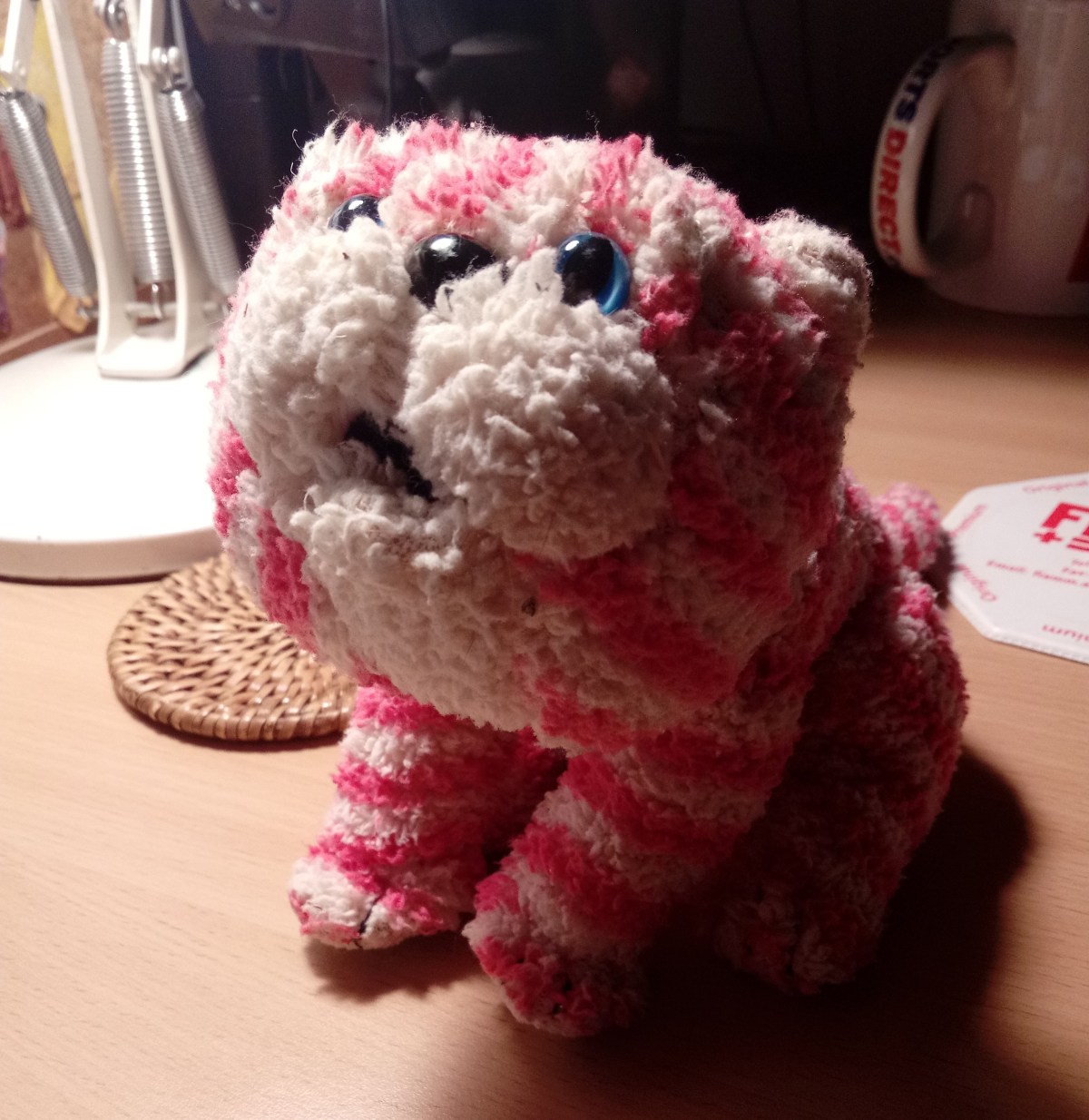
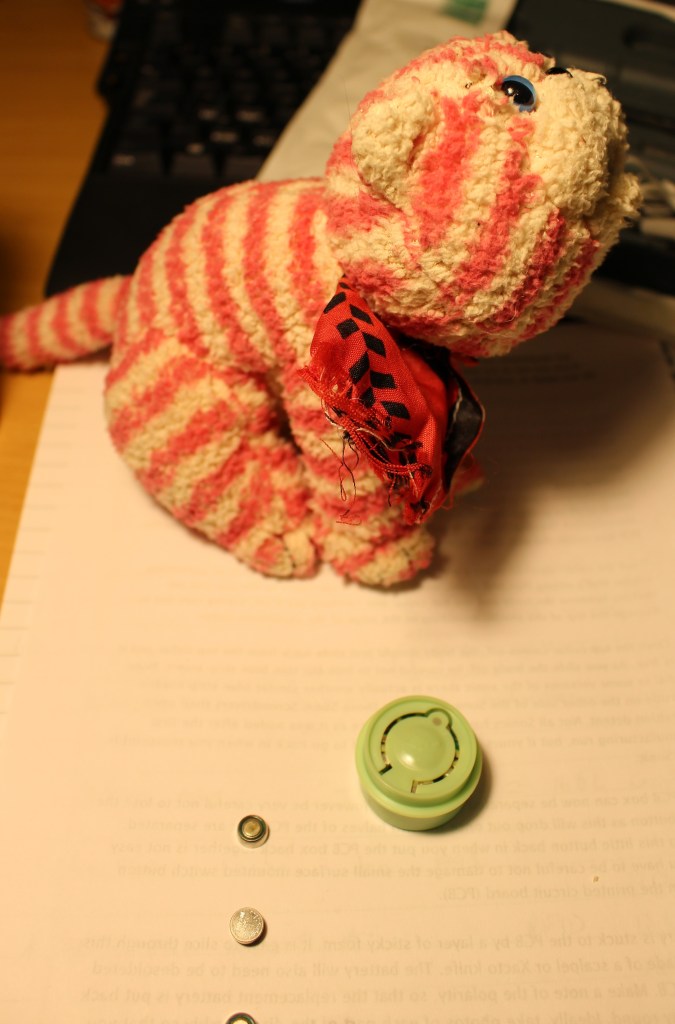
For a change, this one’s just for me. I don’t often write-up repairs on my own items, but I couldn’t resist dedicating a few words to our beloved Bagpuss soft toy. He’s been around in the family for a good few years and when my youngest daughter decided to dust him down and make his voice work, I wasn’t surprised when no noise came out. Our Bagpuss has an electronic voice box which is activated with a gentle squeeze around the belly. After many years and many hugs, the batteries had gone kaput.

I grew up in the 1980s and remember watching Bagpuss on BBC1. I must have been about four I guess. Bagpuss lived in a shop window, a shop that was owned by a child, a shop that didn’t sell anything. Emily, the shop owner, would bring Bagpuss and friends broken objects to restore and explore. The story would begin once Emily had left and Bagpuss woke up…

Well, this Bagpuss wasn’t waking up anytime soon and to make matters worse, the batteries within appeared to be non-replaceable. Well, that’s not very good is it? So, in the spirit of the original TV program, I decided to take an unpicker tool to the cat and carefully dismantle his seams…See how I get on.

Make and model: Bagpuss talking toy

Fault reported: No talking, no sound

Cost of replacement machine: £10.00 if you can find one

Manufacturer support (in the UK): 0/10

Cost of parts (for this repair): £1.00

My time spent on the repair: 1 hour

Tools needed: Needle and thread, small flat screwdriver

Sundry items: None

Cleaning materials: Contact cleaner

Repair difficulty: 2/10

Beverages: 1 tea (as usual)

Biscuits consumed: No biscuits, just a slice of chocolate cake (I think)

There’s always that moment with a fix like this when you think; shall I just leave it as it is? I mean, it was still a loved toy right? But as my regular reader will know, that’s not quite how we do things in the workshop. Things must work correctly and if there’s a reasonable chance of success, then the repair must go on.

So, here it goes.

I knew that this Bagpuss ran on batteries, but had no battery compartment to gain access etc. He’s a soft toy, made from a mixture of polyester and cotton fabric, which is all neatly stitched together. All I could do is roughly locate the sound box within his chest and neck area and then chose a suitable seam to unpick, in the hope that it would allow me some access to the box without causing too much damage.

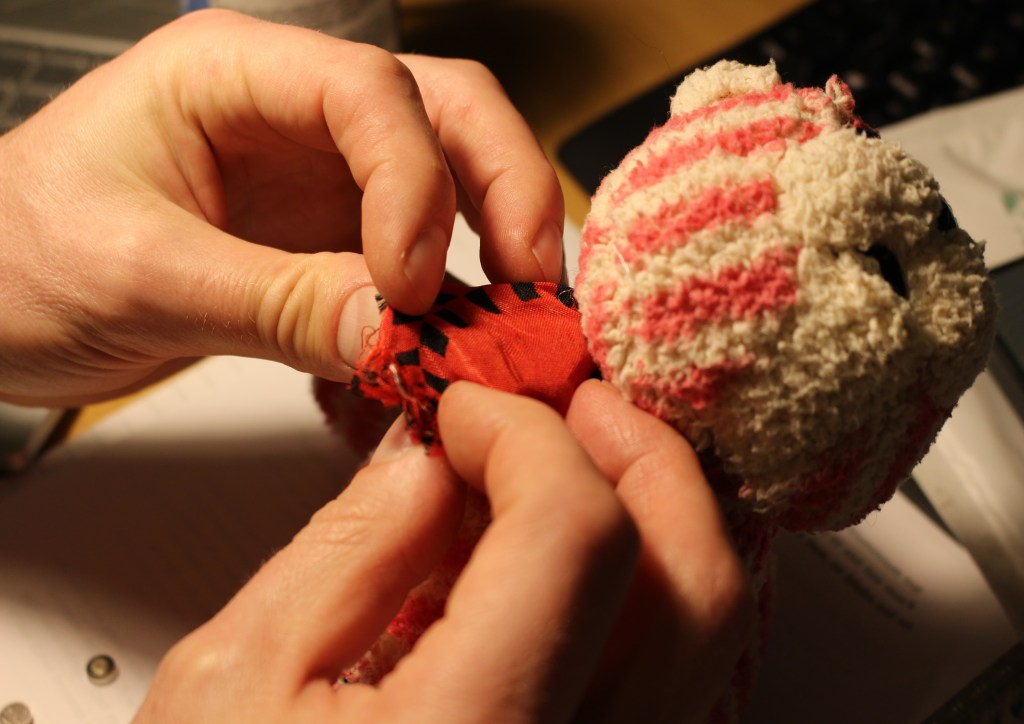
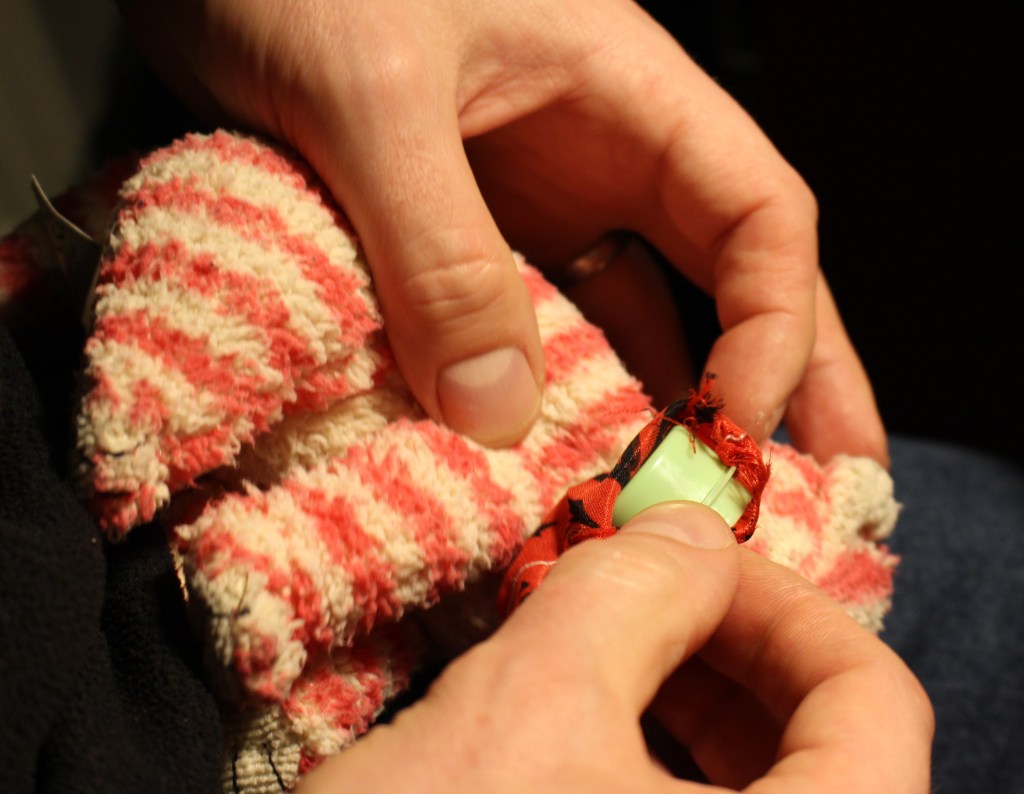
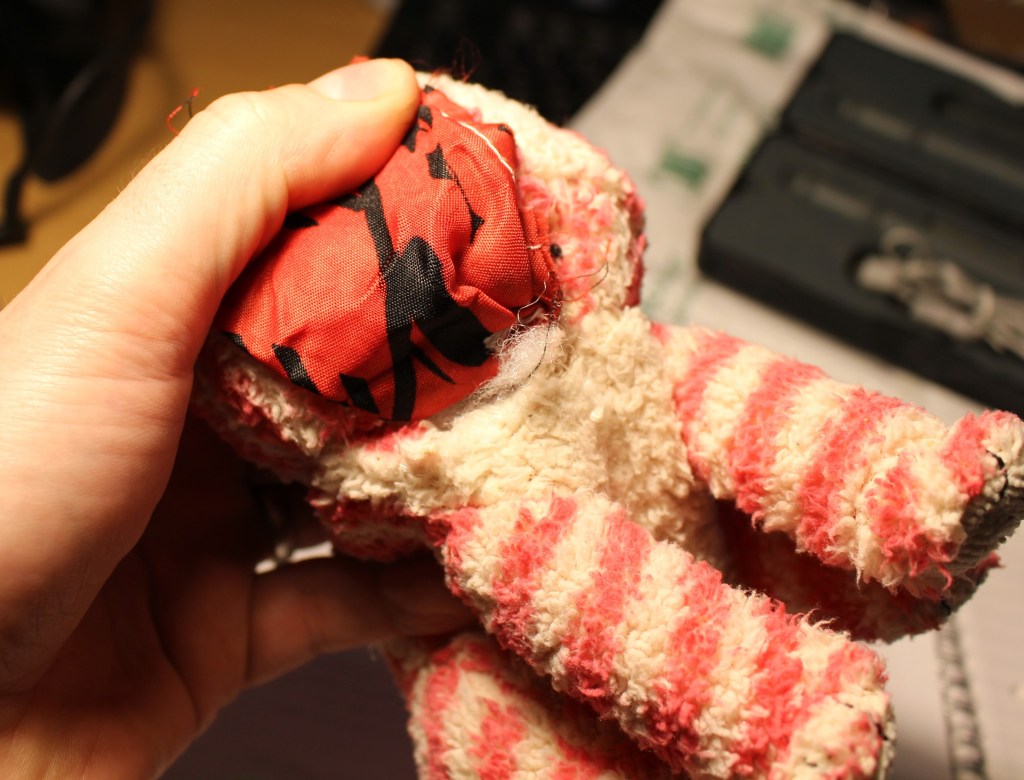
Using a standard stitch un-picker tool, I was able to gently cut into the neck and part of the chest area which gave me access to a small red and black smooth polyester bag, which contained the voice box. At this point, I was starting to feel a bit sick, I mean, what had I done!?

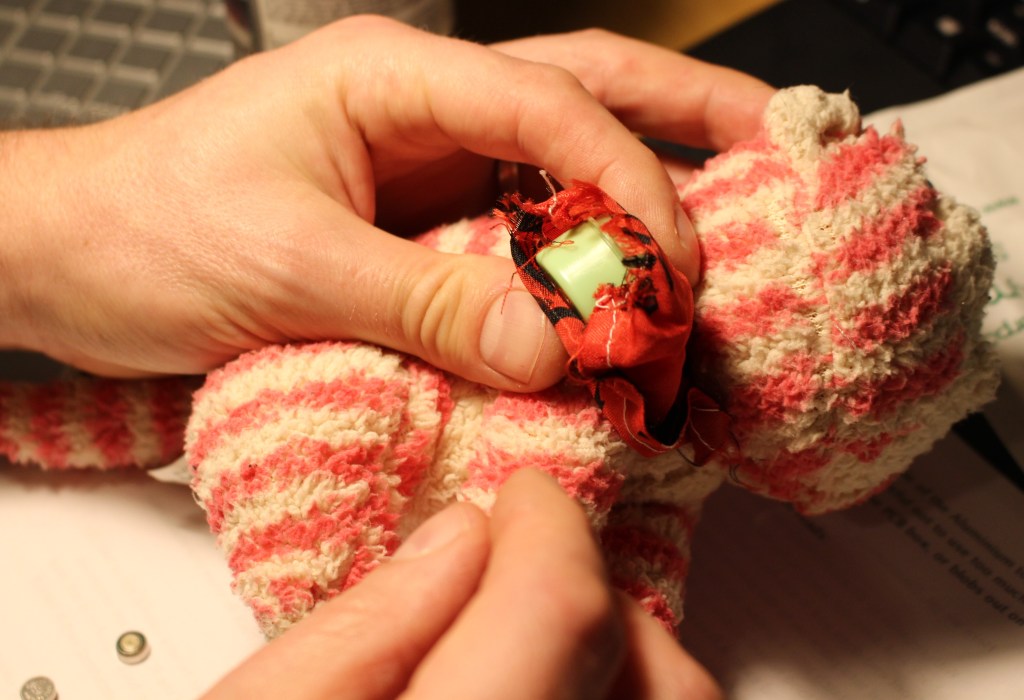
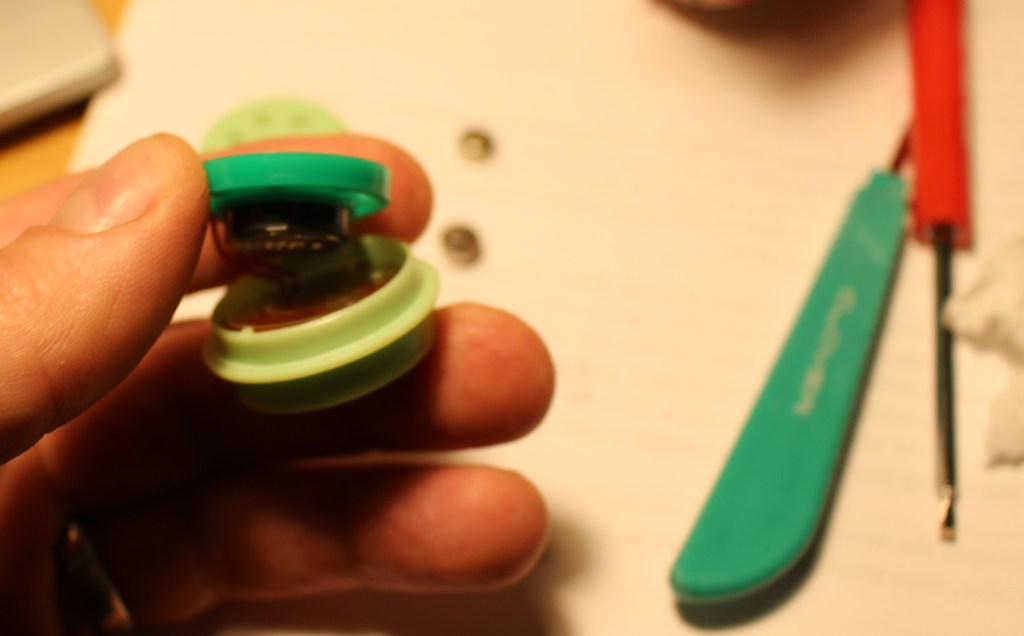
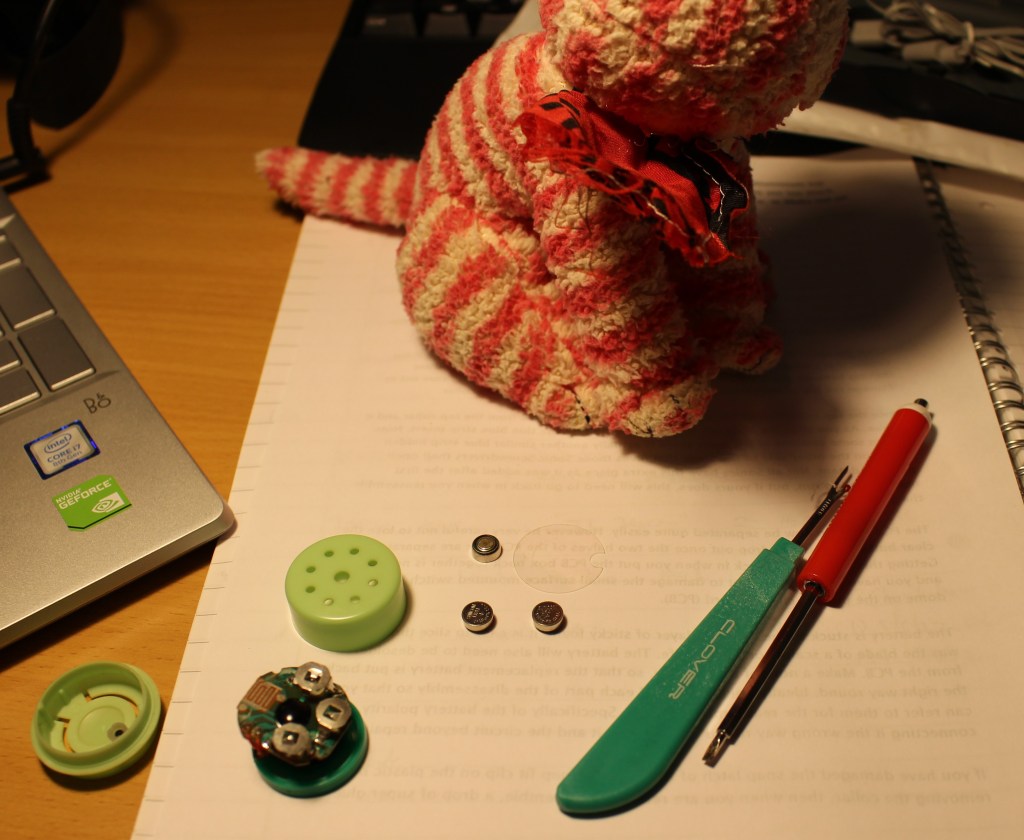
Moving on, the voice box just slide out of the red and black bag and from then on in, it was standard toy-fare. The plastic voice box had a switch on one side and a battery compartment on the other side, all perfectly normal. The battery door was held in place with a small screw and once removed, revealed three LR41 coin cell batteries. Very normal stuff, nothing non-replaceable here.

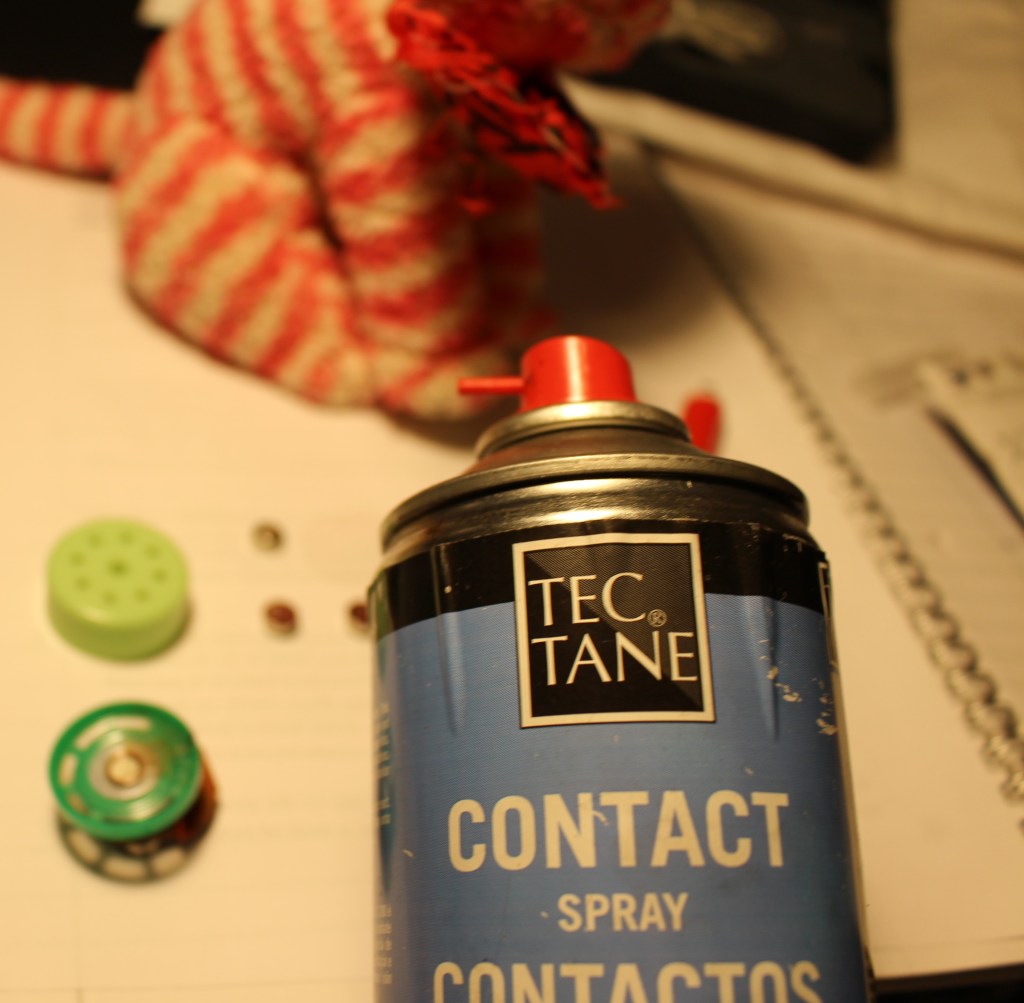
Luckily, I had some spare batteries in stock and with a little contact cleaner applied to the slightly tarnished battery contacts and the new cells fitted, Bagpuss’ voice was heard for the first time in ages.

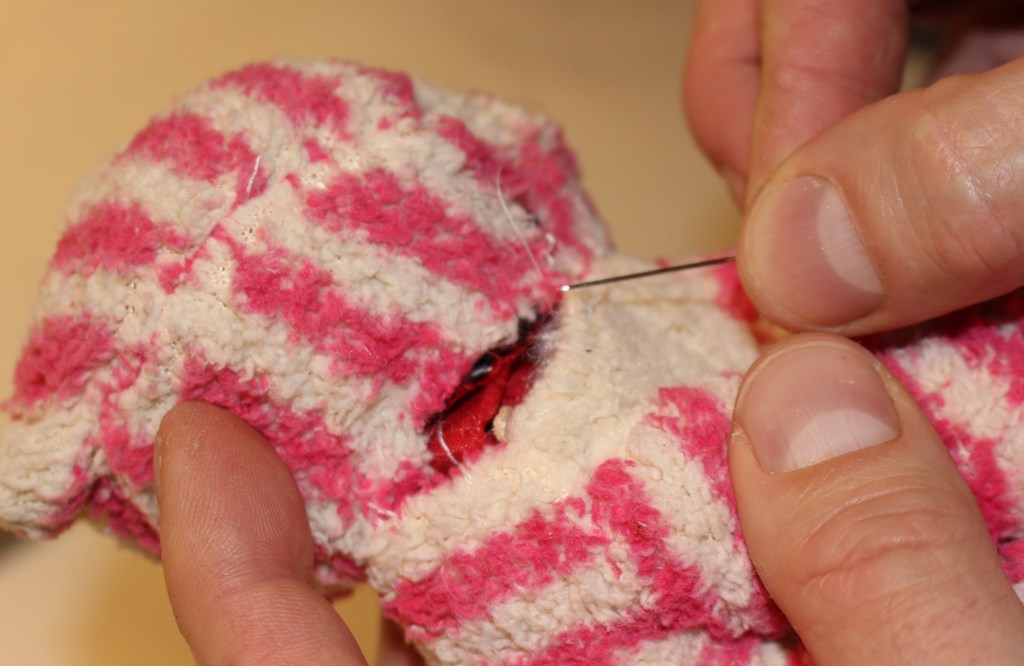
Now it was just a case of putting the voice box back in the right place, so that the switch to make the sound work could be reached easily. Once that was done, it was just a case of carefully re-stitching the neck and chest bag together using white cotton thread and lots of neat tack-stitches that would be invisible, once tight.

After a few minutes of finger-pricking sewing, Bagpuss’ head was back on and it was time for a squeeze…

See what you think.

When a label or someone tells you that a battery cannot be replaced, ignore it and try anyway.

Once Bagpuss was back together, I couldn’t help but wonder why the manufacturer hadn’t fitted a hidden zip to allow simpler battery replacement. Perhaps it’s got something to do with safety standards. Who knows. What I do know is that Bagpuss isn’t alone, and I suspect that many toys like this are discarded needlessly each year due to short-term, lazy design.

Old school iPod Nano battery replacement

Apple really don’t want you to get into their products- but they’re not alone.

We have two Apple products in our house from the early 2000s; one iPod Nano 1st generation and the 1st generation iPod colour.

IMG_9910
FixItWorkshop, Worthing, August’19, Apple iPod Nano.

Apple tech polarises opinion as it’s always premium priced and is quite locked-down to ‘Apple only platforms’.  Some people love the ease of use that their products seem to offer, others get frustrated with the lack of integration with other products.

Despite being an Android house, we keep the iPods as they are quite robust, but due to age, battery life has recently become an issue.

Make and model:  Apple iPod Nano

Fault reported: Battery not holding charge

Cost of replacement:  eBay, loads out there

Cost of parts:  £8.00

Hours spent on repair:  1

Tools needed:  Spudger, small flat-bladed screwdriver, soldering iron

Sundry items: None

Repair difficulty:  4/10

Cups of tea:  1

Biscuits:  2 (Custard Creams)

Let’s just get it out of the way now.  Apple really don’t want anyone opening up their devices and it was a wrestle to open up the casing, without snapping something (the iPod, not one of my nails or something).

The battery in the Nano is situated beneath the metal cover, which must be removed using a spudger.  A spudger is a small lever with a fine edge that can be used to gently open up small, usually plastic, push-fit, ‘clicked-together’ things.  Spudgers are kind of disposable and I always seem to break one on each job.  I must look out for a strong, stainless steel item.

Using the spudger on the Nano isn’t easy, since (as I later found out) all of the metal tangs located around the metal casing, dig in to the plastic face.  Trying the separate the two halves is a real battle and there’s a real risk of damage should you use too much force.

After a good 15 minutes of wrangling with the Nano, the casing popped off.

This slideshow requires JavaScript.

The battery on this model uses a small fly lead which is soldered to the main PCB, again more evidence to suggest that Apple had no intention of making the Nano’s battery replaceable by most users.  Extreme care had to be taken with the soldering too since the PCB’s components are so close and small, making it too easy to use too much heat, causing irreparable damage.

I took my time and was able to fit the new battery (push fit) and solder the connections OK.

The cover popped back on and fortunately, the screen lit up once more, when the menu button was pressed.  Phew. Tea time.


That thing just eats money!

Tomy (UK) /Robie (US) Mr. Money repaired in the Workshop

I have a real soft spot for novelty toy robots that actually do something.  I think I’ll make a point of collecting more.

IMG_9795
FixItWorkshop, Worthing, August’19, Tomy/ Robie Mr. Money.

Make and model:  Tomy (Robie in U.S.) Mr. Money  children’s money box

Fault reported: Not eating money

Cost of replacement:  N/A

Cost of parts:  £0.00

Hours spent on repair:  About an hour

Tools needed:  Cleaning cloths

Sundry items: Contact cleaner

Repair difficulty:  3/10

A lady got in touch with me on the back of an article I wrote a while ago about a faulty Mr. Money toy robot money box.  My Mr. Money had gone wrong as I’d left an old battery inside which had then leaked.  A major clean-up and tinker was then required to get it working again.

This particular Mr Money belonged to the lady’s husband and was to be ‘given to him again’ as a 40th birthday present.  What a nice thought.  The only problem was that Mr. Money had stopped working long ago; put away and forgotten about.  He needed bringing back to life.  Perhaps there was a hidden message to the husband to save for something?  Who knows.

Mr_Money_Quick_Strip

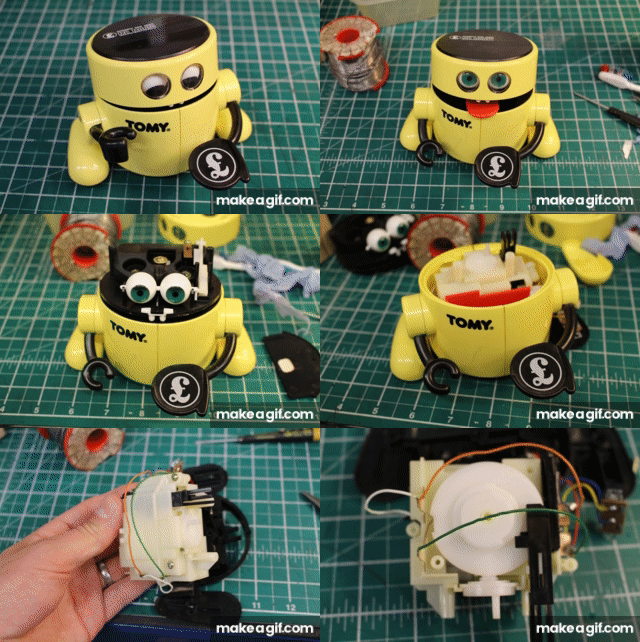
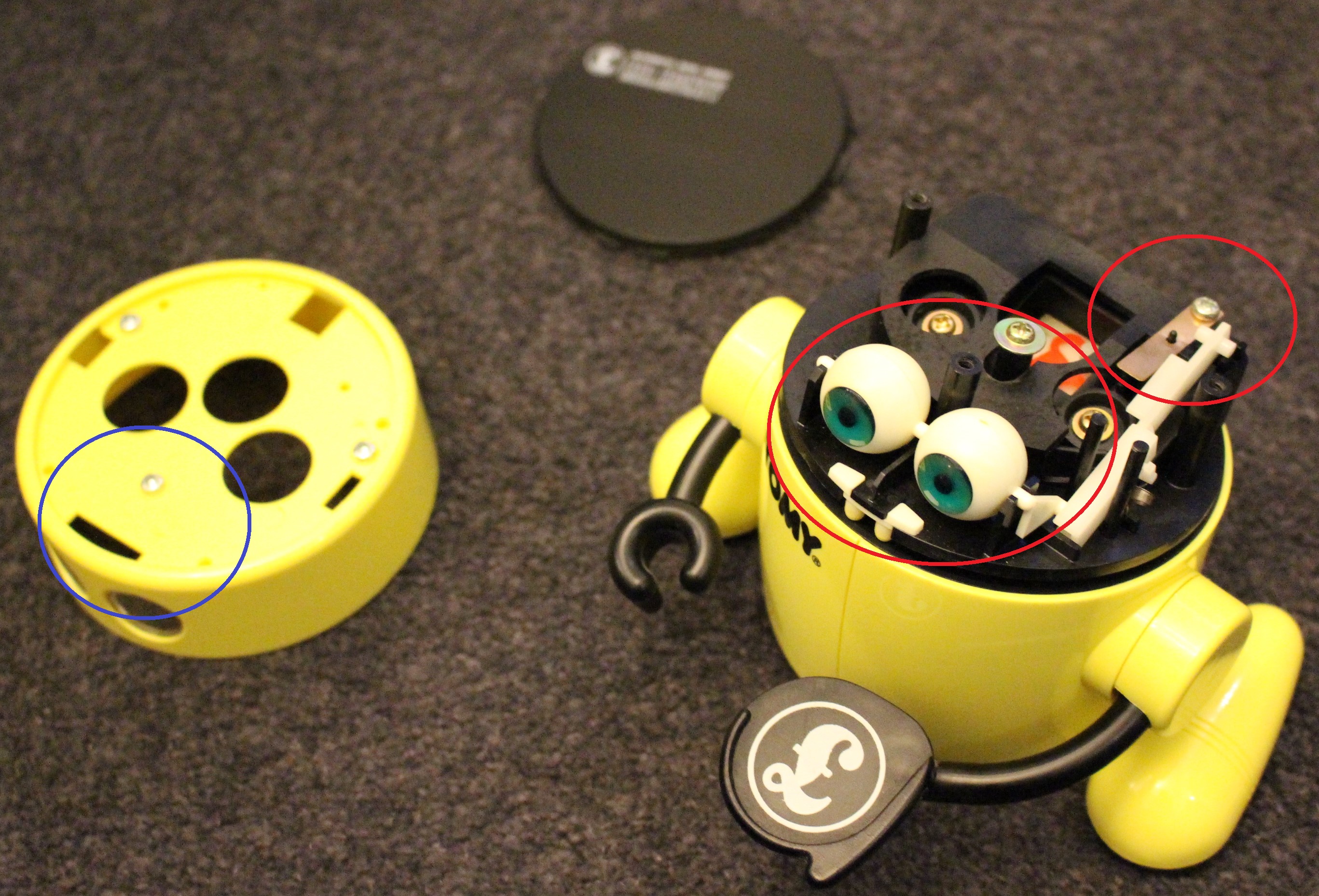
Mr. Money arrived well packed at the workshop and I wasted no time in taking him apart.  There was no evidence of battery leakage or accidental Cadbury Button ingestion and he was generally in good condition with no bits broken off.  A good start.

Mr. Money is getting on a bit and when taking apart any toy, let alone one that’s over 30 years old, one must be careful not to accidently snap-off any lugs or tangs that hold things like casing and levers together.  Very tricky.  It’s not something I usually attempt after a day at work, when I’m shattered.

After some rooting around in the depths of the mechanism, I noticed that the ‘limit switch’ was a little dirty and that some of the contacts needed a little clean.  Using some fine cloth and switch cleaner, all metallic switch surfaces and battery connections were cleaned up and with a new AA battery installed, Mr. Money worked again.

Being 30 years old, there’s no silly use of electronics or other USB excesses which are, I think, ‘over used’ on modern toys.  It all adds up to something which can be repaired with basic tools and parts.

This slideshow requires JavaScript.

I carefully reassembled the workings, casing, switches, arms, head, eyes and lid.

Mr. Money was ready to feast.

After testing a couple of quid through the Mr.Money’s eating cycle, I was happy for him to start his journey home.  I hope he gets used regularly and never put away in a box again.


A bit of 70’s fun: Sona J996 Coffee Percolator

An office find, escapes the scrap yard.

Despite the 1970’s kitsch-ness of the electric percolator, they are very good at making coffee and the delightful coffee smell you get when brewing-up is sublime.  Here’s an advert from the time.

Top tips for keeping your coffee percolator in good order:

  • Descale using a kettle descaling solution as needed
  • Keep the coffee strainer clear of debris
  • Make sure the lid always fits between the strainer and the percolator body

A colleague found this percolator while clearing out an abandoned office cupboard.  I suspect that this one might have been bought as a wedding present way back and had ended up in the office when someone had decided play the role of barista at work.

It was missing its power lead and was headed for the recycle bin, when I intervened.

The power lead needed was an obsolete design used on British appliances of the era and was similar in design to the more modern and current, IEC C13 or ‘kettle lead’.  However, modern kettle leads did not fit this percolator.

More drastic action was needed.  Luckily, I had an old appliance I no longer needed, so I scavenged a board mounted IEC C13 socket from it and replaced the one originally fitted.

After some soldering and a bit of jiggery-pokery, this Sona Percolator now brews coffee using an up-to-date power lead.

This slideshow requires JavaScript.

Cost of replacement:  £40.  Cost of upgrade: £0.

Money, that’s what I want

A cool 1980s toy robot money box gets repaired.

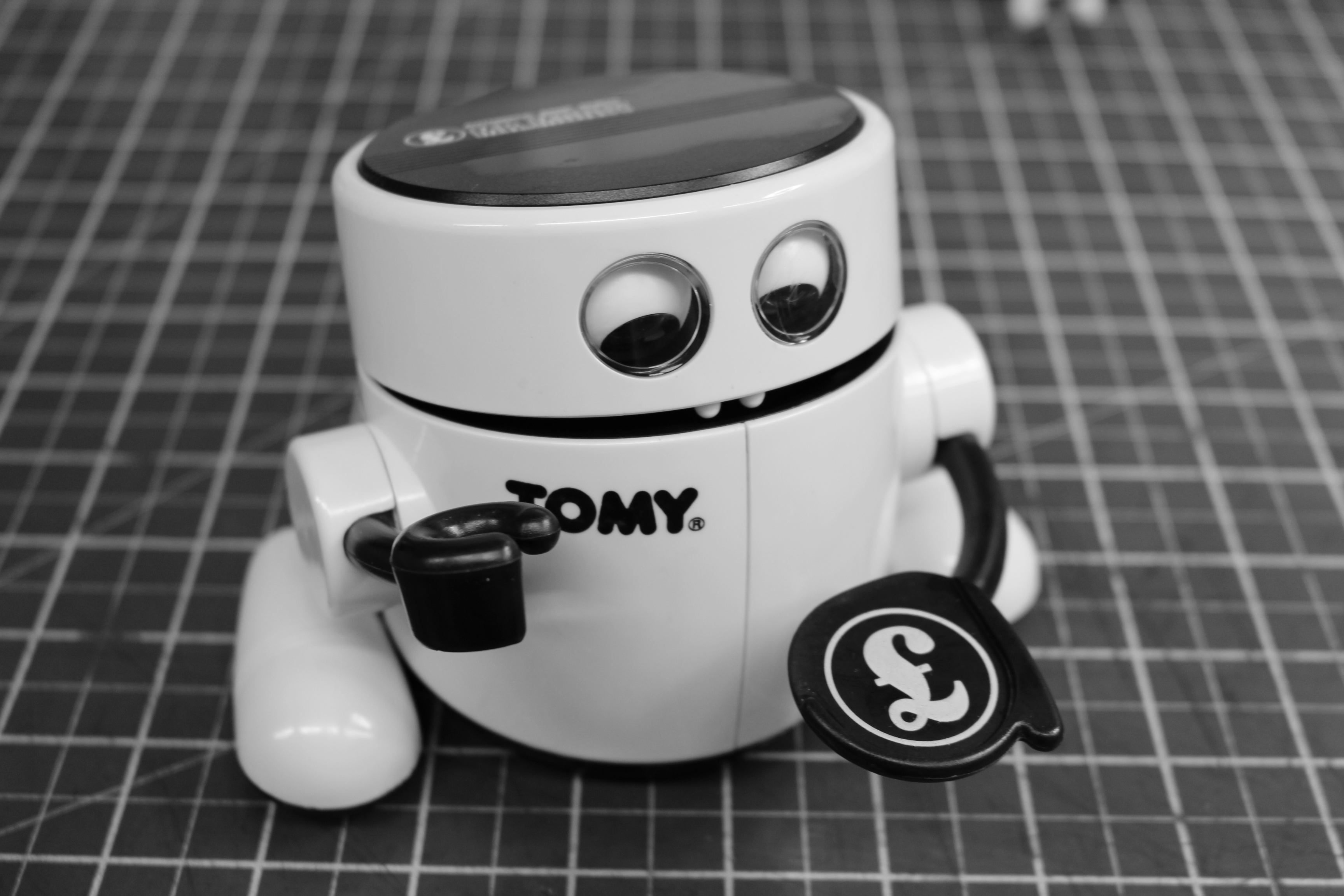
Who doesn’t like a toy robot? I mean, everyone loves a toy robot, especially one with pop up eyes and one that eats coins.  No?  Well, you’re wrong if you don’t agree!

Money 2
FixItWorkshop, March’19, Tomy Mr. Money.

This is my own Tomy Mr. Money, which I’ve had since about 1988 ish, so it’s getting on a bit.  Like me.

Back then, I wasn’t that diligent about leaving batteries in situ for long periods and when I dusted off this piece of retro cool for my daughter to play with, we discovered that the passing of time had not been kind to the old battery or insides.  Which was a bit of a shame.

However, I wanted to show everyone that old toys are way cooler than new ones, so out with the screwdrivers, cleaning stuff and hammer (well, not the hammer) to see what could be done.

Luckily for me and Mr. Money, the battery compartment hadn’t fared too badly with just light corrosion to the battery terminals, which soon cleaned off with brake cleaner and some light filing to near good as new standard.

With a new AA battery installed, Mr. Money didn’t really respond that well to having money placed on his hand.  In years gone by, a coin placed on his hand would trigger his eyes to open, the hand to raise to his mouth, the coin to be eaten and lips to be licked, as well as doing a little side to side dance.  Mr.Money was now looking a bit arthritic.  Could it be that new money is a lot lighter than the 1980s money he was designed for or was it just that the battery corrosion had run deeper than first appeared.  I suspected the latter.

I took Mr. Money apart and found that the microswitch that triggers the mechanism was corroded and needed cleaning and that some of the moving parts also needed a quick brush up, all of which had Mr.Money back to rude health.

IMG_5190
FixItWorkshop, March’19, Tomy Mr.Money, in pieces.

While doing the repair, I decided that it wasn’t obvious how the toy came apart and that some owners might decide to scrap theirs due to similar problems.  So, I decided to make a little slide show of the dismantling, to help others.  Enjoy.

Cost of replacement:  £ priceless/ eBay if you’re lucky.  Cost of repair:  One IPA beer.


Nearly flaming 1986 Yamaha XT600 Ténéré

Beloved Yamaha XT600 Ténéré nearly goes up in smoke.

I’ve had my beloved Yamaha XT600 Ténéré for about 8 years and have deliberately kept it away from these pages as I’m always doing something to it.  It could have its own website with the amount of time, not to mention money and effort I’ve spent on it.

IMG_20180128_141128
FixItWorkshop, Jan’18, Yamaha XT600 Ténéré.

This story is note-worthy as it’s a lesson for me and others who ride and maintain old bikes!

I don’t use the bike that much at the moment, but I always keep it ready for the road, just in case I get a chance to take it out.  Whilst doing a few checks recently, I decided to fire it up and get the oil pumping around the engine, so that things don’t seize up.

The tank was pretty full (over 20 litres) and upon opening up the manual fuel valves, giving it a bit of choke, the engine fired-up on the second crank.  It sounded quite sweet.

However, after about 30 seconds, I heard ‘running liquid’ before smelling the intense scent of super unleaded.  Looking down, I was standing in about 2 pints of fuel, on the wooden shed floor with a hot exhaust casually burning the fuel that was dripping on to it.  Nasty.

I won’t repeat what I said, but suffice to say, I hit the bikes’ kill switch virtually instantly.  I shut the flowing fuel off and wheeled the bike out in to the open air.

After several cups of tea, I found the cause of the problem.  The small fuel feed pipe which runs from the float chamber to the main jet on the carburettor had failed causing the leak.

When I bought the bike, I thought I’d changed all the fuel lines, but I’d missed one, quite an important one as it turned out.  It goes to show that even enthusiastic mechanics make mistakes.

The cost of the repair was £1 for a new piece of fuel hose, but the point of this story is:  If you have any petrol-powered things, especially old motorbikes; don’t run them in an enclosed wooden space.  Always run them outside.