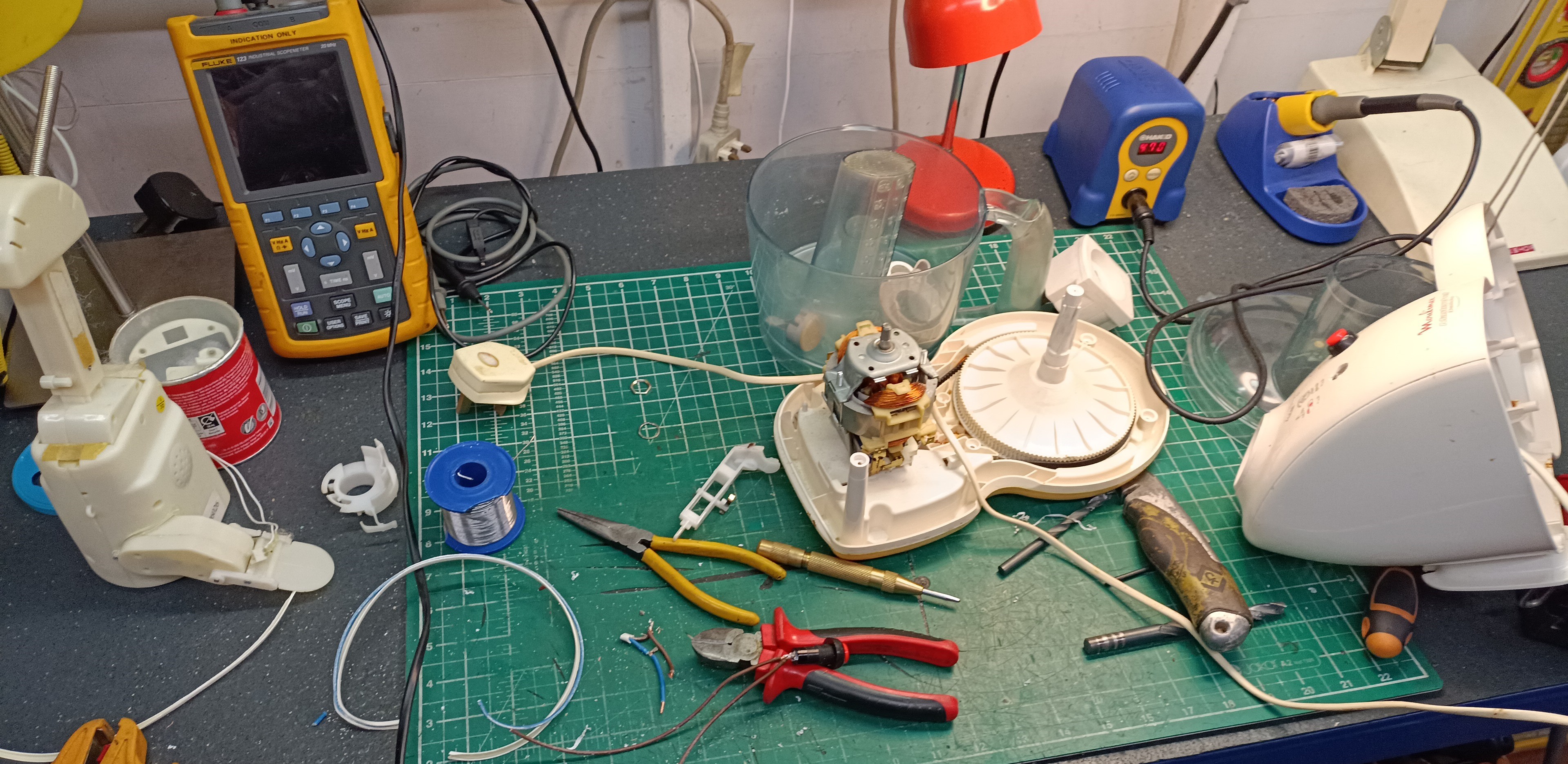
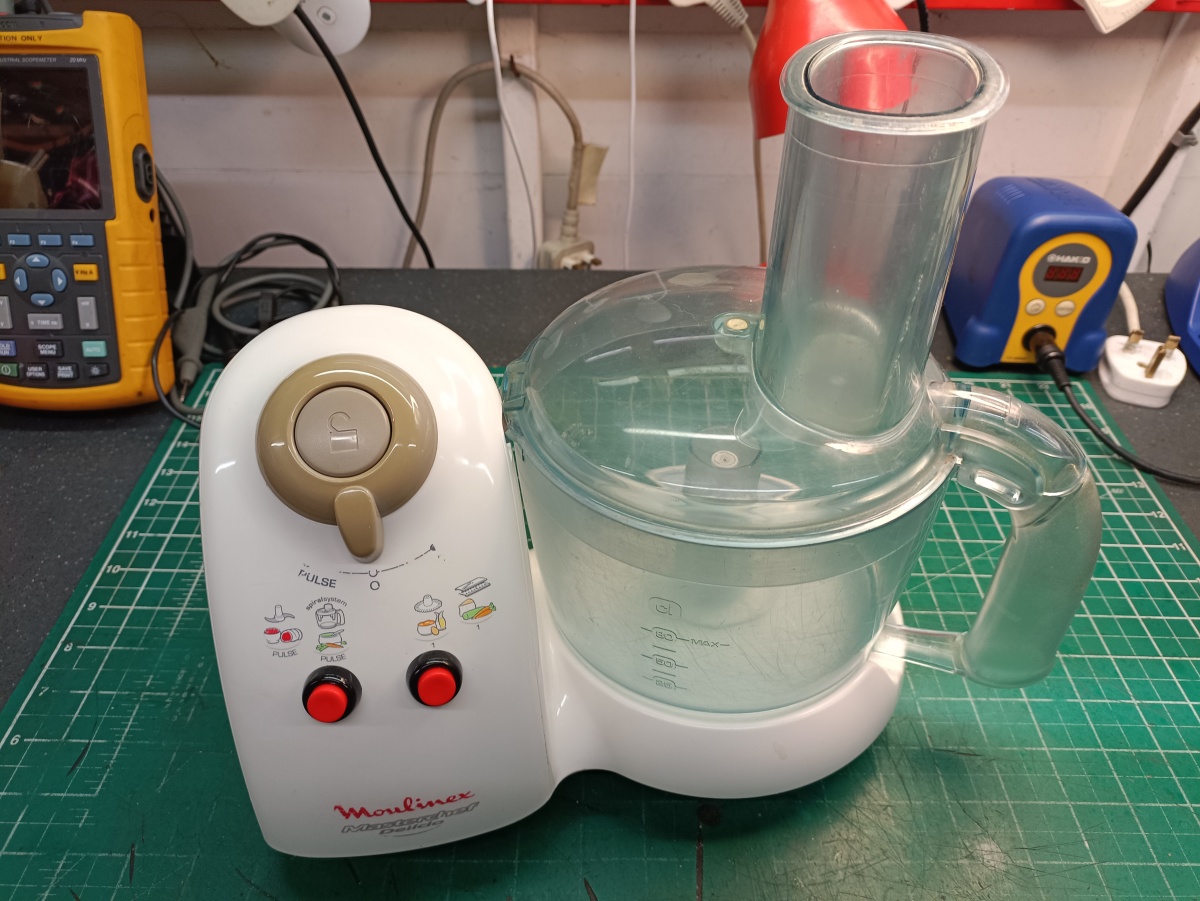
Moulinex magic in the workshop

Economically unviable, virtually no manufacturer support, practically zero second hand value. I’ve had worse machines through the workshop.

It’s not always about the cash…Better crack on.

Make and model: Moulinex Delicio (food processor)

Fault reported: Broken switch

Cost of replacement machine: £40.00 – £50.00 for an equivalent

Manufacturer support (in the UK): 0/10

Cost of parts (for this repair): £ under a tenner, including all parts, but not labour

My time spent on the repair: 1 hour

Tools needed: Small knife, pliers, small screwdrivers, soldering iron

Sundry items: Cable, heat shrink

Cleaning materials: Silicone spray, contact cleaner, wipes

Repair difficulty: 5/10 (fiddly)

Beverages: 1 tea

Biscuits: 2 ginger nuts

Bad language: 2/10

It must start early.  An attachment to inanimate objects, a personification if you will, of machines and their mechanical feelings.  Maybe it starts with teddy bears, Lego people or Matchbox cars. Of course, deep down I know that machines do not have feelings, but I do sometimes find it hard to simply give in with something, and throw it away. 

I don’t think that it’s a coincidence that many classic cars, rescued from the crushers’ teeth, tend to have a ‘face’.  Indeed, designers can often hit on a million-seller, if they get the ‘face’ right.  Think VW Beetle, Morris Minor and Mini. Perhaps these shapes bring back childhood memories of a favourite cuddly toy, which might translate to them being taken care of better and cherished for longer.

Anthropomorphism, the attribution of human traits and tendencies, is something many of us experience, but us repair nerds seem to take it to another level.  I’ll have to think of a catchy name for it.

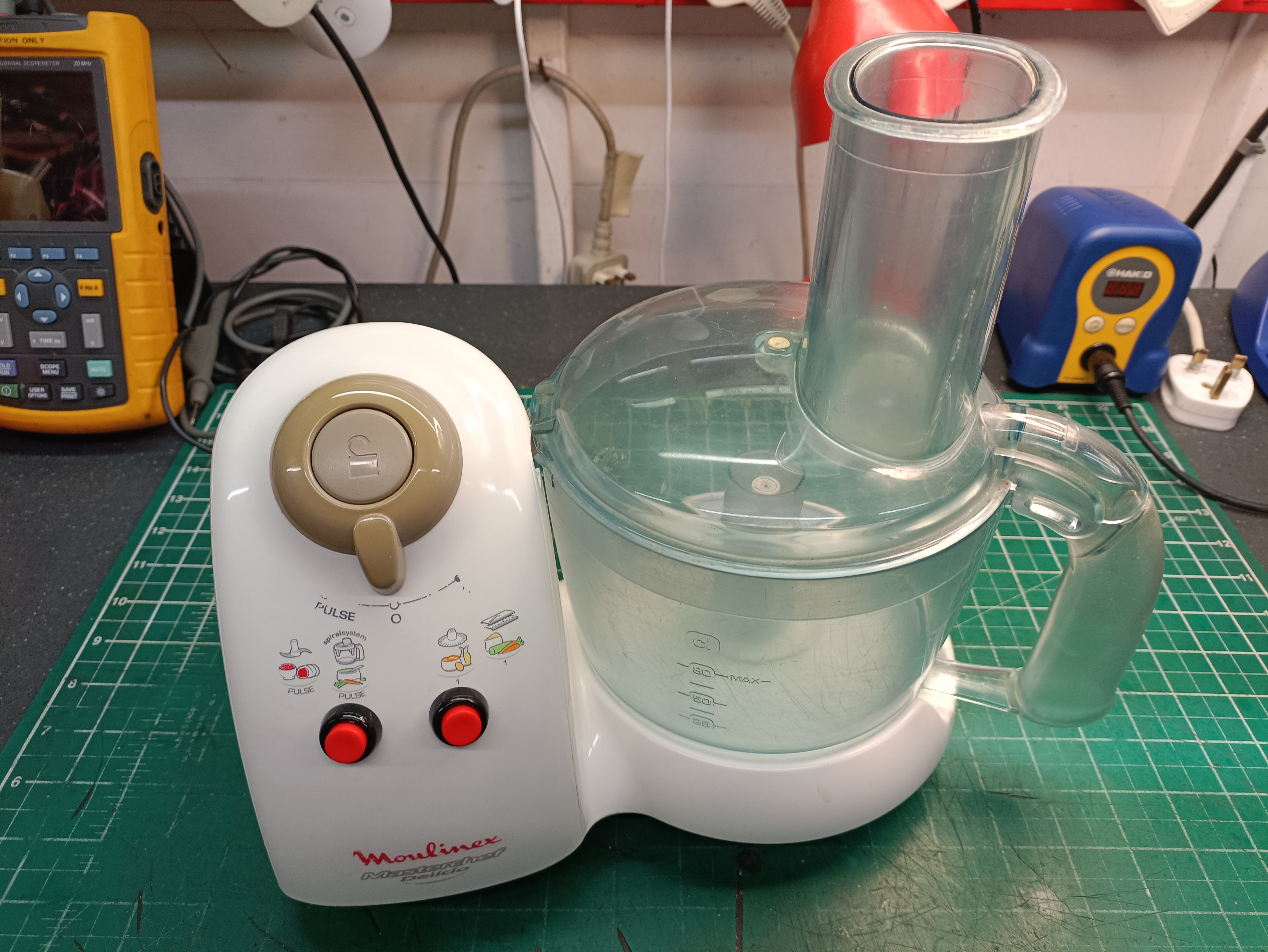
All this has reminded me about a recent such situation where my mum asked me if I could fix her broken Moulinex Delicio food processor, if it wasn’t too much trouble. 

The condition I ‘suffer’ from certainly doesn’t run in families and my mum was at first, ready to recycle the thing. But remembering all the cakes made with it over the years, especially ones made with my two daughters, seemed to put a different complexion on matters. So, I took the mixer away with me and put it on the workshop shelves, awaiting some attention.  At least there were other machines alongside, to keep it company.

Many food mixers tend to be large, heavy and bulky affairs which is OK for many, most of the time, but if you can’t manage the weight of something like an eleven kilo Kitchenaid Artisan every time homemade brownies are called for, something like this little light-weight Moulinex is ideal. So, two compelling reasons to keep the mixer; it’s lack of weight and some fond memories.

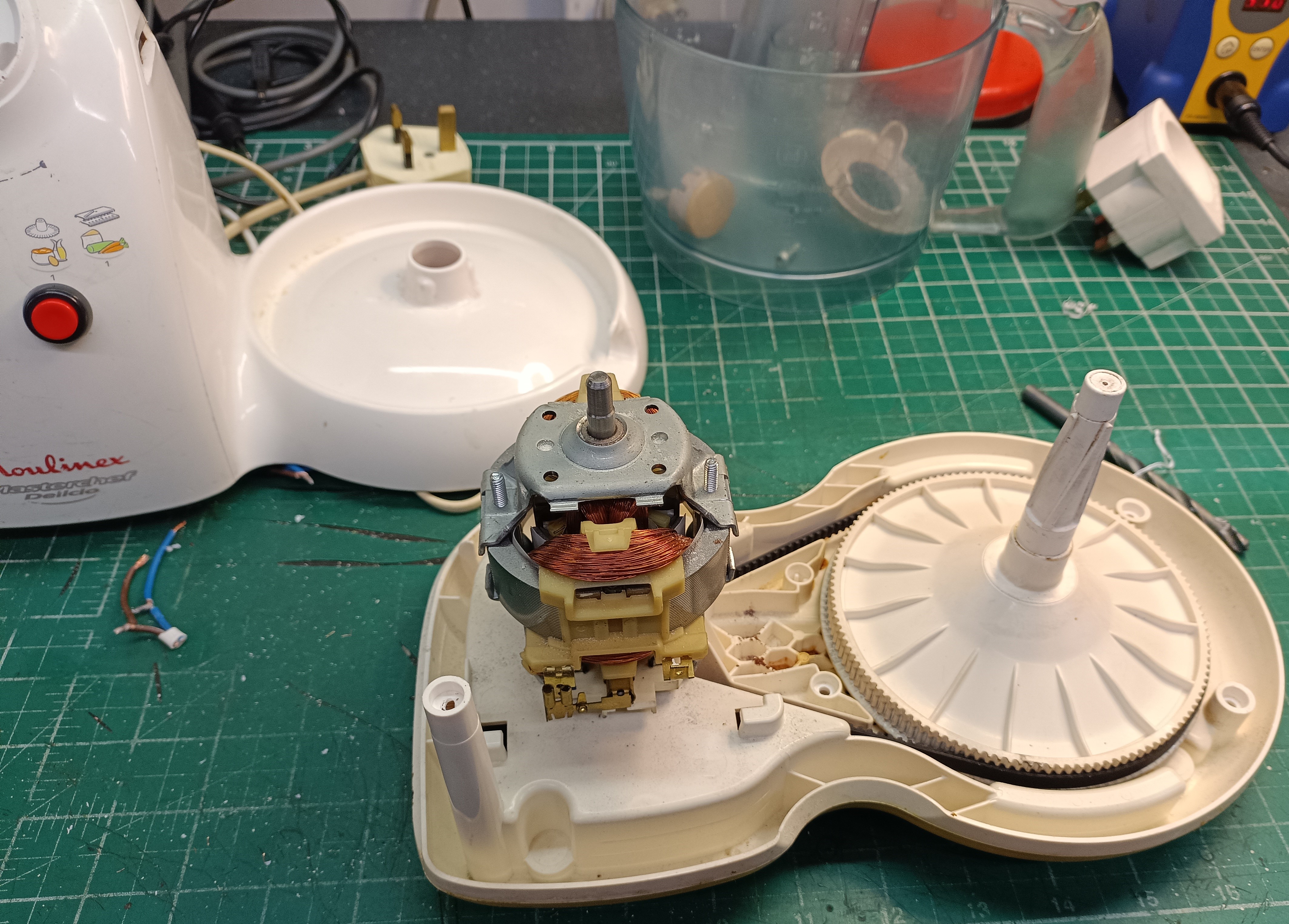
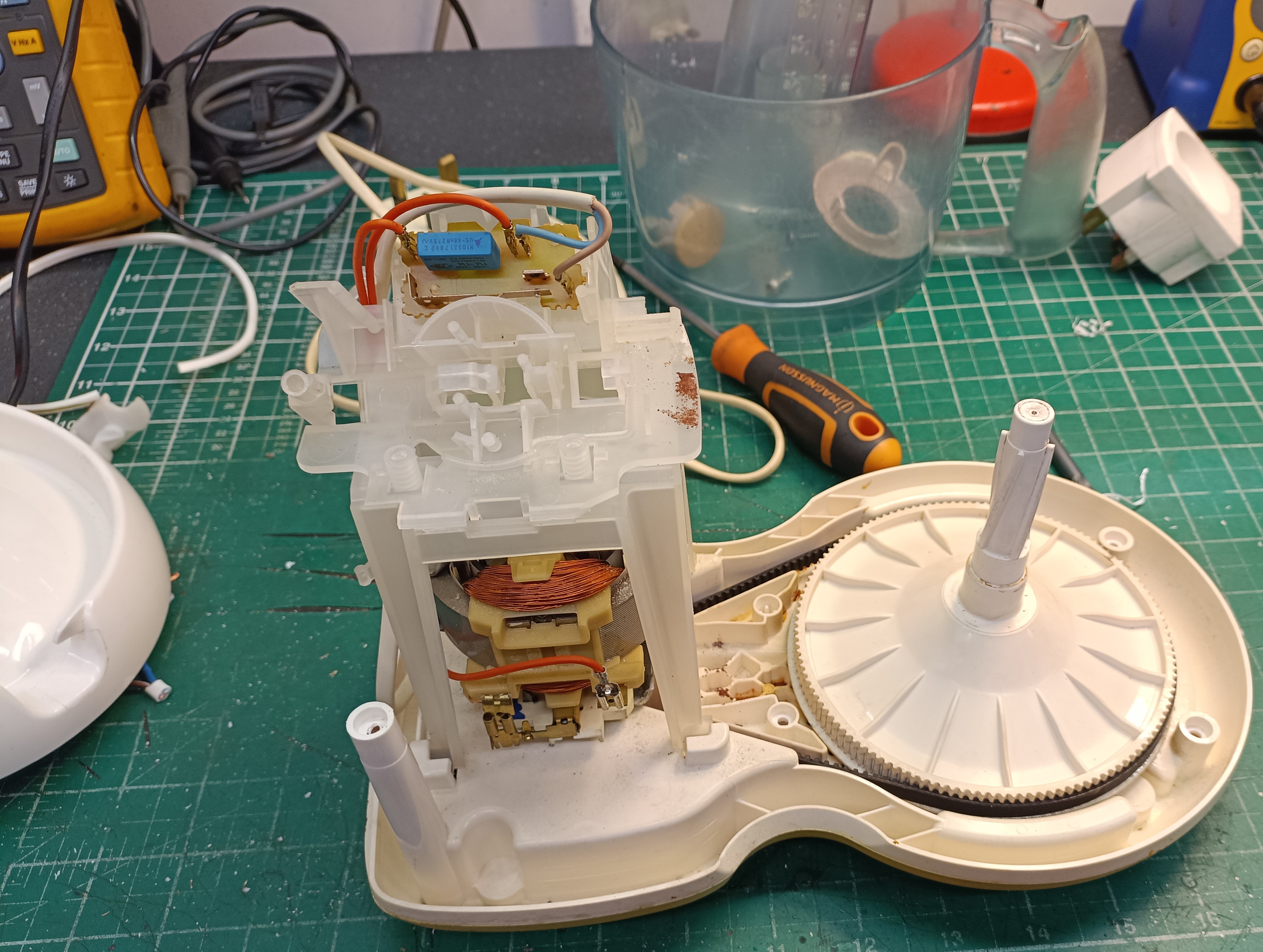
The problem was that the main on/off switch didn’t seem connected with the rest of the machine and to make things more complicated, the integral lid-lock was operated with the same button.  This part is therefore quite important since it might prevent one from shortening their fingers, by not allowing the spinning blades to ever come in to contact with wondering digits.

Now, I’m sure that this all seemed rather lovely in Moulinex HQ at the time, but small plastic switches connected with several thin moving parts combined with knocks and scrapes in a kitchen, is not going to end well.  As a matter of fact, Moulinex offered the offending switch assembly as a spare part until recently, so they must have known that the design was a bit iffy.  Sadly, I missed the boat and despite several attempts, I couldn’t find a replacement part anywhere. eBay revealed a couple of similar machines with faults, so it was back to the drawing board.

3D scanning and printing makes low-volume, but high-quality production a reality, and it’s really something that I need to get into, as I often have the need to copy rare, obsolete parts.  In time, I will. 

In this case, I did consider using one of the many online UK companies now specialising in this kind of thing, but the costs did not warrant it in this instance, so a new strategy was required.  I’ve spent many hours of my life browsing parts like this in catalogues, so I decided that a repair should be possible for under £10.00, using readily available, generic switches. Yes, that should be my budget challenge then, do the whole job for a tenner or under and since it was a family affair, no charges for labour!

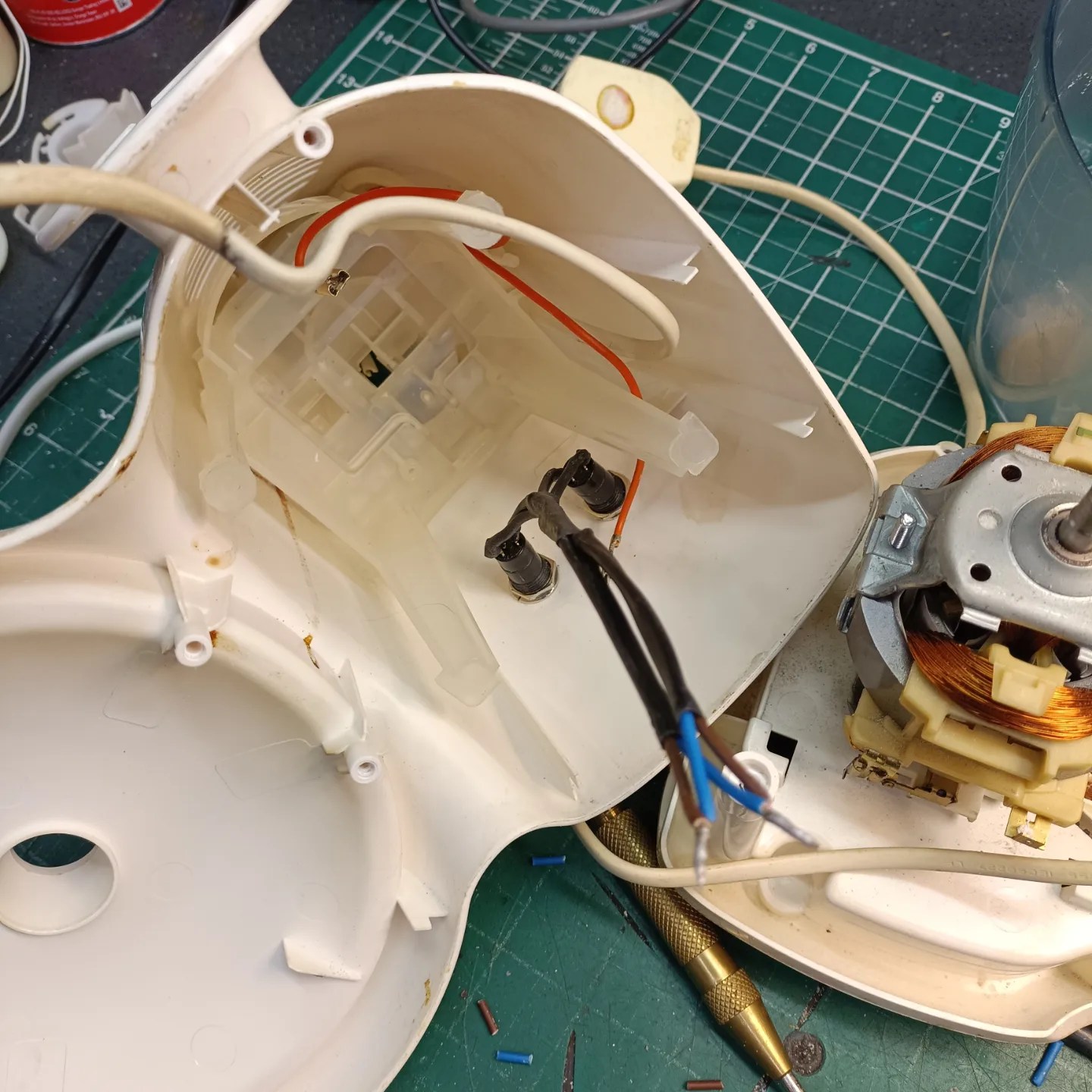
The Delicio is a simple machine; no variable speed controller, just a single speed operation controlled either by latching or push-to-make switch.  It gets the job done quickly and without fuss. After a quick trawl of eBay, I opted for two small round, red button in black bezel switches with solder tags.  The switch series I opted for was available in push-to-make and latching, bingo!  And at £5.98 delivered, a total bargain.

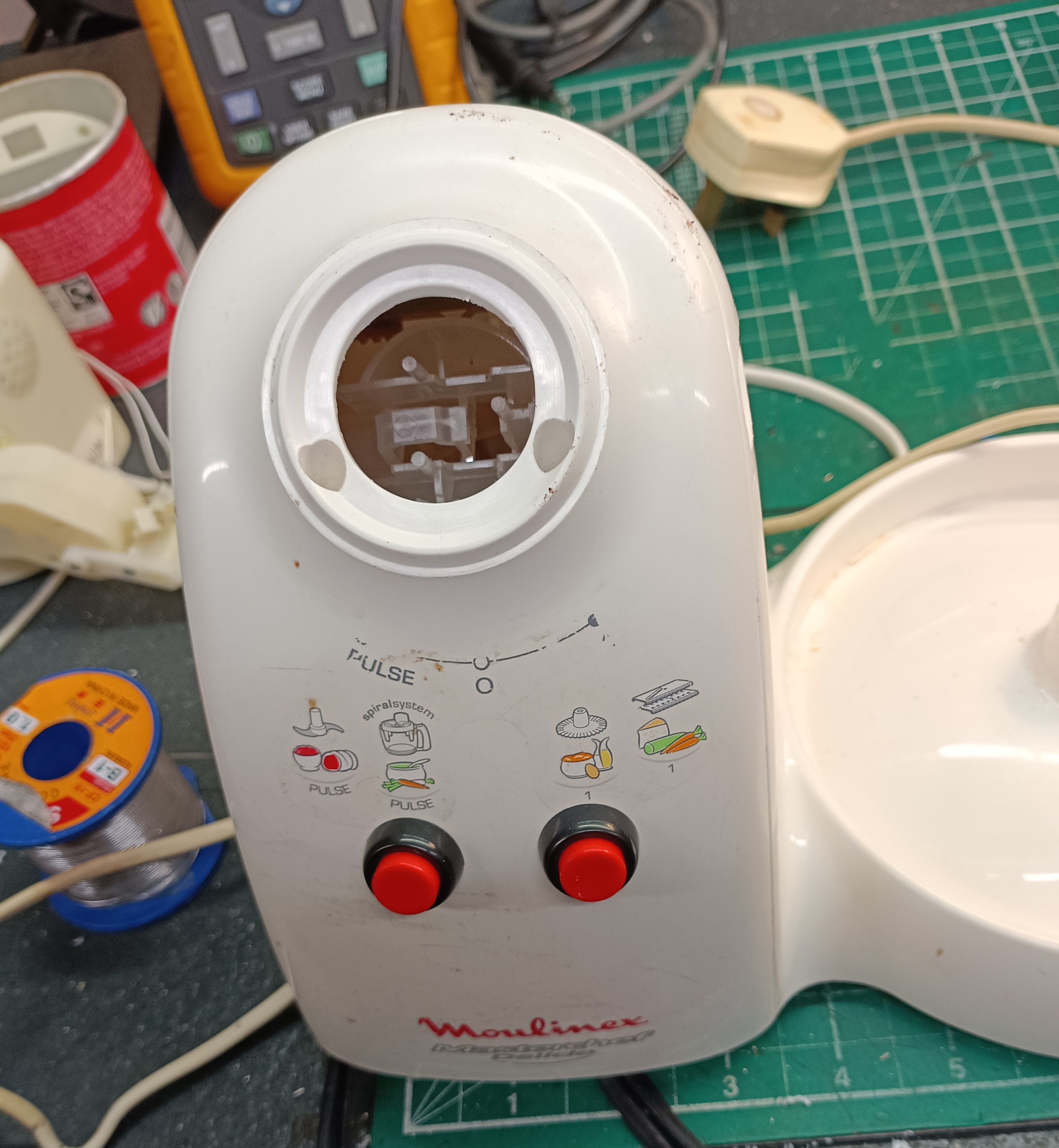
There’s something quite satisfying in selecting an item, taking it apart and then modifying it by way of repair, improvements or both, in such a way that differs little from its original design.  Subtle modifications or improvements, that the casual observer will never notice. If you look closely at the photos, I managed to line up the new buttons with the old printed text, to match the operation. Lucky.
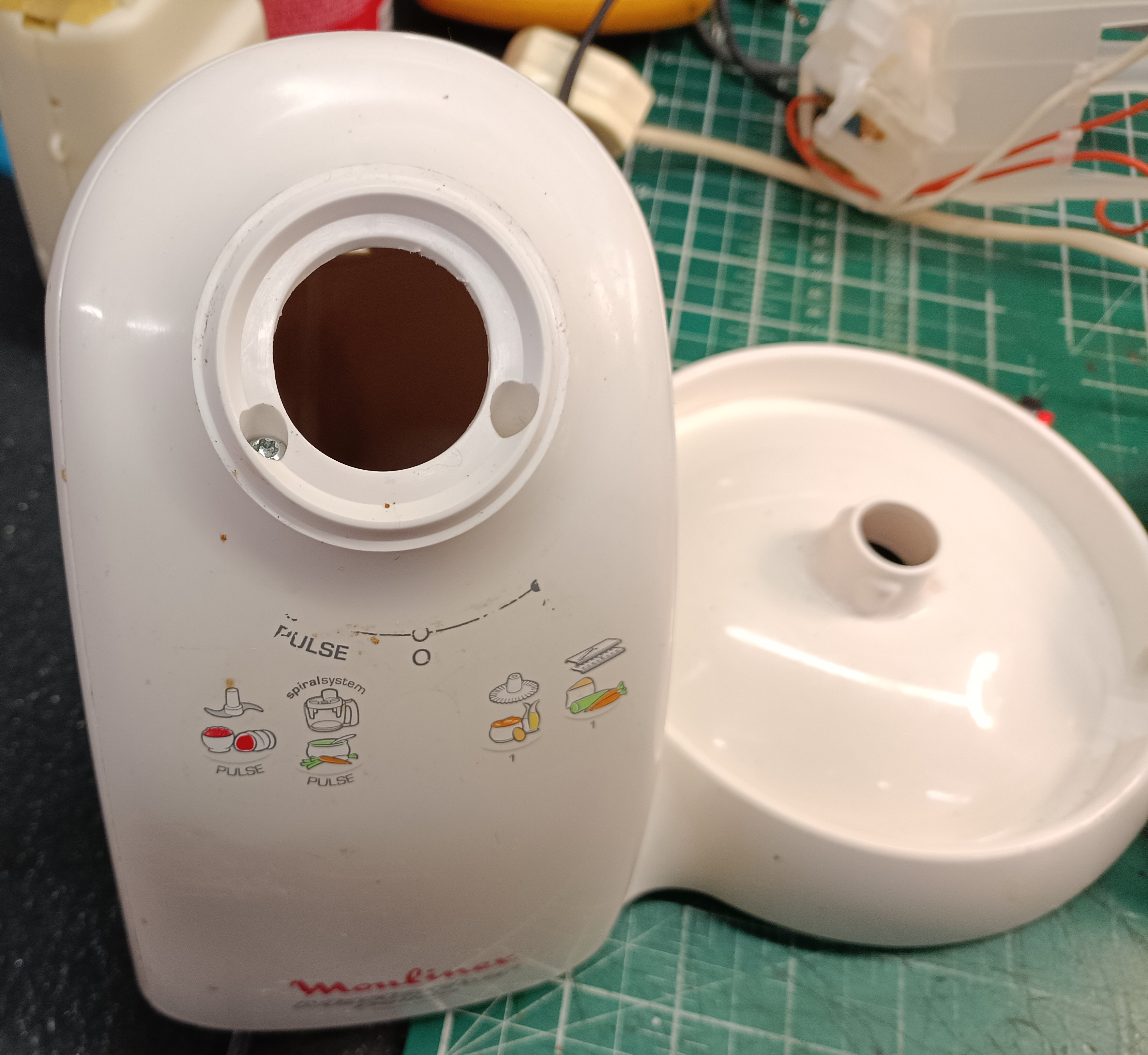
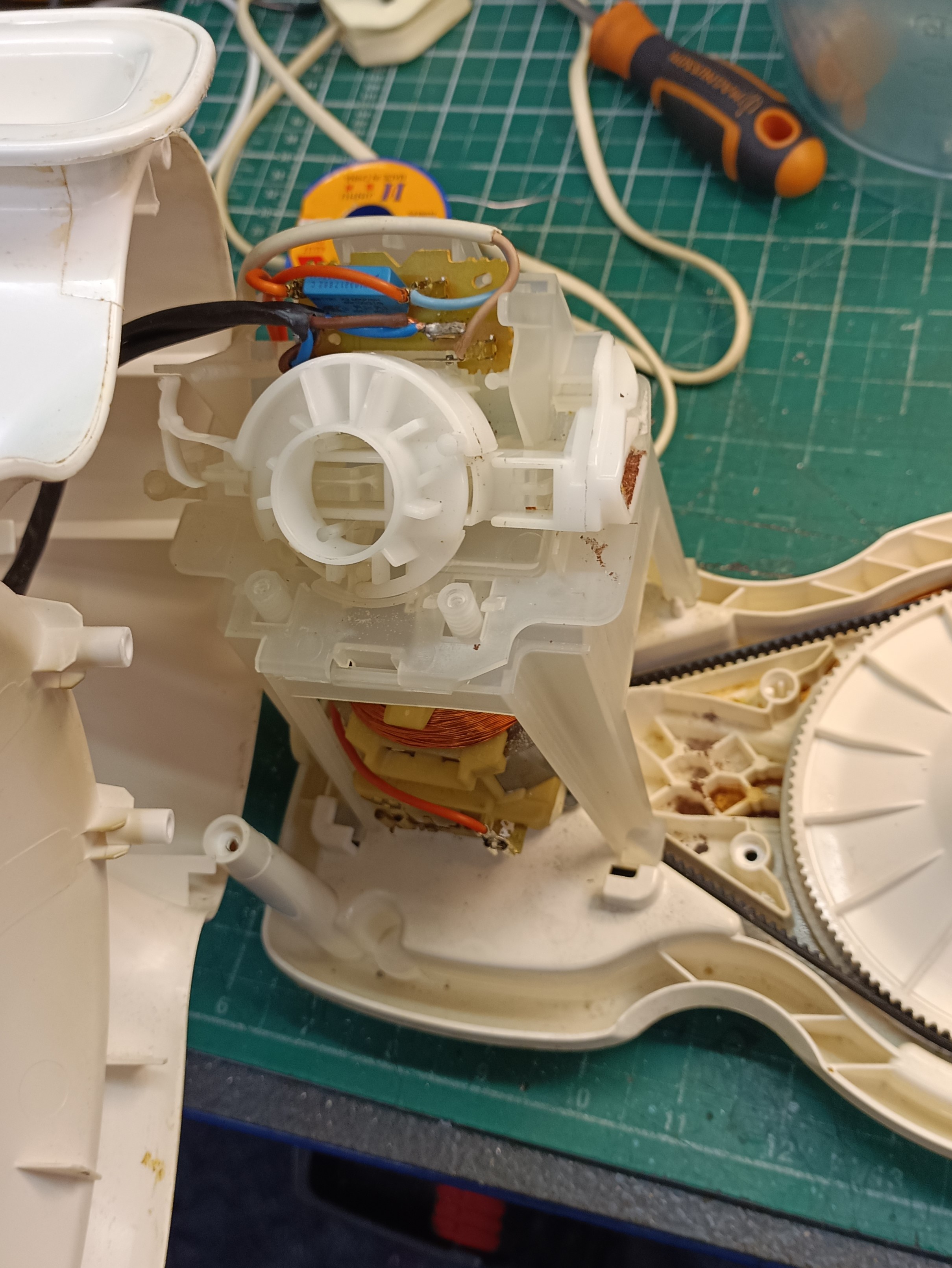
I won’t describe the repair in detail, suffice to say that I found a suitable location for the new switches in the machines’ chassis, drilled out the holes and then fitted them in place with the nuts supplied in the switches’ kit. No special tools required for this job really, just a selection of standard screwdrivers, some 0.75mm wire, heat shrink, cutters and a 12mm drill bit.  I already had some cable, I connected the new switches to the existing wiring harness, by-passing the original.

I was able to retain the original switches’ interlock by keeping the original switch in situ with a little epoxy resin.  This ensured both safety and the original aesthetic.  See what you think in the photos. I was quite pleased with it.

I completed the repair within an hour, which I almost forgot to report, included a wipe over and polish. And I managed it on only one cup of tea with a couple of my favourite ginger nuts.  Oh, and I didn’t go over budget. Any chance of a Vicky sponge, mum?!

Inside The Real Repair Shop 13

This time, Matt discusses false-friend eco products…

One lives and learns and if there’s one thing I definitely know now, it’s that the good people of Worthing (at least) really do love their bread makers! 

Back in August, in the spirt of light-hearted environmental consumer advice, I offered my thoughts on what I deemed to be ‘pointless products’ and crumbs, did I rattle a few bread bins!   Almost 4 amiable souls took the time to share their thoughts on the subject too, extolling the virtues of their trusted kitchen friends. Some even shared a few photos of their finest loaf creations; the most exquisite that I have ever seen, it must be said.  At yeast, most of you saw the funny side I think, but others thought that I was being a little childish. So this article will be a little more proven, I hope.

To those who rose-up, a little browned-off by my distaste for these machines, I say this; it was only a bit of half-baked fun.  You’ve really got to roll with it!

Turning to more serious matters. When it comes to our current environmental issues it seems more than ever that some campaigns, propaganda, even official advice, must be taken with a pinch of salt.  Of course, I too am a consumer of online adverts, original articles and general broadcast media and I find myself increasingly starting to doubt that one can have one’s cake and eat it. Right, enough of the baking buns, sorry, puns.

Despite the typical British Summer we’ve been enjoying here in the UK, it’s been Armageddon on the continent.  And, if you’ve been watching any mainstream news these last few months, you would have seen European reports showing newly designed weather maps with splashes of ferocious oranges, blood-reds and deathly maroons, possibly designed by The Terminator, telling us the World is boiling.

Is it all part of a ‘big plan’ to discourage would-be travellers from taking polluting flights to far-away, warmer climes? Are all the ‘wild’ fires, naturally occurring? Whatever your views on climate change, it would seem that broadcast messaging is nudging us to stay home, stay indoors and don’t move. Remind you of anything? 

Anyway, assuming you’re still with me (thanks by the way), I certainly don’t claim to have expert knowledge on environmental change, CO2 emissions, the latest breakthroughs or Government policy. However, I do have a sprinkling of knowledge on most of these things, enough to say that we have a global population of over 8 billion humans (and rising), many living in or gaining ‘Western lifestyles’ (food production, transport, devices to state a few), so it doesn’t take the mind of Einstein to realise that we’ve had an effect on our environment since we began farming, and that effect is probably speeding up in a way that evolution hasn’t seen before. So, before you rush out to buy the latest energy saving, connected device made far, far away, I urge you to consider something else too.

In The West, we import thousands of tons of electrical items, well anything with a plug on it, from The Far East.  Phones, tablets, toasters, kettles, pop-corn makers (to name a handful) are all made thousands of miles away, and are sold at affordable prices for us to enjoy, the very next day if you like! Also, you can’t seemingly buy any of these things without it being Internet connected, not even a bread maker! This is good news for retailers, but are items made at a price (not quality), in far-away, out-of-sight factories, shipped all around the world, really a good thing for us?  Is the latest ‘online ready’, eco-device, always better for the environment? Is it ever a smarter, greener choice to ditch what you have, in order to do the ‘right thing’ by our planet.

Combine the complicated product route to market ‘journey’ with a short life expectancy (or very planned obsolescence), with a lack of in-country repair support, and the whole thing starts to sound like an environmental disaster. Doesn’t it?  Some say that the average smartphone’s life is comparable to a pair of jeans, scary when you think about it. And what about the giant computing power; Petabytes of storage, precious metals, the air conditioning, and land that the data warehouses around the world use to make all the connectivity possible? It’s all starting to sound a bit bleak, really. 

Years ago, when I was a young BT apprentice, Dave, (a wise colleague and friend of mine) once said that the trouble with the world now is that it’s ‘gone global’. We all laughed at the time, but now I’m older (and maybe a little wiser), I actually see what he meant.

Our thirst for the latest and best has generated a throw-away culture for sure, and if we carry on, deep down, we all know where it’s headed.  But the tech stable door is well and truly open, and you, nor I, would favour heading back to 12th Century lifestyles. No one I know would want to turn off YouTube, Instagram, TikTok and Twitter (to name a few).

Social media is a great way to keep in touch, but don’t forget how the platforms pay the bills. As a brand, or if you have the cash, social media gives virtually instant connectivity to the minds of folk most likely to part with their hard-earned money. It’s a powerful conduit to nudge minds, to influence behaviours and to extract pound from your pocket. Judge me as you will, but I suspect that many people, with a specially targeted, guilt-inducing, tear-jerking, warm-hug, ‘we’ll make it all better again for you’, advert could be made to ‘do the right thing’ and buy just about anything today! Dial-in some world-poverty, environmental damage, and little war, and buyers are putty in the brand’s hands. As with all sales pitches, there’s always a catch… don’t believe the hype!

Back in workshop-land this month, it’s been a right-old assorted bag of customer requests!  I’ve had quite the mix of items in for repair. Lamps, toys, vacuum cleaners and a CD/ radio to name a few, but despite the variation, there are common themes that link all these items together, in a good way.

Spares were easily available, the item’s design allowed for disassembly and reassembly and I could see individual components with my own eyes! The technology was not out-of-date, it didn’t need an upgrade and it was all still as relevant today as it was at the time of purchase.

A good talking point with friends for sure, but a ‘connected toaster’ that links to your smartphone is probably not a good idea. The Internet bit inside will no doubt fail before the rest of the appliance, and how many WiFi devices do you think will exist in even 5 years? It’s therefore likely that something like this probably won’t last longer than a smartphone. And in my experience, these things are rarely supported by the manufacturer in terms of spare parts.  If they have any kind of post-guarantee support, it’s usually not economically viable to bring the item back from the brink.

How to wrap this up then? More than ever, it seems, we all lead busy lives and the vast majority of us are connected to various platforms via our phones, at some time. Indeed recently, on our family holiday this summer, I saw many people from all countries, busy on their phones, by the pool, at mealtimes and even in the sea, throughout the day. Now, I’m not saying that I don’t check my phone, but social media can be like a sugar-rush, addictive for many, and advertisers know this. This means that now, more than ever, it’s possible to link your likes, news, political interests, friends’ network and viewing habits to new products likely to match your spending profile. 

If you’ve watched environmental content on YouTube, or have bought solar energy for example, Google knows that you’re likely to be concerned about climate change. Many of us are.

I’m an aspiring optimist, and as a big believer in new technology and global, visionary projects, if delivered by our best engineers, I think we can at least help curb the negative effect we’re all having on the planet.

Eco-inspired, connected-products can make us feel like we’re doing our bit, but clickbait purchases of short-sighted lithium powered gadgets and cars, with limited or no support, can only be bad news.

If it works, and is useful, don’t chuck it out.  Maintain your stuff and enjoy all the life an item has to give.

The most environmentally sustainable and cheapest products out there, are probably the things you already have.

Matt.

PS, don’t forget to check out Retro Electro Workshop on UKTV Play.

What’s in your man-drawer?

I discuss some basic tools that should be found in every home…

I think it was Michael McIntyre who first referred to the man-drawer as ‘the funniest drawer in the kitchen’, full of all the ‘that’ll come in handy items’ that we accumulate over time.  It’s brilliant observational comedy, and he nailed it so well that today, we often refer to the ‘man drawer’ as a thing in our homes.  The reason that the joke still resonates today is that it’s true.  But, what should be in a man (or woman) drawer for the conscious home maintainer?

Toolbox talk!

I want to talk about the tools that I think every home should have. Tools that could empower you with a fighting chance of having a go at fixing something yourself. The tools that will help you get the best from your appliances, make things last longer and help save you money.  If you already have a good selection of tools, skip the next paragraph and head straight to the ‘common jobs, useful tools to have’ section.  If not, do read on.

Let’s bust some tool-related myths. Firstly; tools are expensive.  Sure, like anything in life, you can pay through the nose for a set of screwdrivers or spanners if you want to, and there’s a tool quality to suit all circumstances and pockets.  But here’s the thing, for most DIY purposes, a reasonable set of basic screwdrivers costs less than a tenner and the best part is that you’ll get that money back again and again when they’re put to use.  Secondly, you need to be an ‘expert’ to use tools.  Well, a knife and fork are tools and we all (hopefully) use those, so don’t be deterred by people who might dissuade you from tackling jobs yourself.  I’m wary of the term ‘expert’ anyway.  In my experience, experts are a rare thing. Luckily, these days, most of us have access to YouTube.  Search for the thing that’s foxing you and the chances are that one of the 2.3 billion users have an answer. 

Before you reach for your phone to fix a dripping tap, if you haven’t got some already, you’ll need to arm yourself with some basic tools.  Below is a brief summary of tools I think every home should have and what I think they can be used for.  Some jobs are obvious, some less so.

Common jobs, 6 useful tools to have

1:  Small flat-blade electricians’ screwdriver. I think it’s possible to write a thesis on the usefulness of a small flat-blade screwdriver, but I’ll spare you that for now.  For small change, you can buy one and use it to: Wire a plug, adjust light fittings, get batteries out of a gadget, scrape-off old paint from a surface, prising something open, cleaning nooks and crannies. A screwdriver like this has uses beyond screws.

2:  Pliers and cutter combination tool.  Really useful for cutting and shaping garden wire, fixing Christmas lights, fixing kids toys, recovering items that have ‘fallen down a gap’ not forgetting cutting and trimming wire.  If you have a bike, a lawnmower, taps or doors in your life, then you need pliers and cutters as adjustment of those items will be needed from time to time.  Do it yourself, and you’ll save yourself time and money.

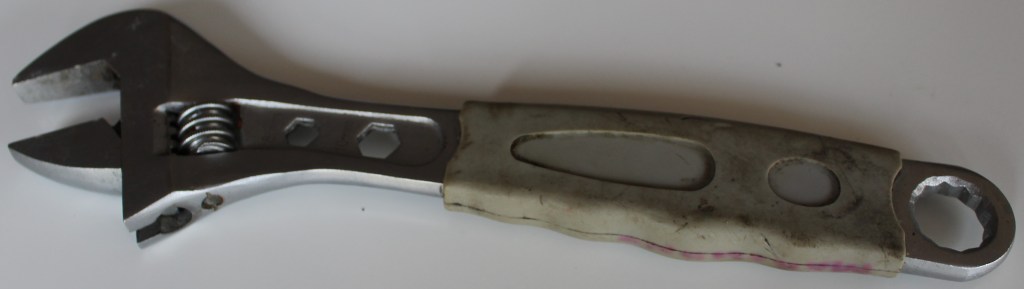
3: Adjustable spanner. If you don’t have space/ need/ cash for a full spanner set, consider an adjustable spanner instead.  OK, so they’re not ideal for regular nut-spinning, they are useful for those less frequently required tasks such as; adjusting a bike saddle, tightening a tap and adjusting a radiator valve.

4:  Cable ties and electrical tape. OK, not strictly tools, but honestly, I can’t think of more useful tool/fixings to have in your own man-drawer.  Cable ties and electrical tape has a million uses, are cheap, readily available and can fix so many things either temporarily or permanently including; tying cables, mending a broken handle on a hoover, fixing a backpack strap, mending a buggy, making a hook loop, tying a door back.  I always keep both in my mobile tool wrap to fix something, on the go. Get some today.

5:  Screwdriver set. If you’re going to tackle more jobs around the home, invest in one that contains at least; big and small flat blade screwdrivers and large, medium and small cross-head screwdrivers. From kitchen appliance maintenance, kids toy adjustment, door hinge fixing to furniture assembly, a basic screwdriver allows you to keep things running for longer and to do the job properly.

6:  A small set of Allen keys.  Allen ‘hex’ screws are used on lots of things now including bikes, home appliances and children’s toys. As with the other tools mentioned here, you don’t need to spend a lot of money to get a set of keys that will open many common household objects.

Don’t worry if you don’t yet have the knowledge to fix your coffee machine, just a quick search on YouTube will show you how to remove the doofer to access the widget to clean the thingy. Using a few of the aforementioned tools will allow you to complete the job like a pro, saving you cash, saving the appliance from landfill and giving you the power to do more.  Just remember to unplug from the socket first.  Tools also make excellent gifts, so the next time you’re wondering what to buy a loved one, have a sneaky peek in their man drawer, make a note of what’s missing for your gift list.

Until the next time… Do you have a DIY fixing related matter that you’d like me to explore in this section?  If so, please get in touch.

Inside The Real Repair Shop 3

Save time and money with a multimeter and a quick look at alkaline versus rechargeable batteries.

Batteries are needed for all kinds of toys, remote controls and the latest gadgets. With a smattering of basic awareness, a tool like a multimeter can be used by anyone, saving one time, cash and help to save waste and who wouldn’t want to do that?

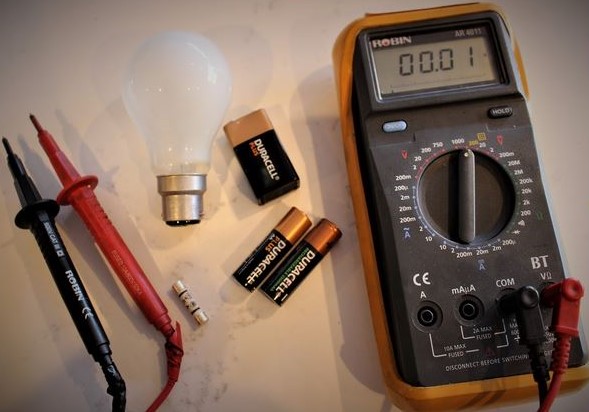
For under £10 (GBP), a decent multimeter can be bought online and, armed with a few YouTube videos on your phone, you’ll be able to test batteries to see if they’re still up to scratch, test domestic fuses in plugs when the lights go out and prove that power adaptors are OK before buying new.  And that’s just the start, exciting eh?

FixItWorkshop, Worthing, January’21, a basic multimeter, batteries, bulb and fuse. Many uses!

I’m not going explain every function on a general purpose multimeter, but I do want to dispel one myth: Multimeters are difficult to use. They simply are not. Assuming you can turn a dial and read a number display, then all you have to do is put the test probes on the right part and then voilà, you’ll be ready to measure things.

Take a standard 1.5V AA battery. It has a + (positive) end and a (negative) end. The red probe should touch the positive end and the black lead should touch the negative end, it’s that simple. Assuming that you’ve selected the DC voltage (10’s) range, a good AA (alkaline) battery will show between 1.5V and 1.68V when new. Anything less and the battery is starting to fade and may need to be replaced.

It’s worth noting at this point that some things are capable of running on less battery juice, for longer. Take a quartz clock with one AA battery. Chances are that it will run for years on a battery, even though over time, the voltage will fall below 1.5V. If you put that same aged battery from the clock into a toy car for example, the chances are that the toy wouldn’t work properly or even at all. To some things, battery voltage is critical, others not so much.

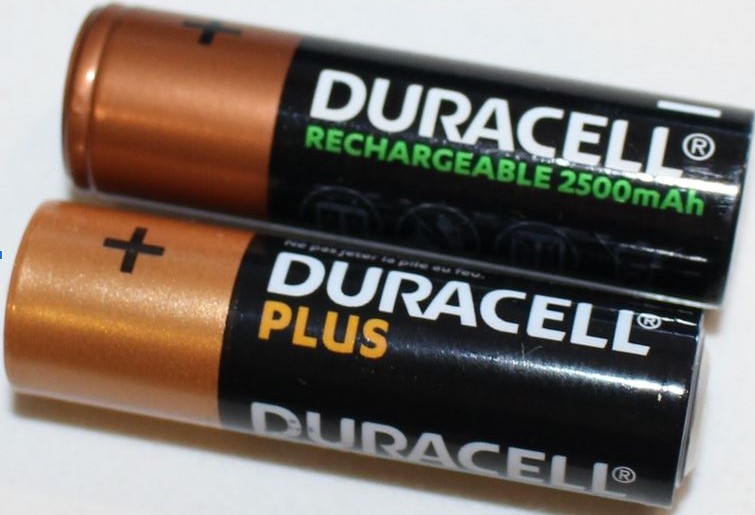
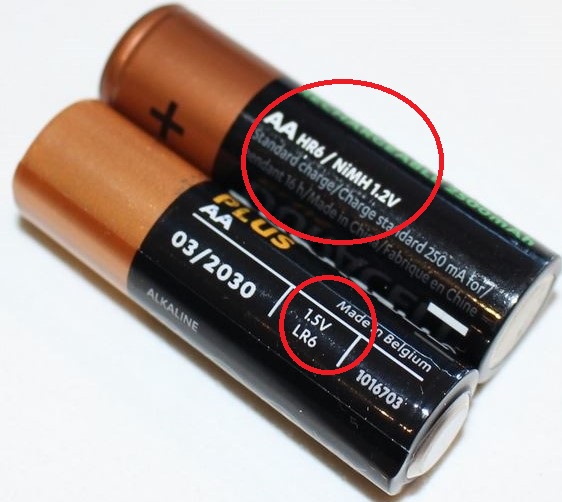
What about normal alkaline batteries versus rechargeable ones, I hear you say faintly, are they worth it?  As with all things, it depends.  Not all battery specifications are the same, so check details carefully when making a purchase.  It’s easier than you think.  Based on detailed shed-based experiments, I generally use rechargeable types in items that tend to use-up batteries quickly, such as radio control car toys and so on.  For something like a clock or a TV remote control handset, where batteries tend to last longer, I recommend conventional types as these items are sometimes more sensitive to voltage differences.  The aim overall is to buy fewer batteries and by using rechargeable ones, which are generally more expensive to get started with, in things that ‘eat batteries faster’, they begin to make economic sense.

Image left: Rechargeable batteries and conventional ones can look similar.  Image right:  Check battery specifications carefully, before deciding that something doesn’t work correctly.

Here’s something you’ll be familiar with.  You go to use something that takes batteries that you haven’t used for ages, only to find that it won’t work.  Upon opening up the little battery door, you’re then greeted with an unpleasant mass of rusty, acidic battery leftovers which have been festering since last Christmas.  In situations like this, many will simply throw away, but often, all that’s required is light restoration with contact cleaner, maybe some wire wool and something like kitchen roll.  More serious battery contact damage can often be solved with new battery contacts, which are available on eBay for small change.  Remember, remove batteries when something’s not in use.

FixItWorkshop, Worthing, January’21, battery leakage has caused corrosion damage to the battery connections (repairable).

If you don’t already own one, make sure you add a digital multimeter to your birthday list this year. Now go and recharge your own batteries with a nice cup of tea.

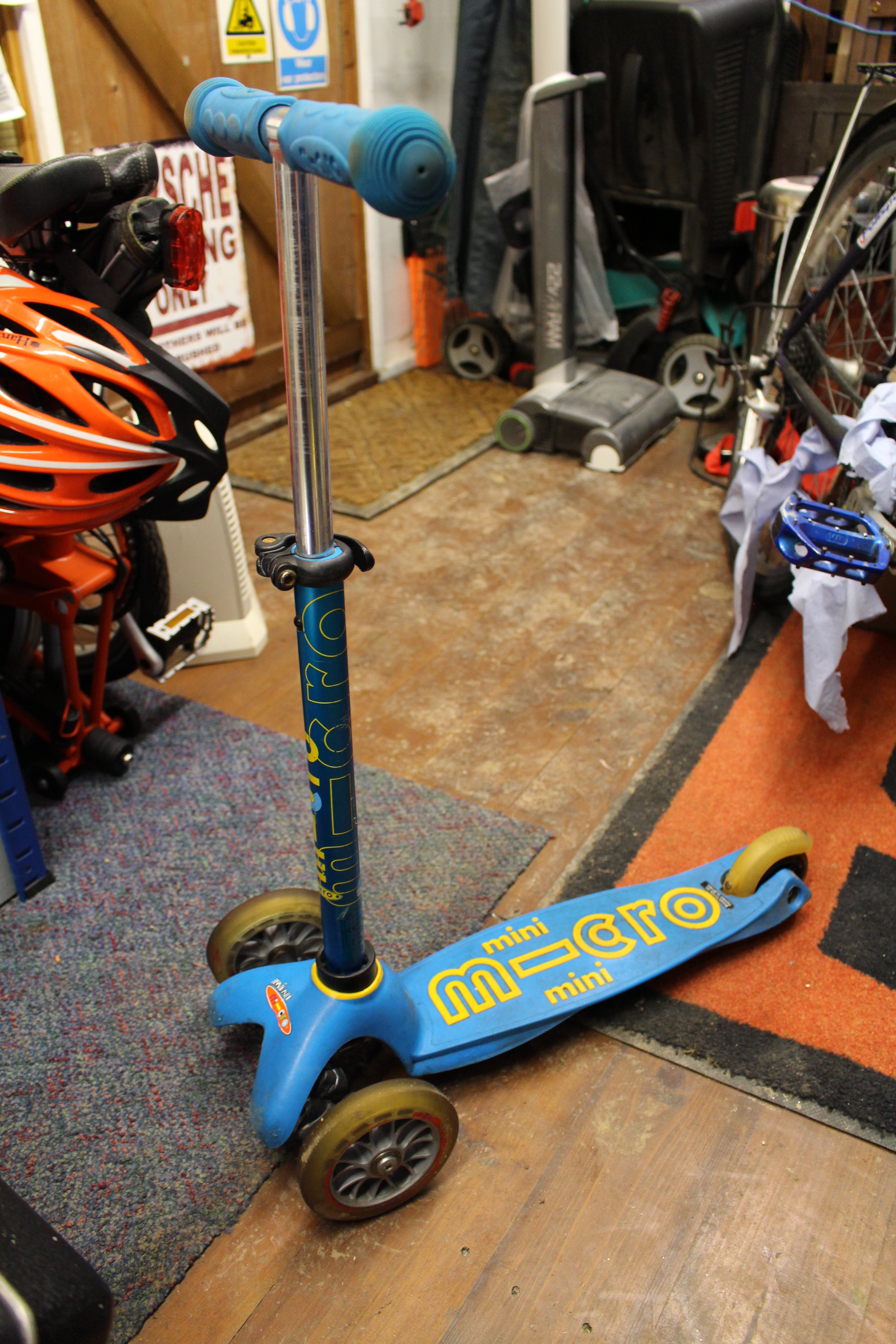
Micro Mini Scooter tune up

A Micro Mini Scooter gets a little TLC

IMG_0983
FixItWorkshop, Worthing, March’20, Micro Mini Scooter.

I like Micro scooters and I would have loved one when I ‘were a boy’.  My daughters have them and they love zipping along the pavement on them to school.  The scooters handle well and are well screwed together.  They are also well supported from a spares point of view, so I like them even more.

Make and model: Micro Mini Scooter

Fault reported: Back wheel stuck

Cost of replacement: £55

Manufacturer support:  7/10

Cost of parts: £2.00

Hours spent on repair: 30 minutes

Tools needed: Cleaning tools/ cross-head screwdriver/ Allen keys

Sundry items: Silicone spray/ cleaning rags/ PTFE spray for steering

Repair difficulty: 2/10

Cups of tea: 1

Biscuits: 1 custard cream

The scooter in the picture belonged to my friend’s son who’d taken it through one too many puddles I think, as the rain water had taken its toll on some of the scooter’s moving parts.  Over time, the rear wheel’s bearing had suffered excess water ingress, had rusted and had seized.  I’m always amazed at how ‘stuck’ things can get with only a small amount of rust.

This slideshow requires JavaScript.

In their wisdom, Micro have decided to fit their products with generic bearings commonly fitted to skateboards, roller boots, bikes, cars, photocopiers etc, which means that replacement bearings are a doddle to obtain.  I bought some upgraded bearings with better water seals for under £10, so I know that the repair will last longer than the original equipment fitted from the factory.

The front wheels were seemingly fine, so I left them alone. ‘If it ain’t broke, don’t fix it’.

On this model, the rear wheel comes off with one Allen key bolt holding a retaining a stub axel, which slides out with a little persuasion.  The bearings just pop out of the wheel using a small screwdriver as a lever and before fitting new equipment, I always clean the area first to ensure that no dirt is trapped, which could cause premature bearing failure in future.

With the new bearings in, stub axel refitted, a quick wipe down with a strong cleaning wipe, a little PTFE lube applied to the scooter’s steering mechanism and it was ready to see another day.

Bonza.

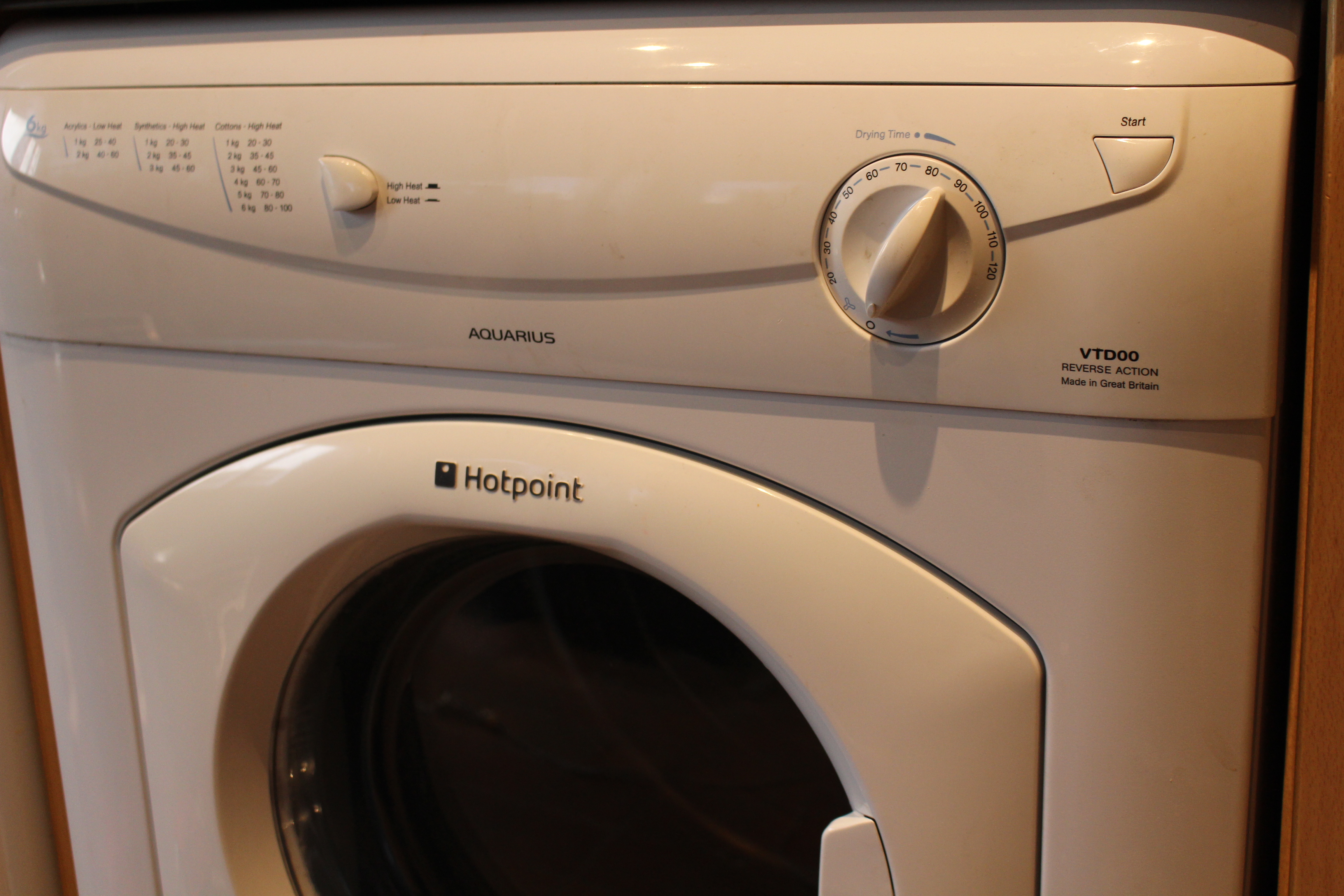
Hotpoint ‘Rumble’ Tumble Dryer VTD01

A noisy tumble dryer gets fixed cheaply

Strange noises from machines play on my mind.  None more so than when that niggling noise starts to get worse.  Noises like that usually mean two things.  Catastrophic failure and expense.

Time to disconnect from the mains and fetch the tool box.

The patient in the surgery this week is our own Hotpoint tumble dryer.  We avoid using it at all costs, but with miserable English weather and two children, getting washing turned around efficiently, ready for use is mandatory.  To be frank, I’d noticed the excess whinning bearing noise coming from the dryer for a few uses, but it was getting to the point where it was hard to ignore.

Electric hot air tumble dryers are pretty simple things.  They work by sucking cool air in, heating it up under thermostatic control and then blowing it in to a rotating drum.  The moist air is then expelled via a filter and then hose, to atmosphere.  Tumble dryer models of this kind will have the following:  A motor, heater, thermostat circuitry, timer and a drum.  There isn’t much to go wrong and many parts for UK tumble dryers are available, cheaply from places like eSpares.co.uk.  Usually, no special tools are required if you want to have a go at fixing your machine and I recommend you do of course.

IMG_7419
FixItWorkshop, Worthing, December’18, Hotpoint VTD01 Tumble Dryer.

After opening up the cabinet, access to the drum and motor was available by the side panel which was held in position with several self-tapping screws and hooks.  Care must be taken if you attempt something similar on your machine since there are plenty of sharp edges to watch out for.  This dryer features an AC induction motor (which has no motor brushes).  It has a spindle which runs through the motor with a pully one side to drive the drum via the belt and a fan the other to blow the hot air.  Removing the belt and spinning the motor by hand revealed the problem.  The spindle spun OK, but sounded rough.

Replacement motors are available at a reasonable £90 or so, but you know me by now, I don’t like spending that kind of money, unless I have to.

The motor is attached to the appliance with simple bolts and is removed easily.  The motor is held together with self-tapping screws, which are easily accessible.  Just two bearings feature in this motor; one at each end to support the load.  Both bearings sounded rough, but seemed not to be worn too much.  The bearings are standard items and it would be easy to find exact replacements from a bearing supplier (rather than replacing the whole motor), for under £20.  However, as this was my own machine, I went for cheaper fix, to squeeze more life out of what I already had.  With the dust cover popped off from both bearings, I cleaned both with isopropyl alcohol cleaner and then re-greased with quality high-melt point bearing grease.  Much better.

This slideshow requires JavaScript.

The motor re-assembled, re-installed back in the machine and it was time to switch on.  It now sounded as sweat as a nut.

If and when the bearings get noisy again (and they will eventually), I’ll replace the bearings with new ones.

Cost of replacement:  circa £200.  Cost of repair:  My time, two cups of tea, one custard cream, a bit of grease.  Not in that order.

fixitworkshop.co.uk repair service and blog

The diary of a tinkerer: Stories, advice, tips and sometimes the odd failure to inspire your own repair.

The diary of a tinkerer: Stories, advice, tips and sometimes the odd failure to inspire your own repair.

Update July 2023:

Matt Marchant is also appearing in Retro Electro Workshop, on Yesterday Channel and UKTV Play, alongside Rob Howard and Shamil Joomun.

  1. I write about things I fix and even those I can’t
  2. I offer a repair service for a small fee
  3. I occasionally volunteer at Repair Café and similar events in Sussex and surrounding area

The tinkerer at FixItWorkshop.co.uk is Matt Marchant

I love repairing things and hate throwing things away that can be saved. There’s far too much waste in the world.  Many things that can sometimes appear unrepairable, are indeed repairable, with a little tinkering. I want to encourage people who doubt their own ability to repair their things, to give repair a go.  After all, if ‘that thing’ isn’t working, grab a screwdriver, take it apart and investigate.  What have you got to lose? I’ve been tinkering with bikes, cars, coffee machines, toys and vacuum cleaners and pretty much anything that can be dismantled since I could hold a screwdriver.  I’ve worked for BT as a senior engineer, and I’ve studied design, business and electronics. Enjoy the repair diary of a tinkerer.  I hope it gives you a nudge to repair your broken thing.  If you can’t, I might be able to help.

Scroll through articles on repairs, views and news.