
Inside The Real Repair Shop 11: Lego, Radios and Allegros

This time, Matt talks about cars on fire, tinkering and repair education.

Festive greetings from the workshop and well, hasn’t the year flown by?

As some of you know already, repair work is a bit of a side-hustle for me, and it’s something I’ve enjoyed since I was a child. Seriously, I would dismantle my parents’ vacuum cleaners, radios, clocks and later, the family car’s engine. Things sort of got out of control when I set fire to my uncles’ Austin Allegro though by muddling up some dashboard wires. Fortunately, the Allegro was made of stronger stuff and survived my handy work, despite a few scorch marks. Anyway, what were they thinking, letting an 8-year-old work on a car unsupervised!

For me, a long-long time ago now, a Fisher Price handyman set turned into Lego building and craft play using old washing up bottles and loo rolls. This turned into blowing up electronics kits, which then moved on to building bikes and cars.  As a late teenager, I then got an apprenticeship with BT and studied while I learned about telephone exchanges and communications technologies. All of this might explain why I was never picked for the school team. You can’t have it all, I guess.

Playing with Lego and kits from Tandy (remember them?) for me as a kid definitely helped me to have a positive approach to repair and to not be fearful of getting it wrong. We only really learn from mistakes, of course. And I was lucky to have people around me at the time who were (mainly) happy with me dismantling household things with real tools, taking risks with real appliances and building weird inventions in the kitchen. But it wasn’t all good-humoured in our house! I still remember getting a stern telling off for dismantling a Mini carburettor on the draining board, next to the family’s drying crockery. My mum was upset with me for some reason.

Where’s all this going anyway? Well, as an adult who sometimes acts all grown-up, I’ve since had time to reflect on this maybe unusual set of circumstances, which ultimately lead me to where I am now in Worthing, at 44 years of age. I make no apology for being a pushy parent to my two daughters, encouraging them to create and build stuff; from toilet rolls and sticky tape to their increasing collection of Lego sets, or are they really my Lego sets? I want my kids to learn as I did, the joy of building, testing and usually failing to solve problems. It doesn’t always work like that, but you know what I mean.

I get a wide range of repair enquiries in my inbox, from Kenwood Chef restorations to lamp re-wires to kids’ toy repairs, many enquiries with interesting back-stories too. But sometimes I just can’t take on a repair if I feel that it can be done by the person enquiring. For example, fitting a new plug to an appliance, which I feel, if needed, should be attempted by most folk. The main issue affecting many people, and therefore preventing them from tacking the job themselves, is a lack of confidence. I see it all the time, from vacuum cleaners that just need minor adjustments or cleaning, to lamps that only need a new bulb.  When people ask me to do repair work like this, I’ll always give them the option to do the work themselves first, with some guidance – which probably isn’t good for business, but will ultimately help that person to maybe help themselves.

Of course, as adults, there are local repair cafés, DIY college courses and YouTube that can help any budding diy’er, but to be truly repair savvy, I believe that one must start their learning younger and begin through play and the classroom.

In this article, I wanted to share some of my educational thoughts on repair.  Appliance repair and general household maintenance isn’t covered as a subject at school (in the UK) to my knowledge, and as we make it to adulthood, we’re just expected to figure it out for ourselves or ask someone else. The closest we get to repair work in secondary school is in Design Technology, but hoover teardowns and rebuilds are not covered.  Is this because it’s perceived as unglamorous, basic, simple work, I wonder? Perhaps it’s something I’ll take up with the current Education Secretary, although I’ll have to be quick, as it may all change next week! In all seriousness, our education system needs to encourage practical self-reliance, encompassing repair, if our government is truly serious about sustainability and our environment.  In the same way that secondary school mathematics should include topics on mortgages and loan applications, technology subjects should also encompass domestic appliance fault-finding and furniture assembly education, alongside more classical topics so that our children today turn out as adults tomorrow, who can, at least, wire a plug.

Until the next time…
More power please

Does your toy have enough energy?

IMG_20200304_211145
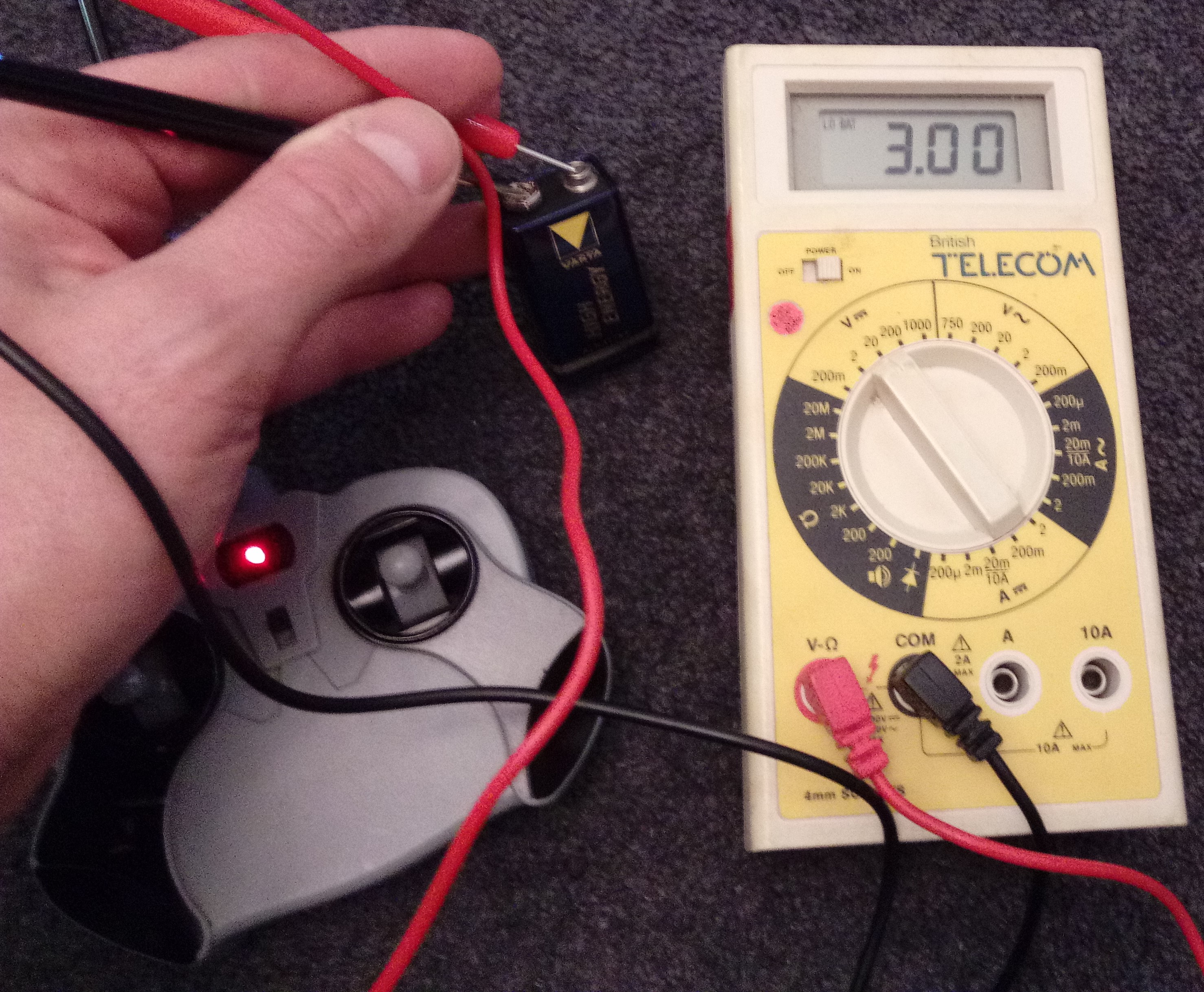
FixItWorkshop, Worthing, March’20, testing a battery (featuring my retro BT multimeter).

I’m not a fan of batteries. They run out and always when you least expect it.

You know that anything with a battery, will need attention at some point.

Batteries either need to be replaced or better, recharged.

But often, replacement batteries are the only option for toys, which can mean high running costs. Especially when the toy is played with continually by an enthusiastic child owner!

Trouble is, a mixture of built-in obsolescence and poor design means that it’s just not obvious how one replaces duff batteries meaning that, I suspect, lots of toys get thrown away needlessly, but it’s not the owners fault necessarily.

Sadly, some replacement batteries cost more than the toy itself, which is just mad.

Make and model: toy radio control car (no brand or model)

Fault reported: Not working

Cost of replacement: £10ish

Manufacturer support:  0/10

Cost of parts: £5 (batteries)

Hours spent on repair: 30 minutes

Tools needed: Screwdrivers, test meter etc

Sundry items: None

Repair difficulty: 0/10

Cups of tea: 1/2 cup

Biscuits: None

This slideshow requires JavaScript.

The owner of this toy had played with it non-stop wearing the batteries out.  Mum and dad had replaced some of the batteries in the car part of this toy, but still the toy didn’t work.  It wasn’t clear to the parents, which batteries in what part of the toy needed to be replaced, which meant that an email asking for help, popped in to my inbox.

At first glance, the car part of the toy had no battery cover or compartment, but on closer inspection, the car separated in to two halves, allowing access to the 4 X AA (1.5V) batteries.  Not a straightforward task for everyone.  Testing each battery revealed that they were all worn with an average of 1.3 volts (much lower under load) each.  I replaced these with fresh ones and put the car back together.  The car’s casing was simply held together with a clip and a couple of small screws.

However, the toy still wasn’t working, time to test the radio controller.  Again, a screwdriver was needed to open the battery compartment to access the battery.  Not all households have screwdrivers (even though I believe they should!).

Testing the 9V PP3/ 6LR61 battery revealed around 3 volts, 6 volts too low.  Again, a new battery got the radio controller working once more.

Doing this ‘repair’ got me thinking.  Batteries can be tricky things to manage.  New ones can go flat when not in use and old ones that have been kicking around in a drawer for a while can be fine to use.  One can replace batteries with ‘new’ ones which are no better than the ones fitted, leading a user to believe that the ‘thing’ must be faulty.  A false positive.

With a little basic training on multimeter use, hours and cash can be saved by testing pesky batteries.  At under £5 for a basic multimeter, it could be money well saved for any household.  Just a thought.

With both car and radio controller switched on, the toy sprung to life.  Of course, I had to test the car thoroughly before handing it back(!).


Aldi Bauhn Radio with no power

A cheap radio gets a cheap fix.

I love a good radio.  I used to collect them as a kid, working or not, do them up, get them working and I eventually ended up with, er… lots.  I’ve since scaled my collection back a bit these days to around 10 or so, quite frankly more than is healthy really.

So when someone got in touch recently with a broken DAB radio to fix, I got quite excited.

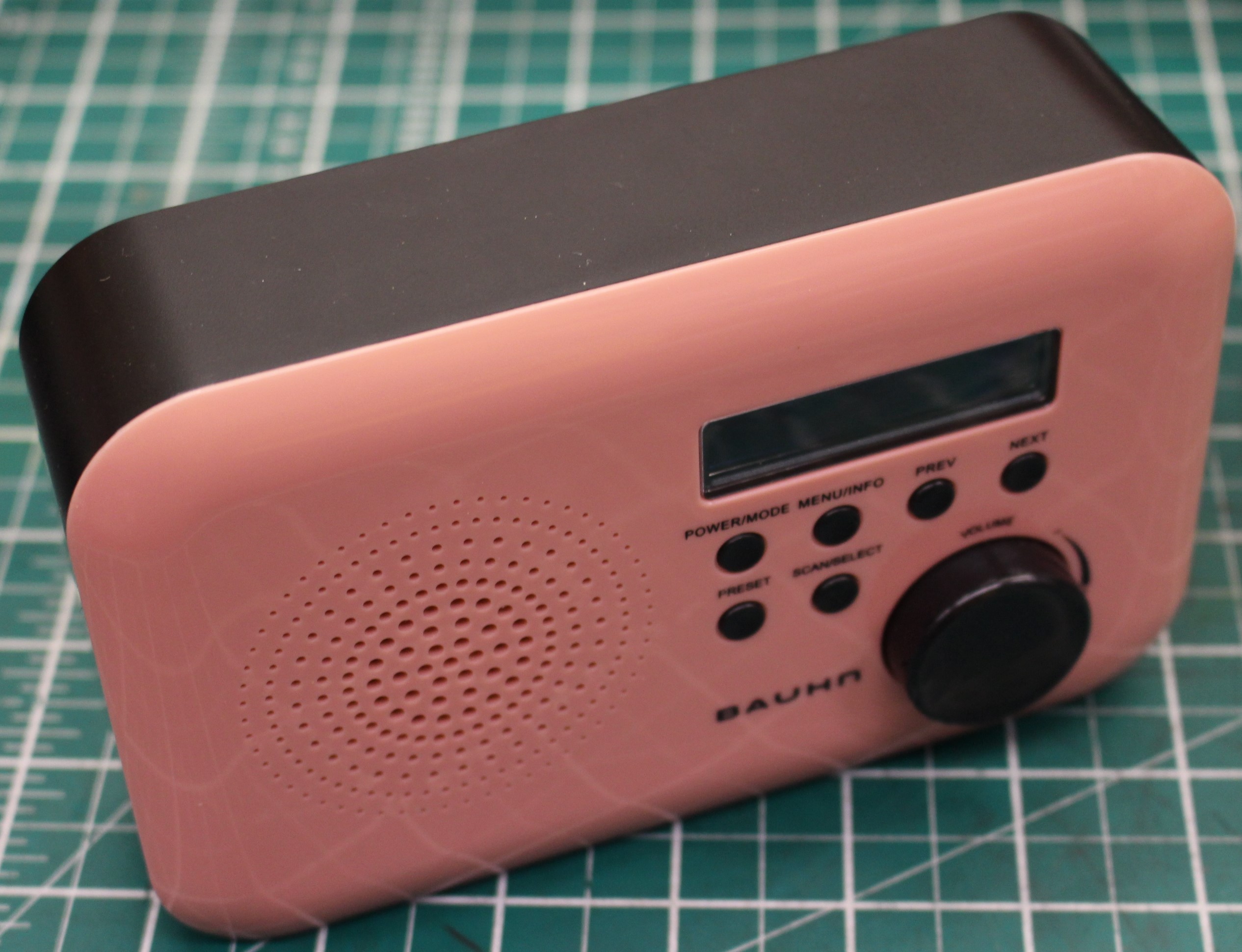
IMG_8145
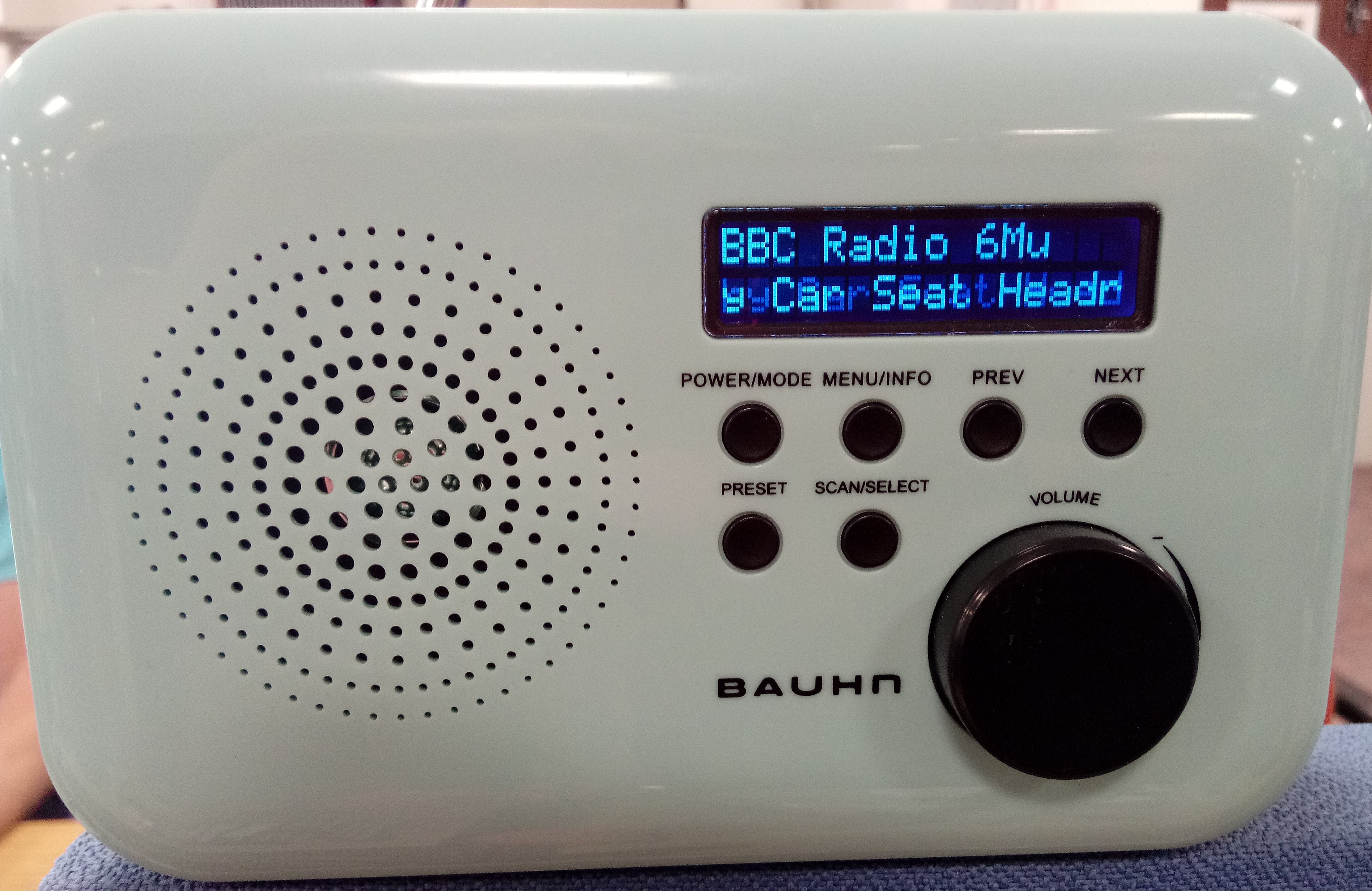
FixItWorkshop, Worthing, February’19, Bauhn DAB Radio.

These Bauhn DAB radios (available from Aldi or Lidl in the UK, I think) were on the market for about £10 and at that price they represent great value when compared to more expensive devices.

However, the one in the workshop appeared to have a problem power connector, which when wobbled, made the radio work intermittently.  Suspicious.

Having already repaired a similar radio with a similar fault before, I decided to video the repair to encourage others to check theirs, if something similar happens.  I hope you find it useful.


Happy fixing!

Cost of a new radio:  £10.  Cost of repair:  One cuppa and a bit of tinker time.

Non-starter: Pure Evoke H2 DAB radio

My own radio gets the workshop treatment.

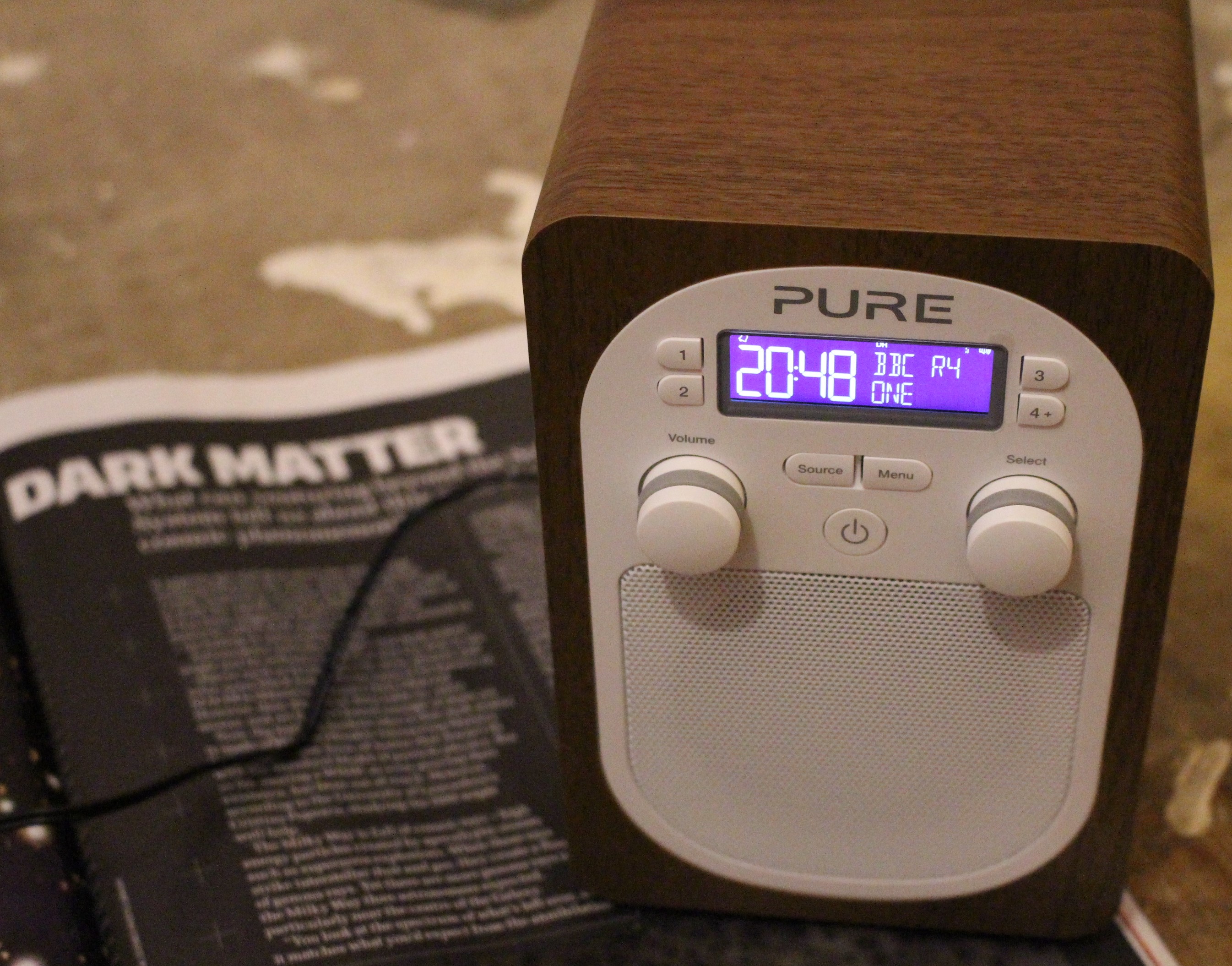
Who wouldn’t love a new DAB radio for your birthday?  Well, that’s what I had this year and I was thrilled to receive this Pure Evoke H2.  After choosing a suitable location on my desk, I quickly unpacked it, plugged it in and…nothing.  Booooooo!

The display backlight appeared to glow a little, but that was it and I was missing Today on Radio 4.

IMG_7657
FixItWorkshop, Worthing, November’18, Pure Evoke H2 DAB radio.

To save a quite frankly dull story, the returns and replacement process offered by the company who supplied the radio was hopeless.  But, after 2 months, I ended up with a replacement radio, in addition to the one I already had.  The second radio worked, albeit with some fettling required to the speaker to make it sound ok (another story).

Time to dig out the screw drivers as I had nothing to lose.

Just 6 screws hold the back on and with these removed, the radio’s innards were exposed.  Now, I’ve made radios from kits in the past using components I can hold with my fingers, but with this radio, the circuitry was teeny-weeny and I would have to have some luck to fix it.

I was in luck.  The radio is made up like a sandwich.  The front fascia is screwed to the cabinet and the back, that I’d removed, was screwed to the cabinet, from the other side.  There are data-style cables between the two halves and one of them appeared to be loose.  I carefully pushed the connector ‘home’ and then re-applied the power lead and wouldn’t you know it, the display lit up and it burst in to life.  Now we’re talking.

Thinking I’d sussed it out, I screwed the radio back together and had about a week or two of unbroken service, until the screen froze and then nothing. Oh no.

Re-opening the back of the radio, I suspected that the tiny soldered pins on the back of the multi-way connectors on the data-style cables, had been dislodged.  I have average sized hands for a bloke, but I needed tweezers to get the connectors on during assembly.  I wonder how much it would have cost to add an inch or so to each cable, to make manufacture easy.  As a consumer, I would have gladly paid the extra penny.  I suspected that this is how the original fault came to be as it wouldn’t have taken much more than a shove in the wrong direction to break the delicate connectors, due to the short length of the internal cables.

This slideshow requires JavaScript.

Since this circuit board is a tiny stamped component affair, I had to be quick and neat with my re-soldering.  Each pin to PCB connector re-soldered, cables re-attached, back screwed back on and the radio worked once more.

Pure have a reputation for easy to use, excellent sounding products.  It’s just a shame they have seemingly penny-pinched on some of the internal gubbins on this model.  If yours develops similar symptoms, don’t give up, take the back off and have a look.

Cost of a new radio:  £40-90.  Cost of repair:  5 mins tinker time, one cup of tea.

Very quiet Bauhn DAB Radio from Aldi

A little DAB radio, repaired at the workshop.

A colleague of mine brought this cool little DAB radio in to the workshop as it’s once crisp DAB tones were now no more and all life from the little device, had seemed to have ceased.  It was, very much, a dead radio.  When working, it picked up every station available, really clearly and seemed to out-perform the much more expensive devices my colleague also owned.  However, after a few months in the hands of his son, the radio would no longer turn on when plugged in.

IMG_20180515_153713.jpg
FixItWorkshop, May’18, Aldi Bauhn Radio, in for repair.

It was brought from Aldi for under £10, which seemed like a bit of a bargain to me.  It’s amazing just how much DAB radios have fallen in price in the last 5 years or so.

IMG_20180515_153836
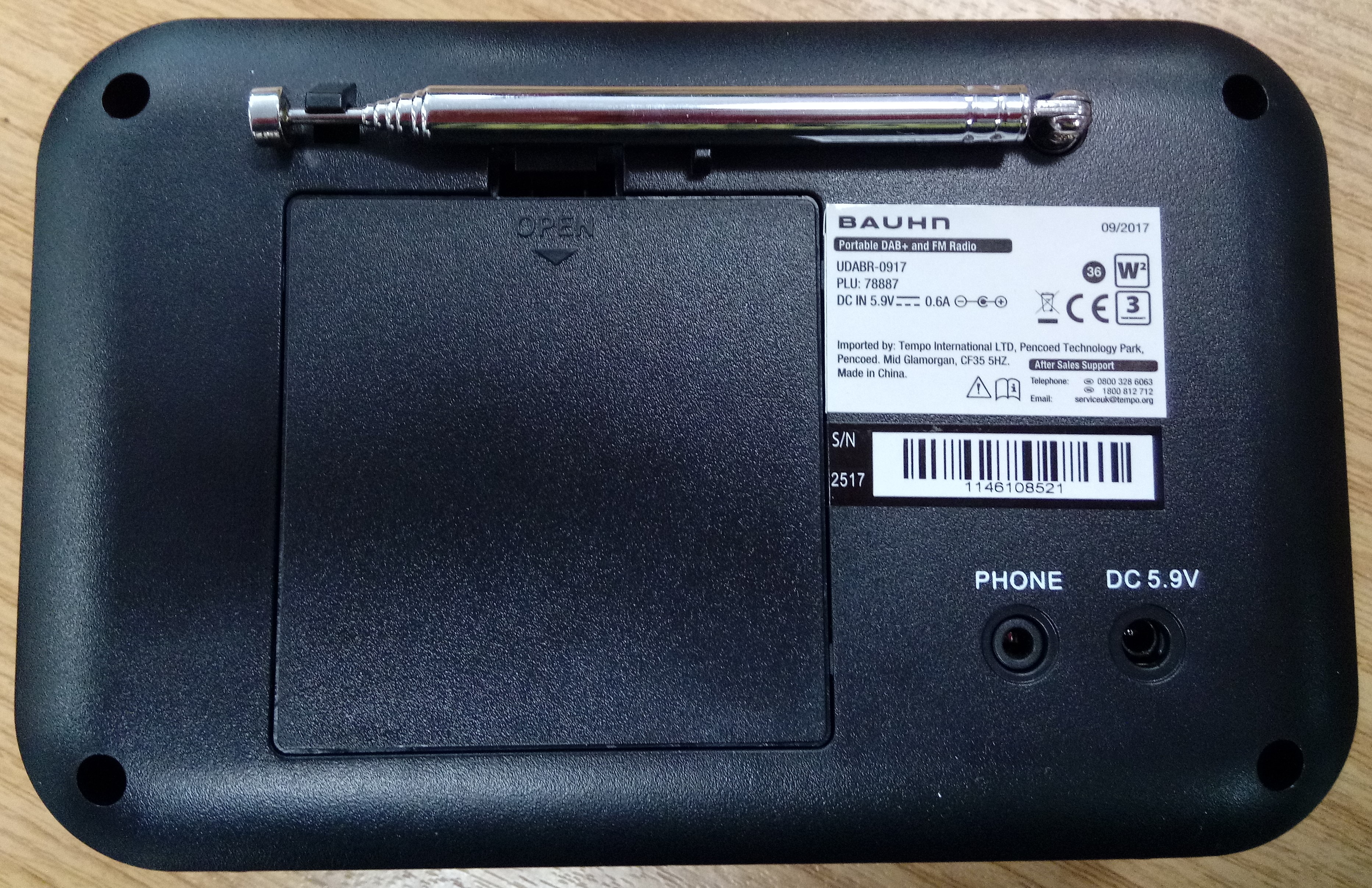
FixItWorkshop, May’18, Aldi Bauhn Radio, in for repair, back of the radio.

The Bauhn UDABR-0197 (catchy name) is a compact, portable radio and is capable of being used with either a plug-in adaptor (supplied) or 4 x ‘AA’ batteries.  When powering this radio using either plug-in adaptor or batteries, the little radio refused to do anything.  Very sad.

I always start with the basics, so I checked the power from the plug-in adaptor first, which seemed to be delivering its 5.9VDC, pretty much spot-on. As a side note, I always check the condition of plug-in adaptor leads and plugs as they seem to almost always be made of the thinnest wire available in the Far East and prone to cracking causing poor connections.  This one was fine.

Opening up the radio was really easy, just 4 cross-head screws and the two halves of the radio came apart without any major dramas.

The first thing you notice about (cheaper) small appliances like this, is the ‘lack’ of anything inside.  The circuit boards in new small devices can sometimes be multi layered affairs, using micro components, making repair with normal workshop tools very difficult or impossible.

Luckily for this little radio, the designers have had the foresight to keep the power distribution board separate from the main ‘radio’ gubbins and this seemed to be of conventional construction.

On closer inspection of the power distribution board, it revealed a break in two of the pins from the ‘power-in’ jack socket meaning that power would not get through to the main circuit board.  The two pins were also shorting together, causing a local loop connection.  This meant than neither mains adaptor supply nor battery would power the radio.  Problem realised.

I was then able re-make the connection using a soldering iron on the board, reconnecting the pins to a spare section of copper detail on the power distribution printed circuit board.  Very satisfying.

Once the radio was back together, all screws back in place, power supply connected, the radio burst in to life, just in time for me to listen to my favourite station.  Happy days.

IMG_20180515_155029
FixItWorkshop, May’18, Aldi Bauhn Radio, in for repair, all fixed.

Cost of a new radio; £10.  Cost of repair; A bit of soldering and a cuppa plus gingernut biscuit.