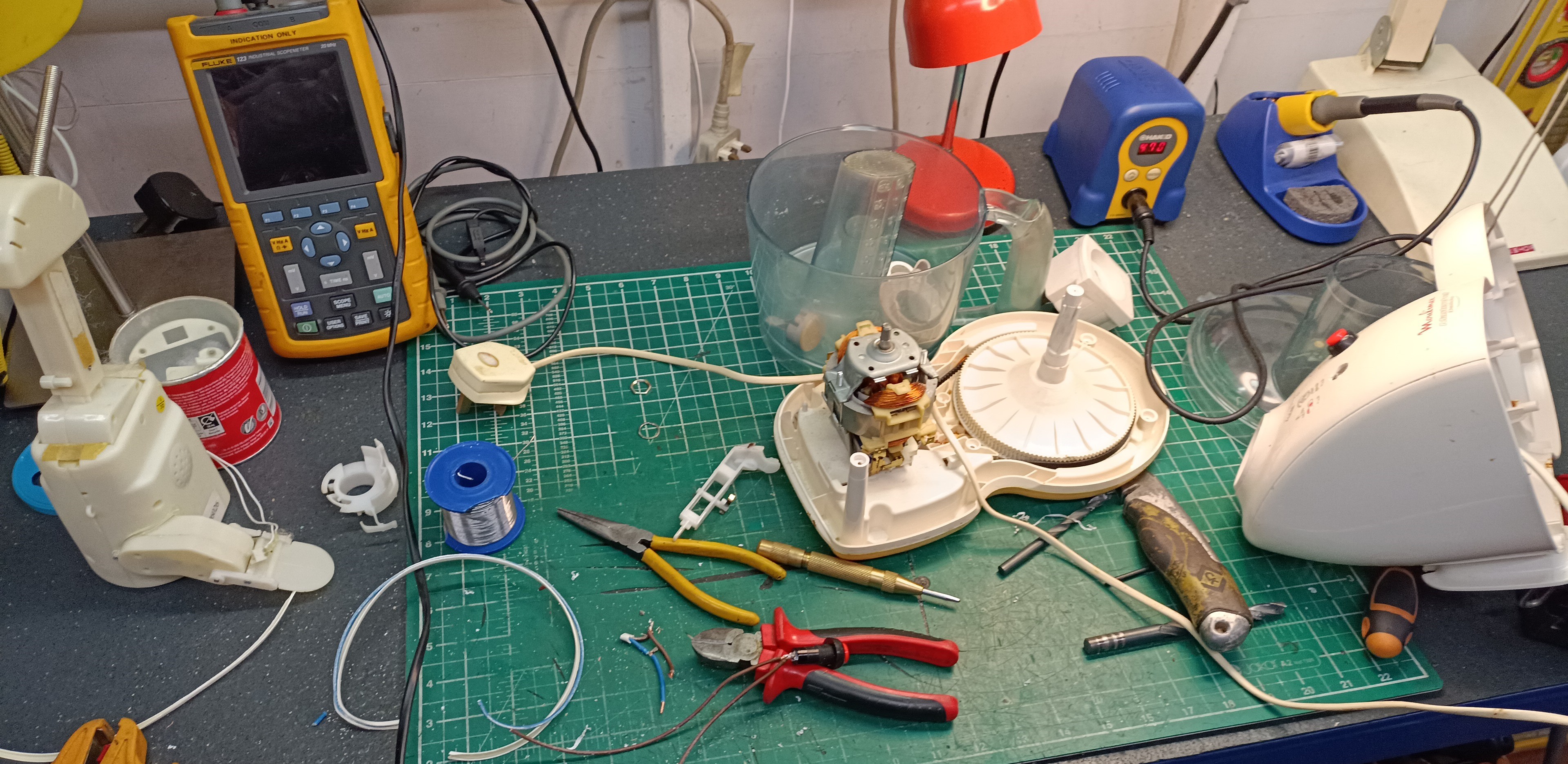
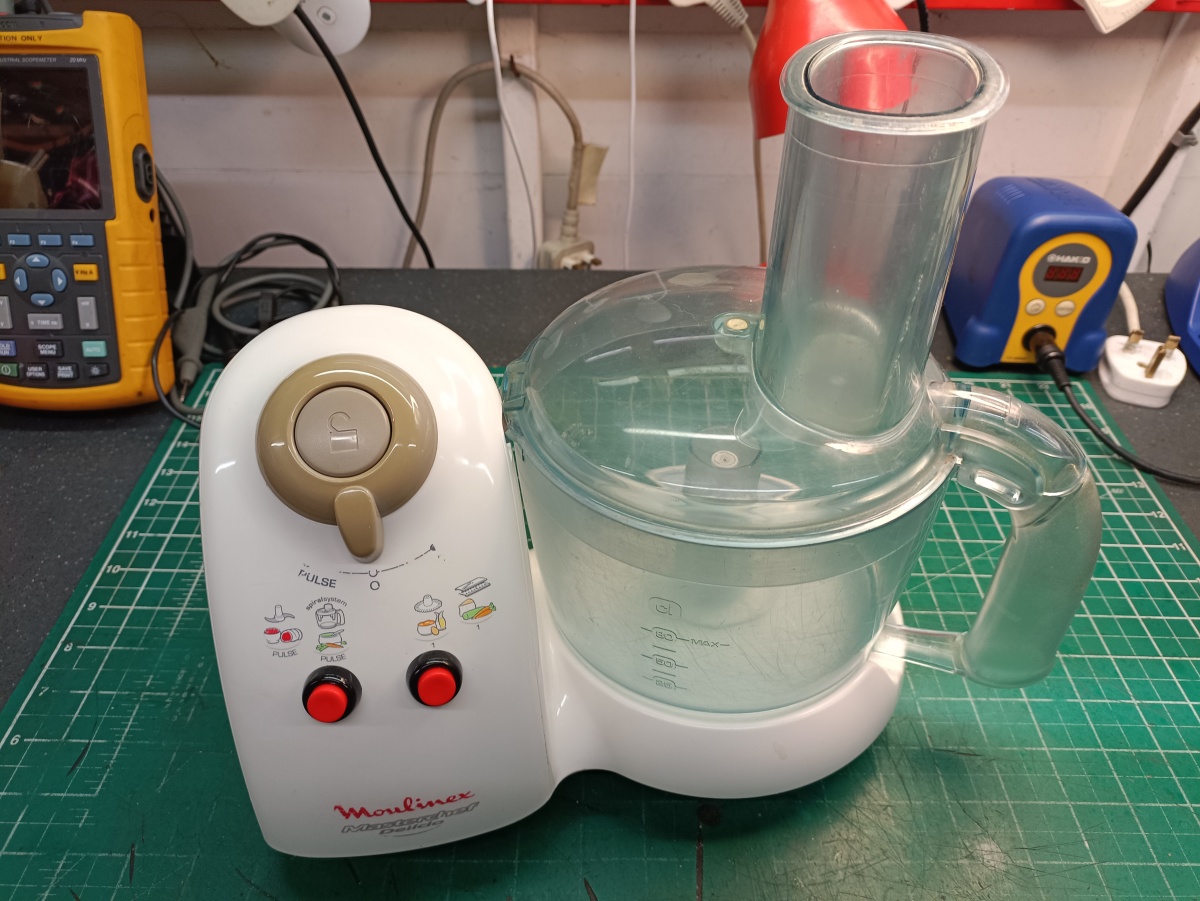
Moulinex magic in the workshop

Economically unviable, virtually no manufacturer support, practically zero second hand value. I’ve had worse machines through the workshop.

It’s not always about the cash…Better crack on.

Make and model: Moulinex Delicio (food processor)

Fault reported: Broken switch

Cost of replacement machine: £40.00 – £50.00 for an equivalent

Manufacturer support (in the UK): 0/10

Cost of parts (for this repair): £ under a tenner, including all parts, but not labour

My time spent on the repair: 1 hour

Tools needed: Small knife, pliers, small screwdrivers, soldering iron

Sundry items: Cable, heat shrink

Cleaning materials: Silicone spray, contact cleaner, wipes

Repair difficulty: 5/10 (fiddly)

Beverages: 1 tea

Biscuits: 2 ginger nuts

Bad language: 2/10

It must start early.  An attachment to inanimate objects, a personification if you will, of machines and their mechanical feelings.  Maybe it starts with teddy bears, Lego people or Matchbox cars. Of course, deep down I know that machines do not have feelings, but I do sometimes find it hard to simply give in with something, and throw it away. 

I don’t think that it’s a coincidence that many classic cars, rescued from the crushers’ teeth, tend to have a ‘face’.  Indeed, designers can often hit on a million-seller, if they get the ‘face’ right.  Think VW Beetle, Morris Minor and Mini. Perhaps these shapes bring back childhood memories of a favourite cuddly toy, which might translate to them being taken care of better and cherished for longer.

Anthropomorphism, the attribution of human traits and tendencies, is something many of us experience, but us repair nerds seem to take it to another level.  I’ll have to think of a catchy name for it.

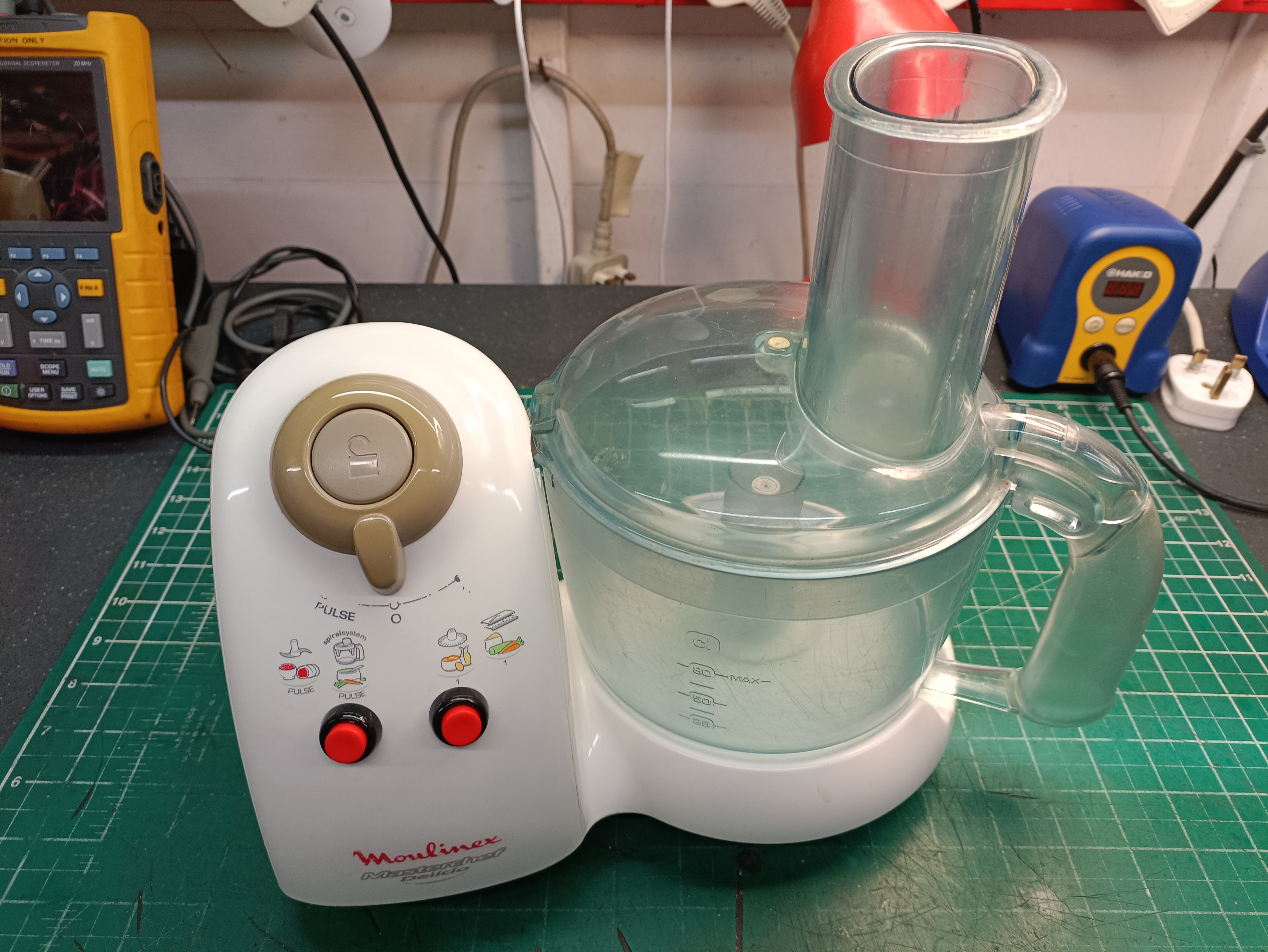
All this has reminded me about a recent such situation where my mum asked me if I could fix her broken Moulinex Delicio food processor, if it wasn’t too much trouble. 

The condition I ‘suffer’ from certainly doesn’t run in families and my mum was at first, ready to recycle the thing. But remembering all the cakes made with it over the years, especially ones made with my two daughters, seemed to put a different complexion on matters. So, I took the mixer away with me and put it on the workshop shelves, awaiting some attention.  At least there were other machines alongside, to keep it company.

Many food mixers tend to be large, heavy and bulky affairs which is OK for many, most of the time, but if you can’t manage the weight of something like an eleven kilo Kitchenaid Artisan every time homemade brownies are called for, something like this little light-weight Moulinex is ideal. So, two compelling reasons to keep the mixer; it’s lack of weight and some fond memories.

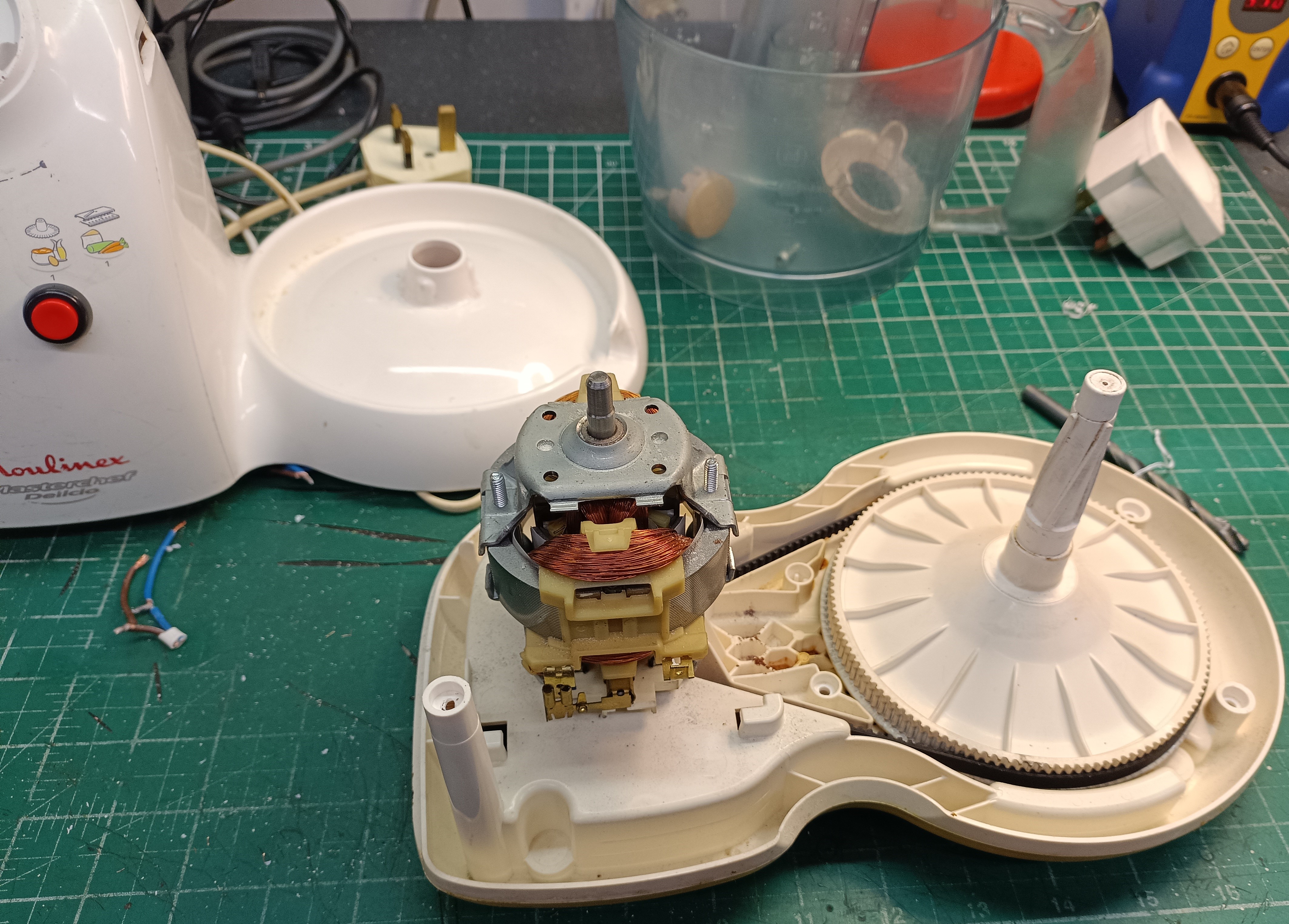
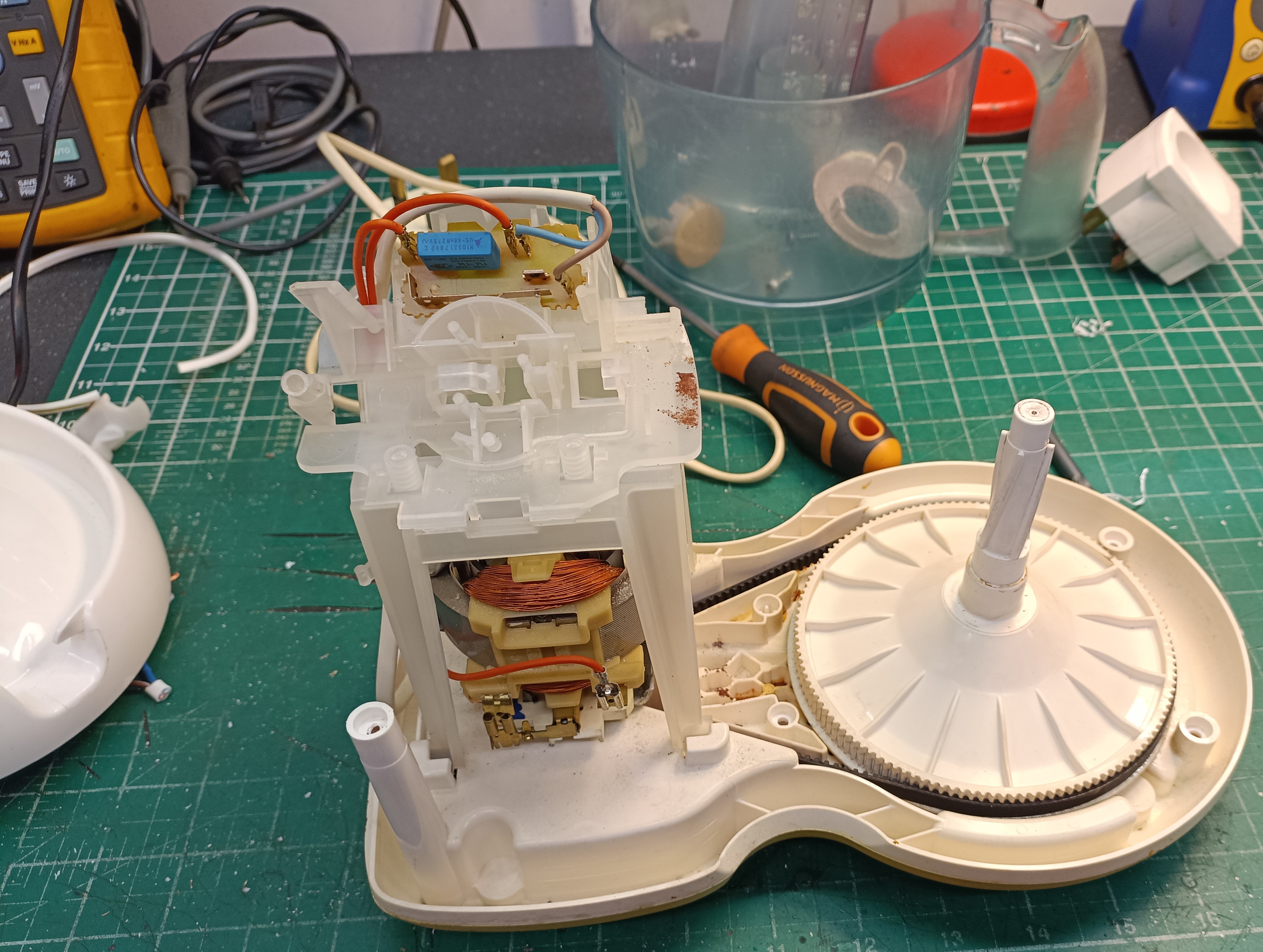
The problem was that the main on/off switch didn’t seem connected with the rest of the machine and to make things more complicated, the integral lid-lock was operated with the same button.  This part is therefore quite important since it might prevent one from shortening their fingers, by not allowing the spinning blades to ever come in to contact with wondering digits.

Now, I’m sure that this all seemed rather lovely in Moulinex HQ at the time, but small plastic switches connected with several thin moving parts combined with knocks and scrapes in a kitchen, is not going to end well.  As a matter of fact, Moulinex offered the offending switch assembly as a spare part until recently, so they must have known that the design was a bit iffy.  Sadly, I missed the boat and despite several attempts, I couldn’t find a replacement part anywhere. eBay revealed a couple of similar machines with faults, so it was back to the drawing board.

3D scanning and printing makes low-volume, but high-quality production a reality, and it’s really something that I need to get into, as I often have the need to copy rare, obsolete parts.  In time, I will. 

In this case, I did consider using one of the many online UK companies now specialising in this kind of thing, but the costs did not warrant it in this instance, so a new strategy was required.  I’ve spent many hours of my life browsing parts like this in catalogues, so I decided that a repair should be possible for under £10.00, using readily available, generic switches. Yes, that should be my budget challenge then, do the whole job for a tenner or under and since it was a family affair, no charges for labour!

The Delicio is a simple machine; no variable speed controller, just a single speed operation controlled either by latching or push-to-make switch.  It gets the job done quickly and without fuss. After a quick trawl of eBay, I opted for two small round, red button in black bezel switches with solder tags.  The switch series I opted for was available in push-to-make and latching, bingo!  And at £5.98 delivered, a total bargain.

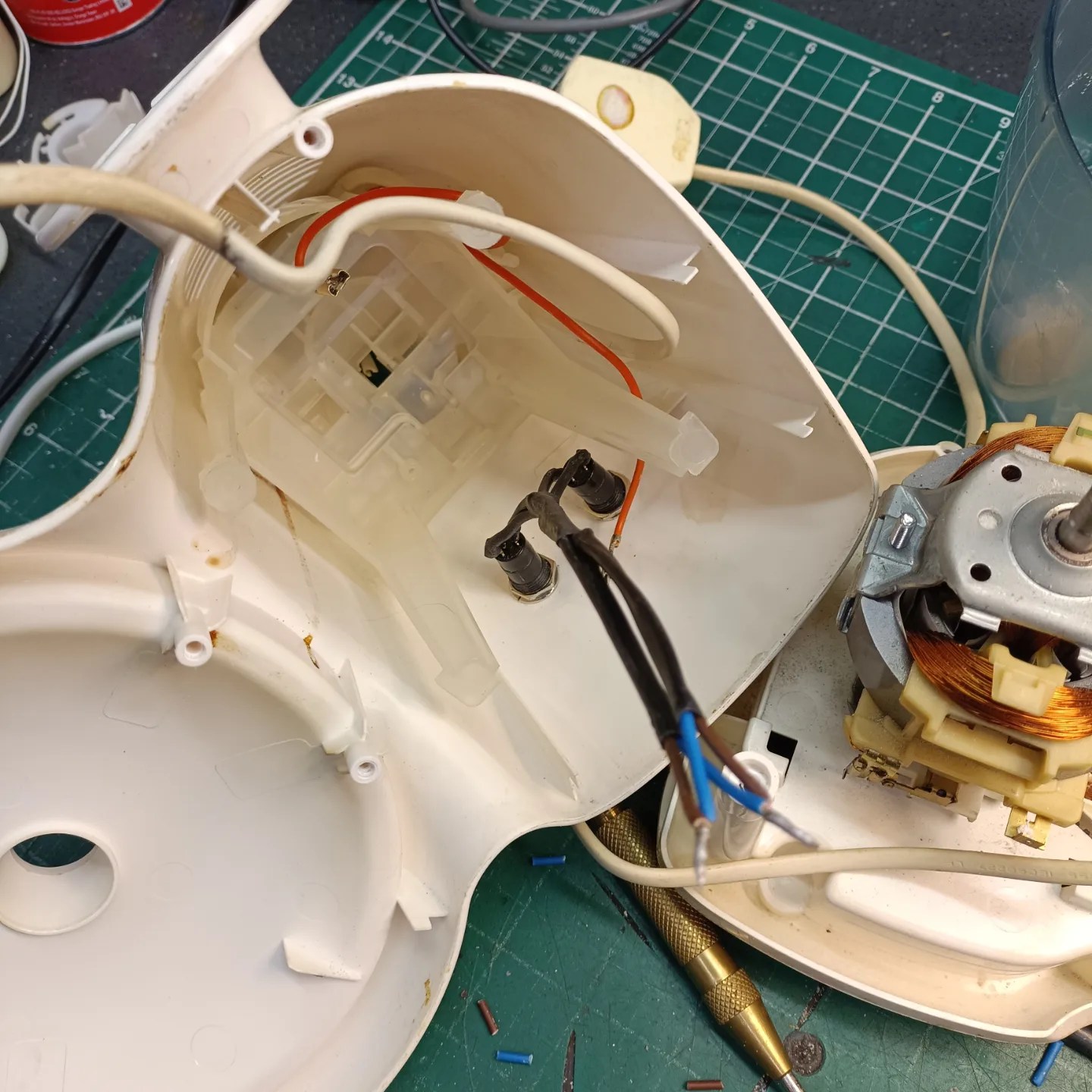
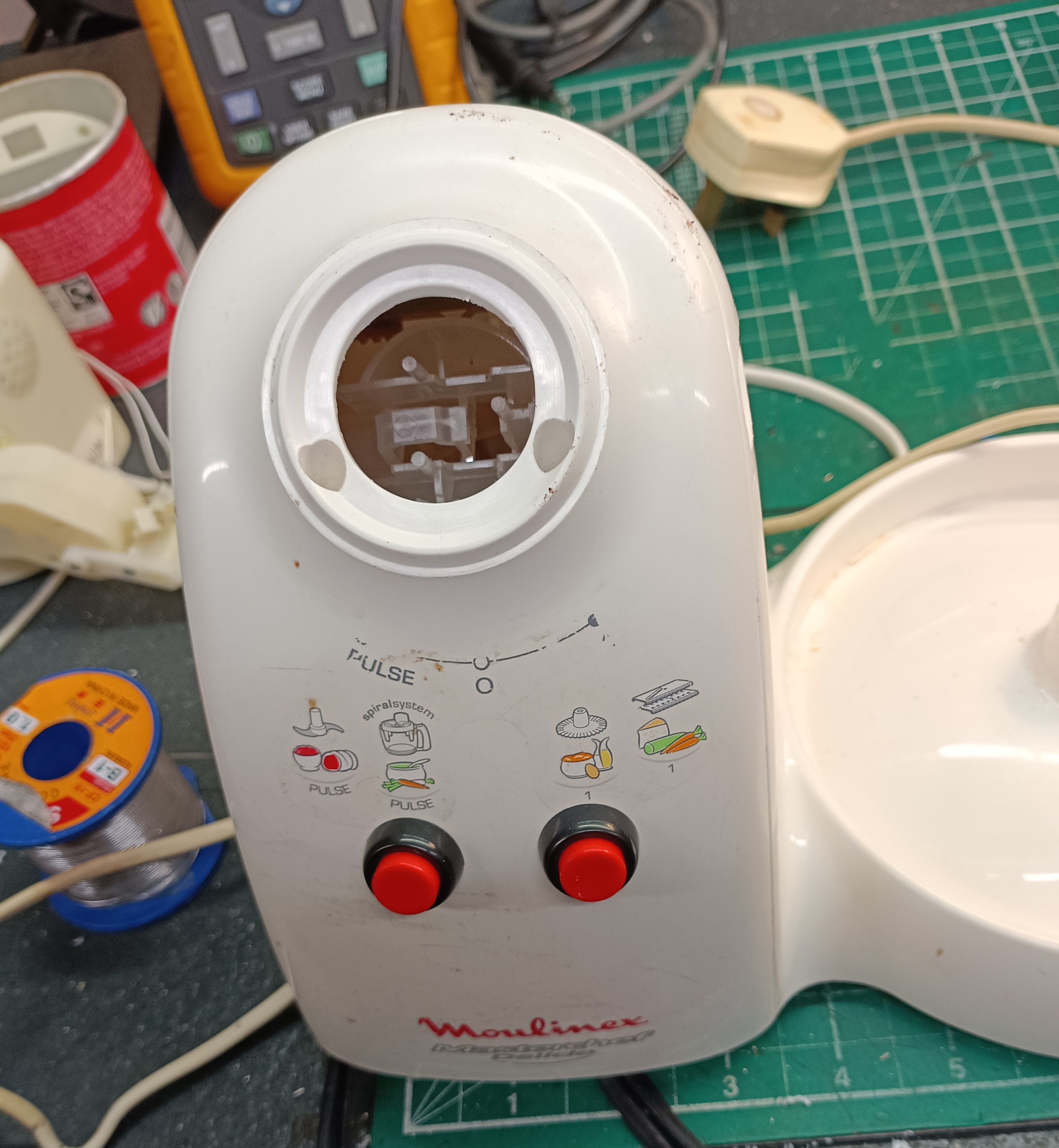
There’s something quite satisfying in selecting an item, taking it apart and then modifying it by way of repair, improvements or both, in such a way that differs little from its original design.  Subtle modifications or improvements, that the casual observer will never notice. If you look closely at the photos, I managed to line up the new buttons with the old printed text, to match the operation. Lucky.
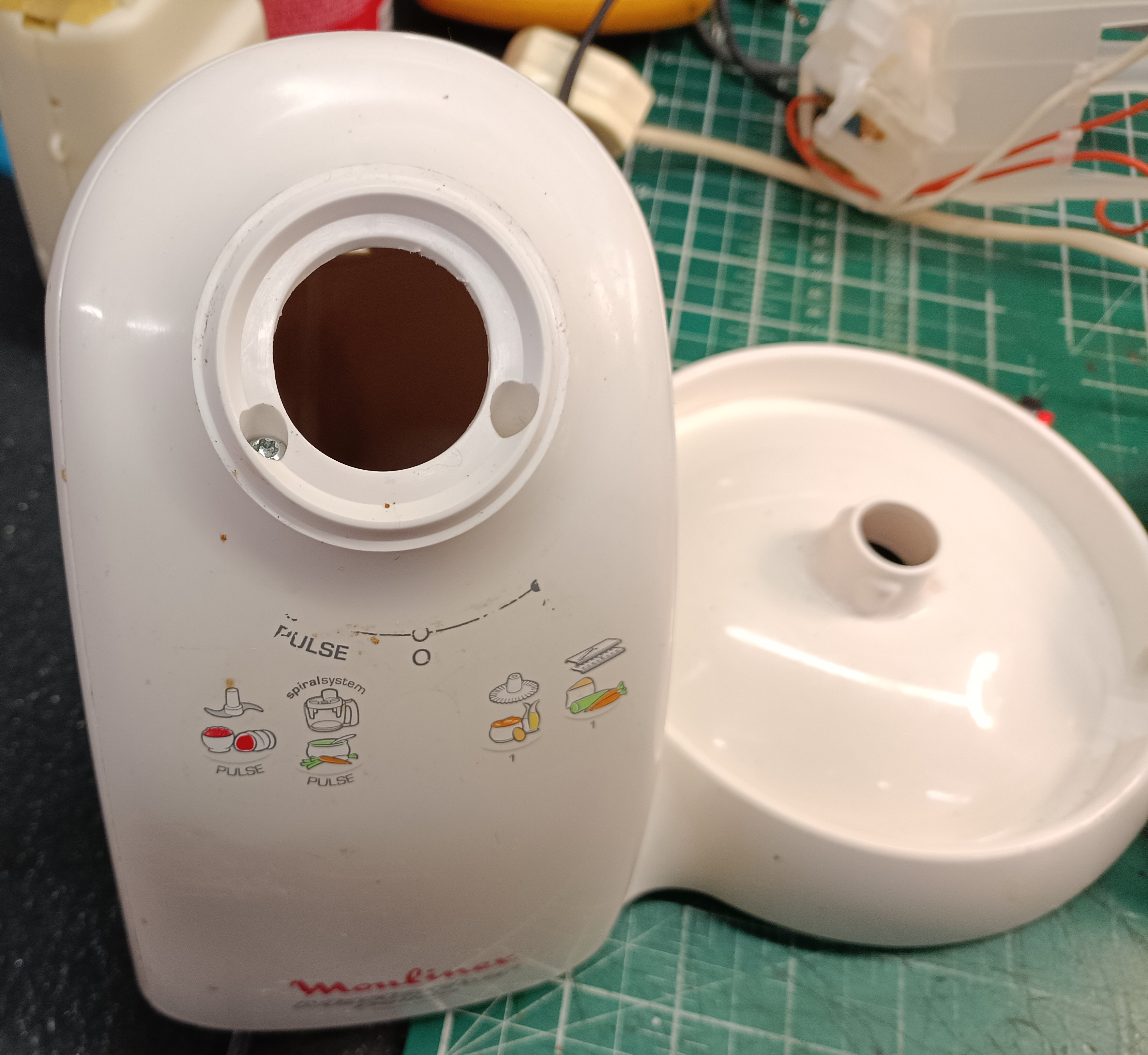
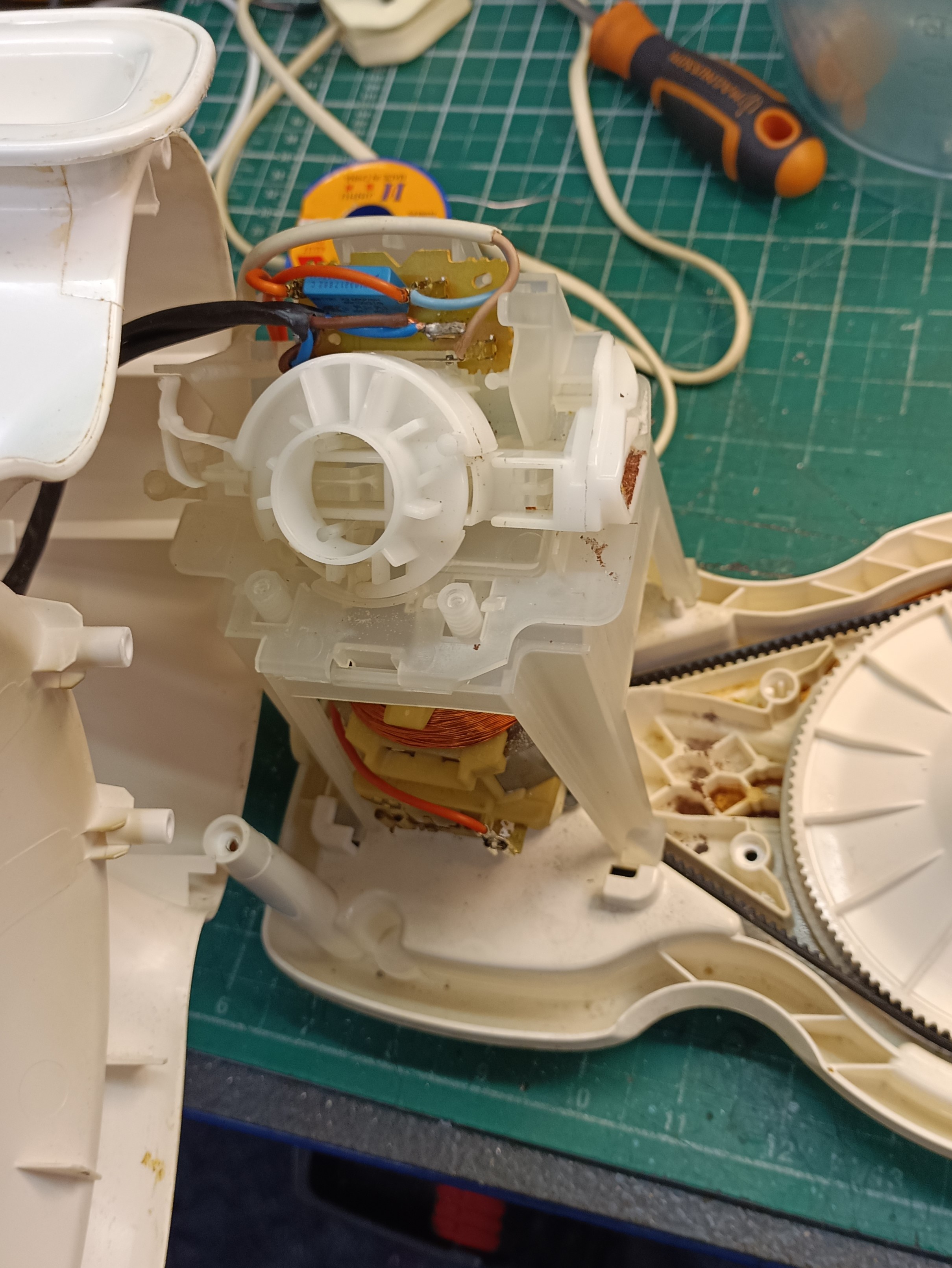
I won’t describe the repair in detail, suffice to say that I found a suitable location for the new switches in the machines’ chassis, drilled out the holes and then fitted them in place with the nuts supplied in the switches’ kit. No special tools required for this job really, just a selection of standard screwdrivers, some 0.75mm wire, heat shrink, cutters and a 12mm drill bit.  I already had some cable, I connected the new switches to the existing wiring harness, by-passing the original.

I was able to retain the original switches’ interlock by keeping the original switch in situ with a little epoxy resin.  This ensured both safety and the original aesthetic.  See what you think in the photos. I was quite pleased with it.

I completed the repair within an hour, which I almost forgot to report, included a wipe over and polish. And I managed it on only one cup of tea with a couple of my favourite ginger nuts.  Oh, and I didn’t go over budget. Any chance of a Vicky sponge, mum?!
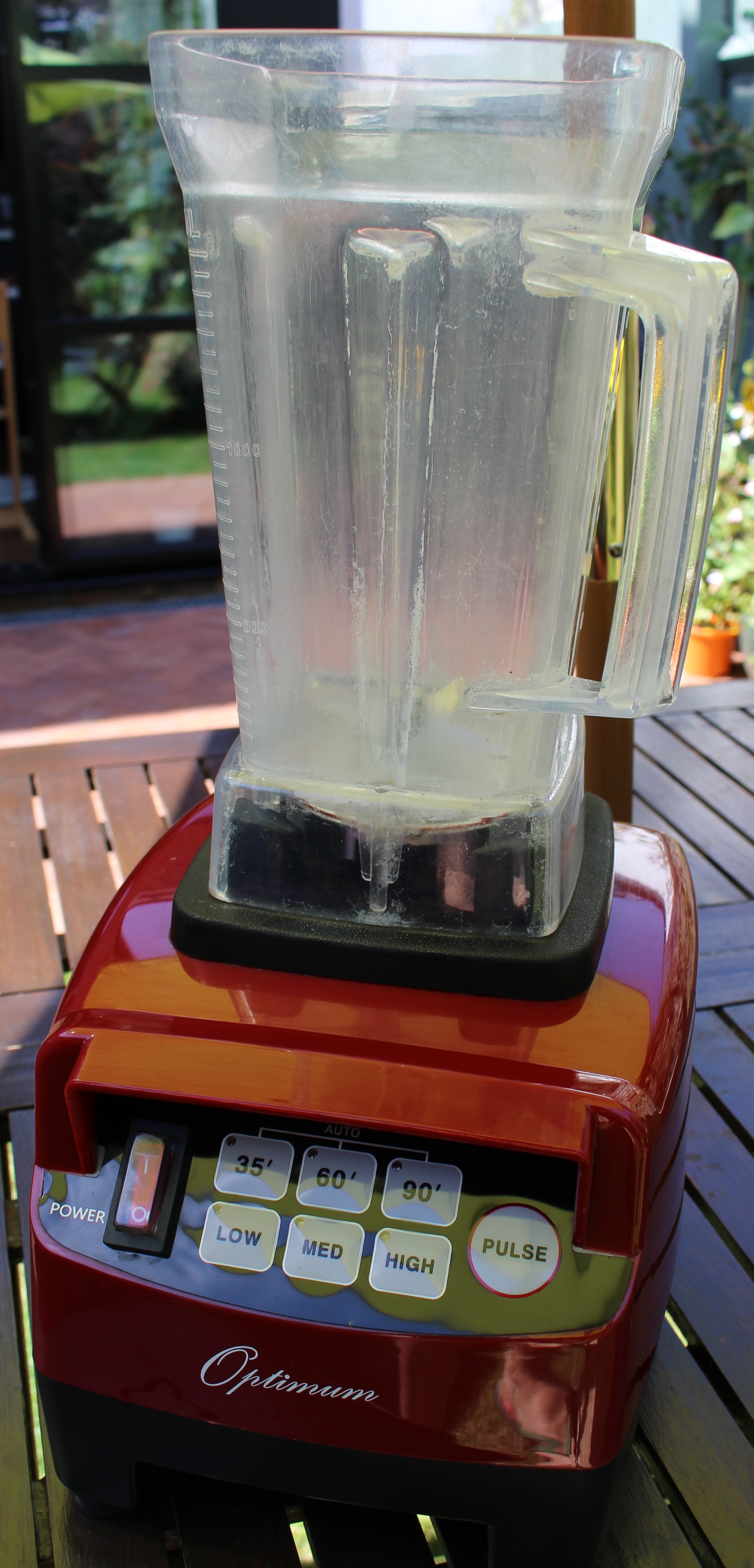
The perfect blend…

An Optimum 8200 Blender, escapes the chop!

IMG_2844
FixItWorkshop, Worthing, August’20, Optimum 8200 Blender… in red.

When I agreed to ‘have a look’ at a customer’s beloved broken blender, I had no idea that the market for blenders was so, well, juicy.  One can spend anything from £50-£1800 – a huge price range.  You have to ask yourself a question; is the juice made by a blender costing 36 times more than a cheaper one, any better?  Hmm, the virtues of blender technology, robustness and efficiency could be debated in a future, exhilarating article, maybe. But for now, our attention is on this one, the repair of an Optimum 8200 Blender.

The reason I mention the huge price range is that prices for spare parts also vary wildly too.

Make and model: Optimum 8200 Blender

Fault reported: Leaking, noisy, crunchy, horrible

Cost of replacement: £300.00

Manufacturer support:  5/10

Cost of parts: £18.95

My repair time: 1.5 hours

Tools needed: Screwdrivers, test meter, heat shrink, soldering iron etc

Sundry items:  paint, contact cleaner

Cleaning materials: Bleach, bicarbonate of soda, washing up liquid, car polish

Repair difficulty: 3/10

Cups of tea: 2

Biscuits: 2 X custard creams

I received this blender with a broken drive coupler/ socket (the bit that transfers the power to the blades in the jug) and a rough, leaking blender jug.  This high-mileage kitchen appliance had been used until it would work no more.

Upon taking the blender into the workshop, I suggested to the owner that ‘it must have been sounding rough’ for a while… There then might have been a small admission of guilt.

Now, I realise that I’m unusual.  I regularly service my vacuum cleaners, sandwich toaster and kettle and I know that this isn’t normal, so my views on machine maintenance are a little outside the bell curve.

The owner had done her own research on repairing her blender.  She’d located a spares provider and had identified the parts required, to get the blender back making smoothies, which is more than many folk do.  The trouble was that the total amount for all the new parts required, was more than the price of a reconditioned unit.  This is often the case as some reconditioning agents have access to cheaper parts, not available to regular punters, through economies of scale.  To make this repair financially viable, I was going to have to work smart.

As mentioned earlier, blenders vary widely in price and there are established names out there that command a high price.  However, look beyond the logo and things are a little greyer.  Badge engineering, colour and subtle style changes can literally add hundreds of pounds to the asking price for the same basic machine.  This is nothing new.  Manufacturers have been sharing designs and production since the dawn of time and when it comes to buying spares for an expensive machine, there can often be a cheaper route for good quality alternative spares that are compatible, intended for the cheaper variation.  The skill is knowing where to look.

This slideshow requires JavaScript.

A picture paints a thousand words as they say and the slide show above shows the stages that I went through with this repair.

Using the original parts listed for an Optimum 8200 blender, the best deal the customer and I could find was:

  • Replacement drive socket, £39.95
  • Replacement blade and bearing, £69.00
  • Tool for blade removal, £11.99

Total, £120.94 (more if you want speedier delivery). Source:  froothie.co.uk

Shopping around for alternatives…

  • Replacement blade and bearing, £18.95 for a Vitamix blender (Amazon.co.uk)
  • Repair to existing drive socket (I drilled and tapped a new grub screw), £ my time
  • I used a tool I had already to remove the old blade (a plumbing bracket) so no need to buy one

Total, £18.95, plus my time

I chose a Vitamix blade as I noticed that some Optimum and Vitamix blenders shared the same jug design.  I actually saw the blade assembly for £7.99 on eBay, but decided that the warranty offer on Amazon.co.uk, was a better deal.

Now, I know I haven’t been that scientific here, but one suspects that there is little or no difference in blender blade robustness and all the ones I’ve ever seen to date contain the same bearings you might find in a scooter or skateboard.  I suspect that the blade assemblies are all made in the same factory, somewhere.

My guess here is that the aftermarket parts supplier must charge a comparitively high price for some items to:

  • Cover staff and site overheads
  • Provide a sense of reassuring expense compared to the original purchase price
  • Potentially recover a high charge from the manufacturer

The trouble with this strategy is that many domestic appliances are worth little once unwrapped compared to the original ticket price.  The comparative high prices for aftermarket parts would likely in many cases, put a customer off doing the repair at all.  The customer then weighs up the cost of:

  • Finding someone to do the repair work
  • Doing the repair work themselves
  • The price of parts
  • The price of labour

Often, when added up, it’s cheaper to replace, rather than repair which in my opinion, not the way to go.

As a repairer, the statement I’m always grappling with is:

Value Repair ≤ Replacement Product Purchase or simply: VR ≤ RPP

So, when someone brings me an item to repair, I’m always looking for:

  • An overall repair that costs-in for the customer, encouraging the customer to keep the existing machine for longer, saving it from the dump
  • A repair that’s likely to be reliable in relation to the condition of the machine
  • An upgrade to the original design (where possible) taking advantage of the innovations or modifications to the original design that enhance longevity or performance

It’s a careful balancing act and one that doesn’t always work first time, but that’s the challenge!

I’ve gone a little off subject but it all relates.

Back to the blender, I saved the customer money on the purchase of a new appliance, saved money on a potential repair elsewhere and saved the broken blender from the chop.  The customer was happy.  As with all items I receive for repair, I also cleaned and polished the blender to make it shine like new.


Footnote: The repair was over, or so I thought.  A week or so later, the customer contacted me again to tell me that a new fault had started.  Speed control was now a little erratic and was making the blender hard to use.  I said no problem and agreed to have a look.  Likely to have happened during my repair work, a small lead on the printed circuit board had become loose.  A quick tighten up and normal operation resumed.  Phew!


Why are some spare parts more expensive than a complete product?!

I struggle to buy a replacement part for a reasonable price.

I’ve been meaning to do a little article on this problem for a while and I apologise in advance if (you’re still reading) this seems like a rant.

Why-o-why-o-why are manufacturers still allowed to price spare parts dearer than a complete product?

IMG_20190810_102348
FixItWorkshop, Worthing, Aug’19, Triton Cara and Enrich Showers.

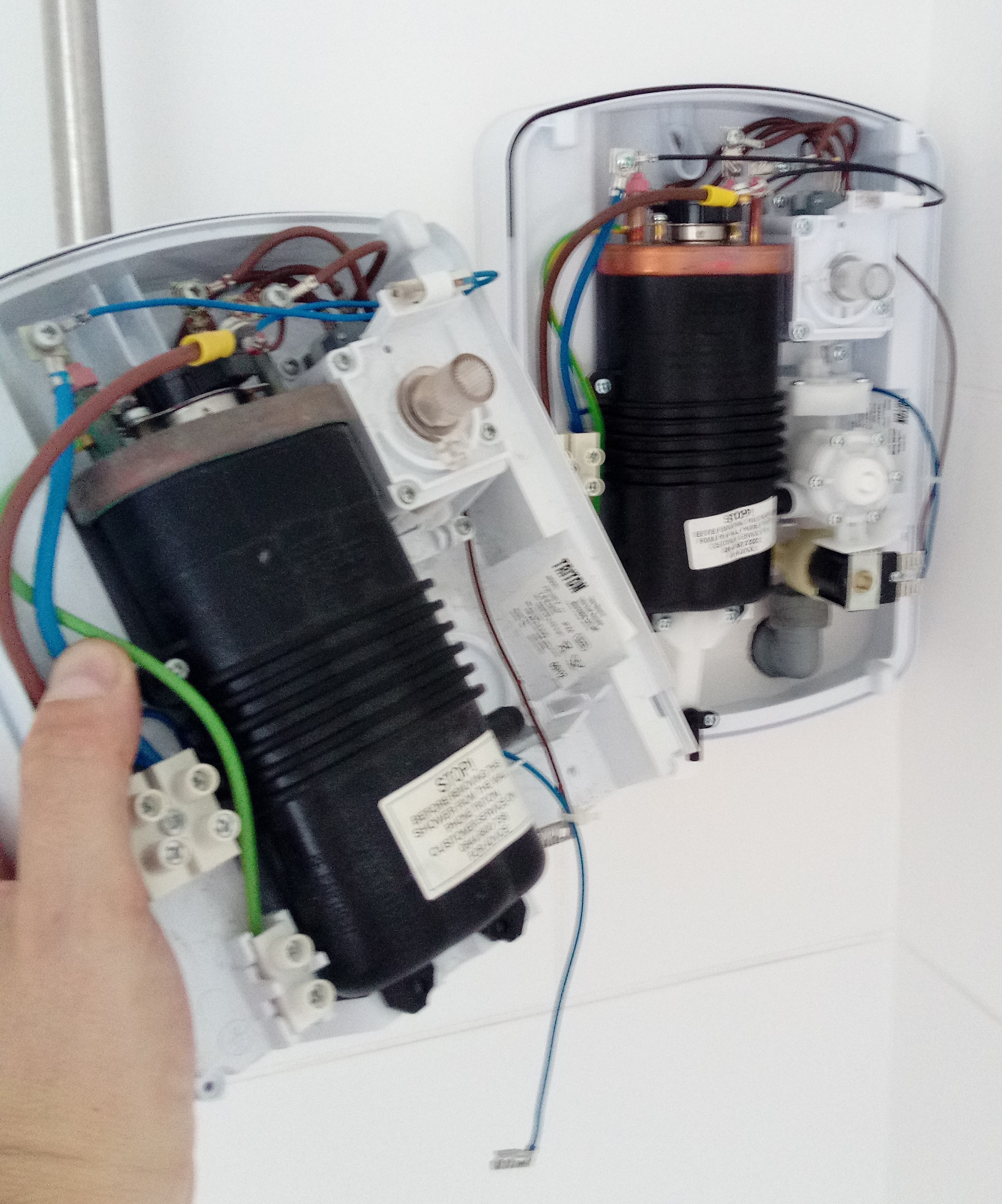
Recently our electric wall shower gave up the ghost and tripped the electrical breaker in the fuse cupboard.  Not great when it happens mid-wash.

The shower was a few years old and registered with the manufacturer for support for things like recalls and so on.  I had fitted the shower myself and it it had been a reliable product until this point.

Out with the screwdrivers and multimeter.

The 8.5kW heating element is split into two circuits, one for half-power and one for full.  Most people would use full power, but you might be able to get away with using it on half or economy mode in summer, when the water feed is generally warmer.

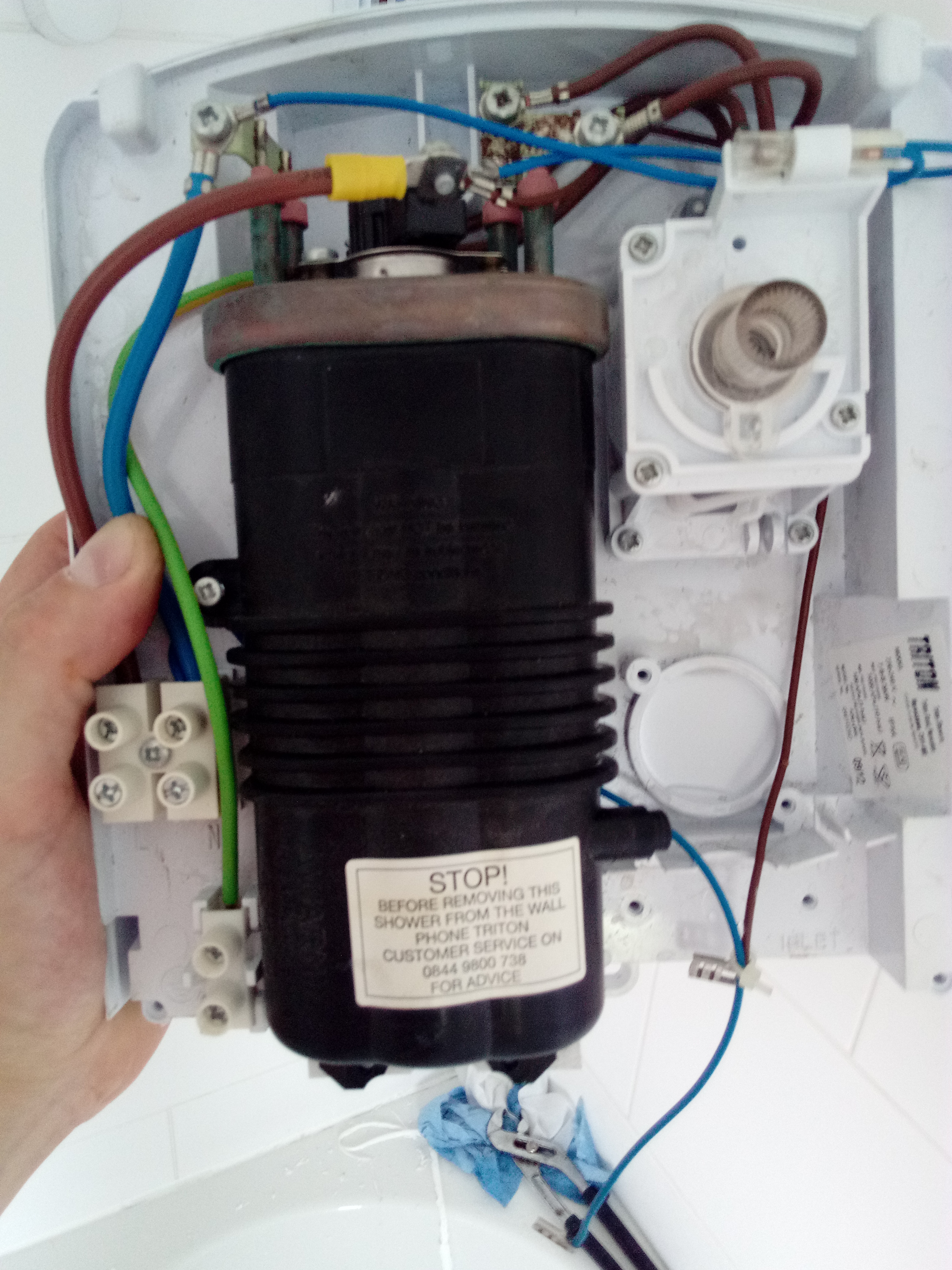
All micro switches seemed to be working OK, which was a bit of a shame actually as it meant that the heater can was probably faulty.  It was.  Half the heater can tested OK, the other half was dead.  Oh dear.

IMG_20190810_102404
FixItWorkshop, Worthing, Aug’19, Triton Cara heater can.

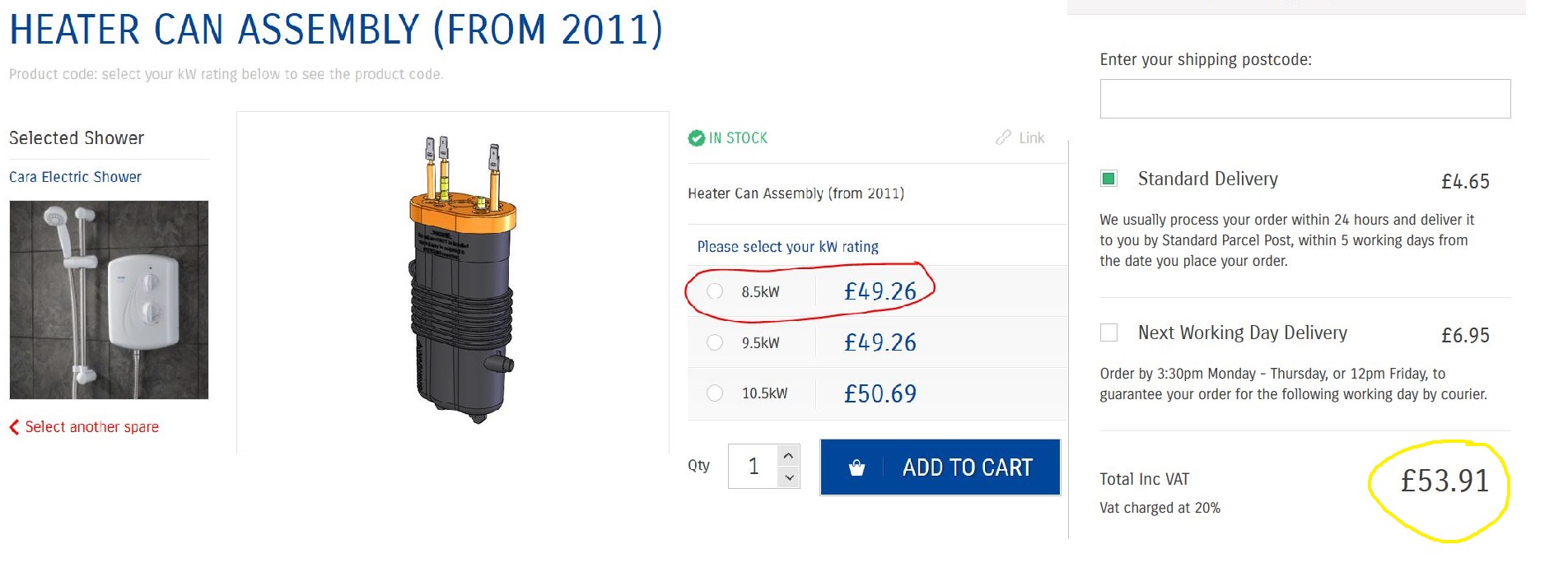
After visiting some shower spares suppliers and the manufacturers’ own website, I discovered that the spare part I needed wasn’t cheap at over £50 delivered.  I saw some advertised for £70 on some third-party sites.

Price of part
FixItWorkshop, Worthing, Aug’19, Triton Cara replacement heater can spare part.  Price sourced from triton.co.uk, correct 10/08/19.

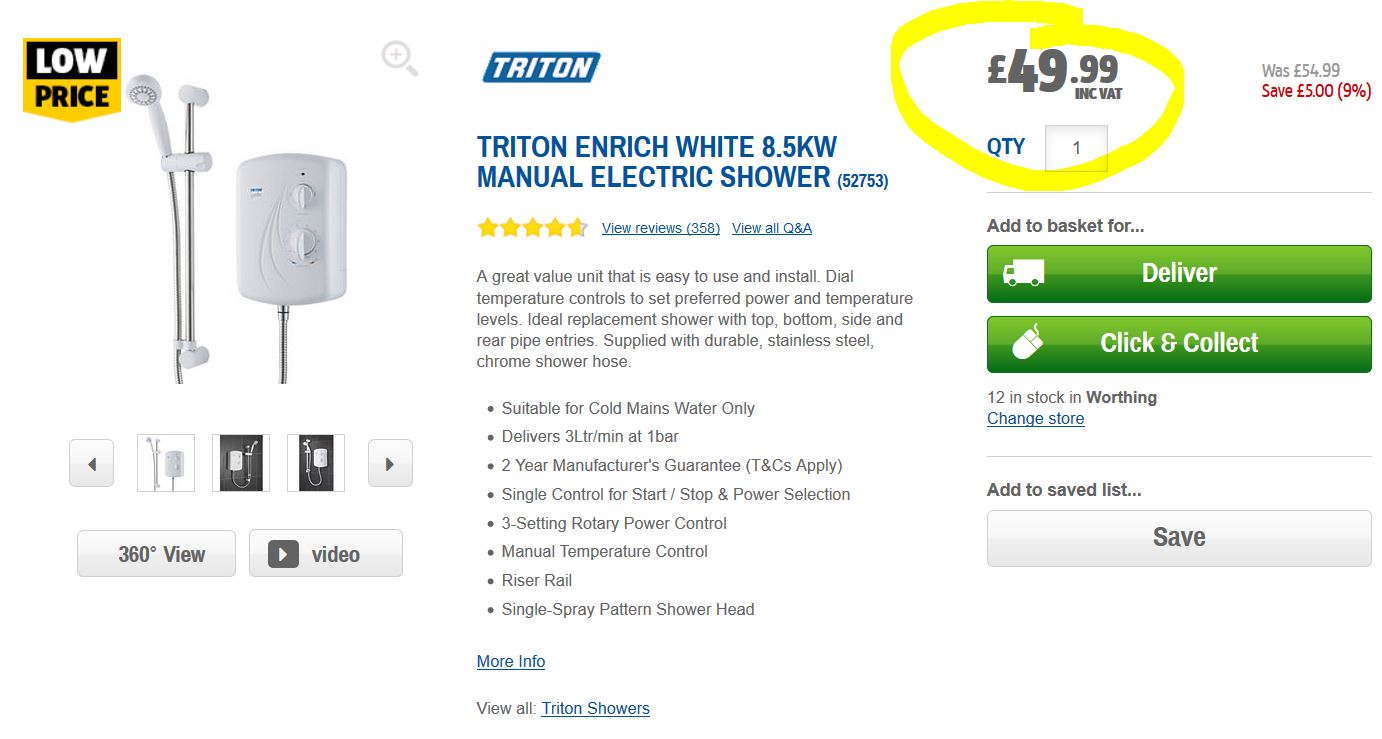
I was fuming.  Why so expensive?  I mean, you’d have to be out of your mind to part with your hard-earned cash on a spare part like this when you can buy the whole unit for less.  See below.

price new
FixItWorkshop, Worthing, Aug’19, Triton Enrich/ Cara – new price listing.  Price sourced from Screwfix.com, correct 10/08/19.

The Cara shower has been replaced by the Enrich and is basically the same product, by another name.  Therefore, the high price of the spare part in this instance cannot be blamed on low manufacturing volumes as the showers are still made, are widely available and have been in production for a long time.   Something is ethically wrong with Triton’s spare parts pricing policies.

Now, I don’t want to beat-up Triton, they’re not alone and many manufacturers do the same, but there are now many forward-thinking companies out there getting it right.  Maybe Triton will revisit their spares listings.

Despite my natural leaning to repair and recondition, I had to admit that simple logic won the day and I bought a whole new unit from Screwfix.  The Enrich shower fitted exactly where the Cara had been and worked perfectly.

I thought about this situation long and hard and decided that for this type of appliance, a spare part should not cost more than 30% of the current retail price.  In this instance, I would have been prepared to pay about £15.00 for a spare part. 

In a world where we need to encourage people to repair appliances (and anything else) manufacturers need to facilitate a reasonable and proportionate spares back up service.  It’s as simple as that.

Still, there is a bright side to this tale.  The old shower’s solenoid, mixer, control knobs and switches all work fine and I’ll keep those as spares to be used again in a shower or something else that comes along.