Keeping a light on the subject

A Herbert Terry 1227 lamp gets a light make over in the workshop.

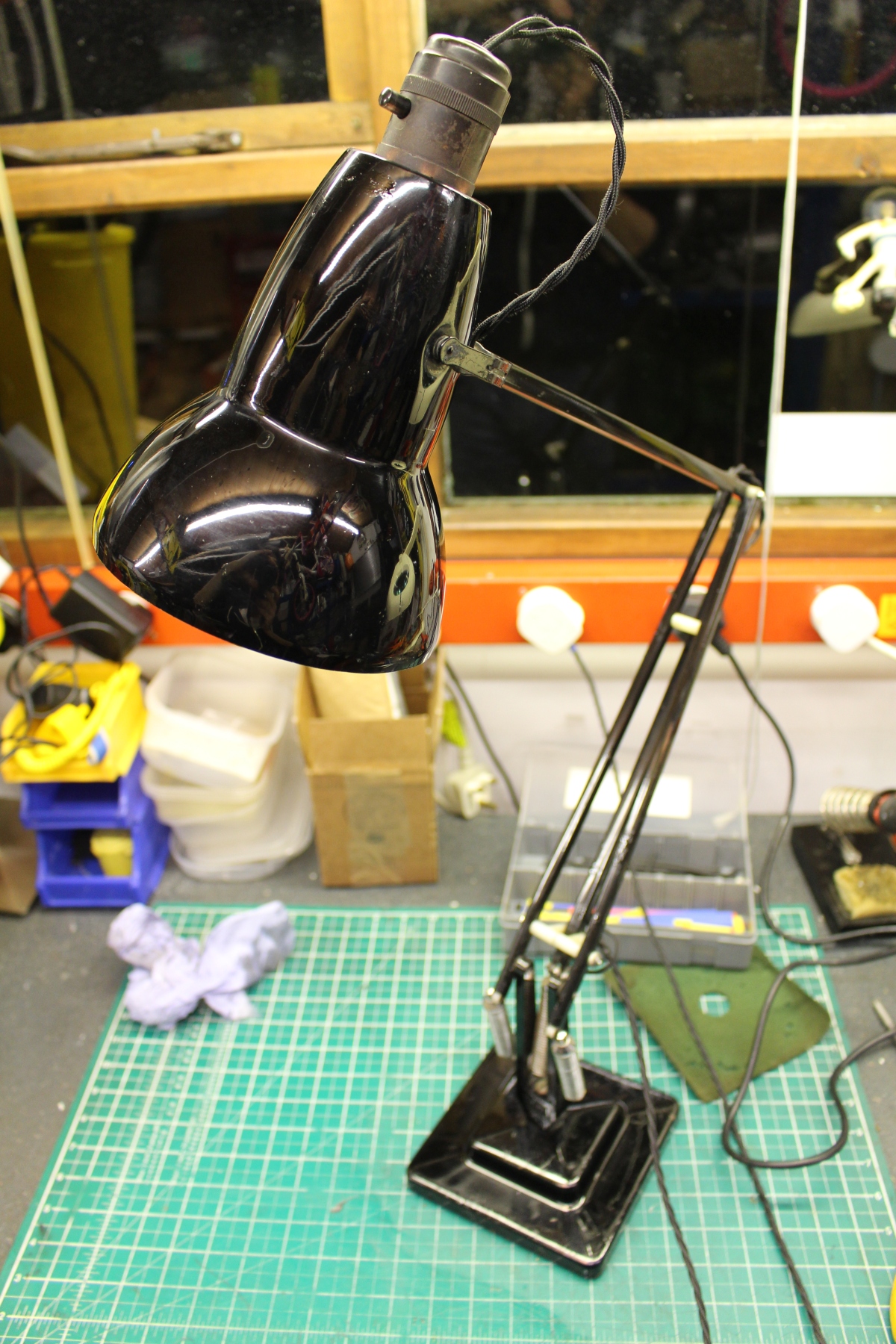
This lamp needs no introduction.  Herbert Terry Ltd first produced ‘Anglepoise’ lamps in England from 1934 and this 1227 model is instantly recognisable, with its art-deco characteristics and perfect proportions. Some of those early examples have survived to today and are now very collectable.

Make and model: Herbert Terry 1227 ‘Anglepoise’ lamp

Fault reported: Wiring requires replacement

Cost of replacement machine: £80.00 -£300.00 for an equivalent

Manufacturer support (in the UK): 8/10

Cost of parts (for this repair): £20.00

My time spent on the repair: 1.5 hours

Tools needed: Small knife, pliers, small screwdrivers, soldering iron, cutters, scissors

Sundry items: Cable, heat shrink, impact adhesive

Cleaning materials: Silicone spray, contact cleaner, wipes

Repair difficulty: 5/10 (fiddly)

Beverages: 2 teas

Biscuits: 2 chocolate digestives

Bad language: 4/10

My customer contacted me to ask if I could overhaul his family’s Anglepoise lamp and had told me that it was in daily use, but they all felt that the wiring was getting on a bit, and therefore they’d lost confidence in it. In other words, they were worried about a small fire or electrocution.

That’s the trouble with old, well-made stuff like this. Often, on the outside, it all looks fine and sturdy with a quick clean up, and it’s easy to forget that some things are as old as they are. But, one has to bear in mind that after all that time here on earth, things like plastics, rubber grommets and wire insulation break down with age and can be damn right dangerous. 

At 70 years old, this lamp was not in mint condition, but had been well looked after. It was still complete, with its original Bakelite bayonet bulb holder and switch, which is a rarity as they often crack. Over time, they get replaced with ‘B&Q special’ items, which never look right. Sadly, the original lamp holders are no longer available, but there are good alternatives out there, which will do the match well, if you know where to look. No issues with this one as it was all in very good order.

So to the brief; give it clean up, remove some rust, replace the worn-out felt base and re-wire, without over-restoring it. After all, it was wearing its age well, and a total re-spray would have removed all the ‘patina’.

Only a basic tool kit was required with this job, nothing fancy but with things like this, I tend to use a penetrating oil on all metal moving parts as rust and fatigue can make some fixings fragile. After all, I don’t want to add unnecessary cost to the job and while the oil is doing its thing, I can always have another brew, so there’s really no excuse not to do this. Only fools rush in and all that.

After I stripped all the old wire out, paying attention to the correct cable routes, I cleaned up anything previously covered up by the old cable. New modern fabric-covered plastic flex is available at a reasonable price, so that’s what I used and while there, I took the time to earth the frame of the lamp as a ‘Class One’ device. Technically, with a plastic/ Bakelite bulb holder, this isn’t required, but as I had some three cored cable, I decided to earth the metal base as a precaution. It couldn’t do any harm.

Normally I like to preserve as much as I can of the original parts, but in the case of the felt base, it was knackered. I could have just glued it back on, but that wouldn’t have done it justice. So, after a little raid of my daughter’s craft kit (which is full of off-cuts and felt) I had the perfect green felt, ready to be cut to size and glued in place. No one wants a scratchy base and once set, no one would ever know that the thing I’d just made, wasn’t a stock item. I was quite pleased with it.

A new LED bayonet 40W (equivalent), some light polishing, and a PAT (test) and this lamp was ready to be used daily, once again.

Until the next time…

Dim Lumie Bedbug

Lumie bedbug glows once again.

A short repair tale about a little bedtime bug.

A friend mentioned that their son’s Lumie Bedbug lamp was intermittently working and that it was shortly going to be visiting the bin if it didn’t buck its ideas up.

Er, no I said.

IMG_20190524_142951
FixItWorkshop, Worthing, May’19, Lumie Bedbug.

The bug night light was meant to glow orange, once switched on, but it only lit up when the cable was wobbled about.

The power connection on this model is a standard USB (B) connector, the ones commonly used to charge Android phones.  If the power lead was faulty, it would be easy to find a suitable replacement.

The bug comes apart by removing the silicone outer layer and releasing the tangs holding the two halves of the bug together.  One screw holds the PCB in place and once removed, the whole thing comes to pieces.

The USB socket was a little out of shape, presumably from some rough handling.  A quick nip with a pair of pliers and it was back as it should be.

The plug was also a little out of shape, but with a bit of careful re-shaping, it fitted the socket perfectly.

This slideshow requires JavaScript.

Once reassembled, reconnected and powered up, the bug glowed without flickering.  Result.

Cost of replacement:  £50.  Cost of repair:  One tea and one custard cream, that I made myself.

Leave the light on…

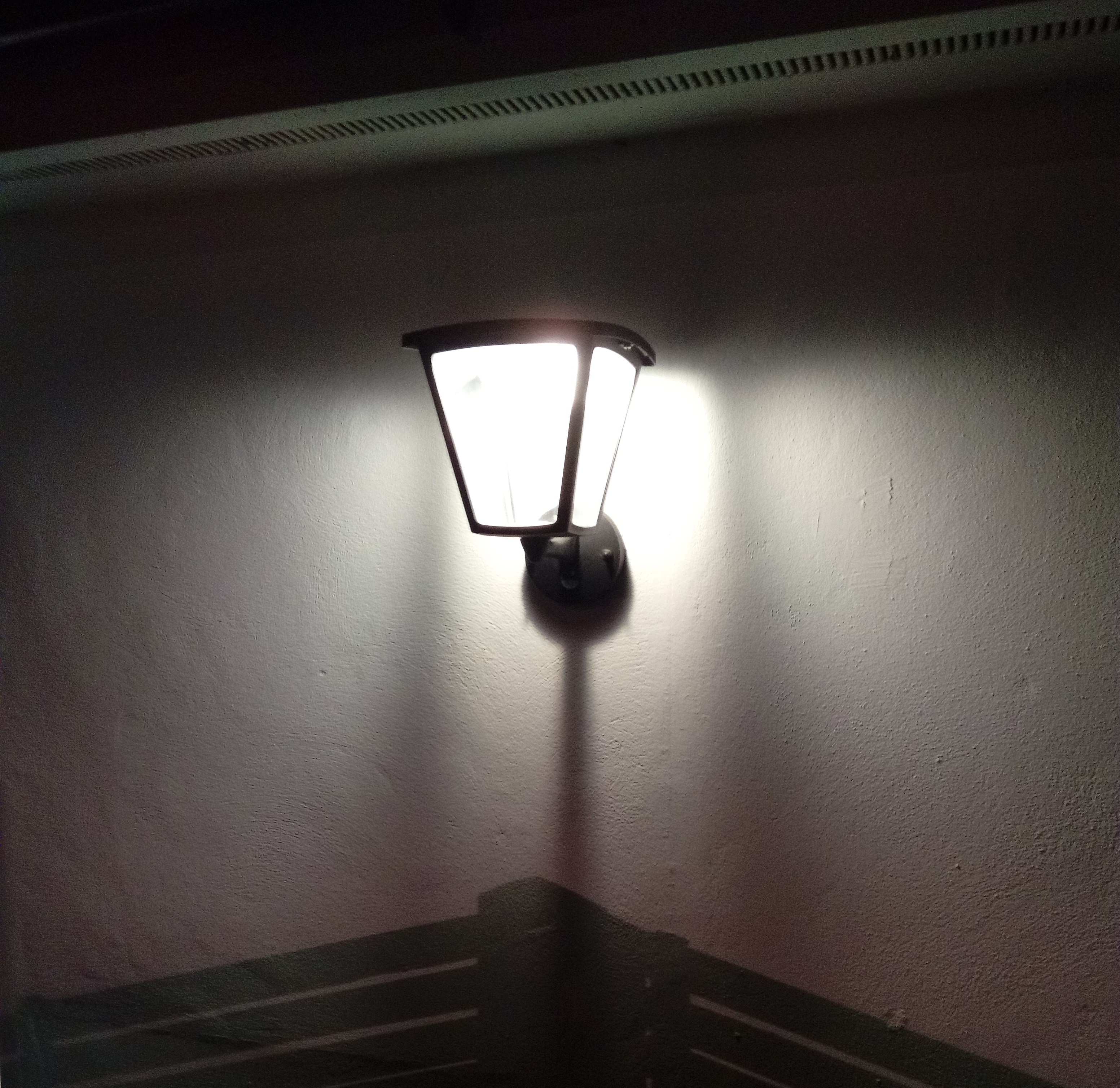
A Philips outdoor wall lamp with a major case of built-in obsolescence, gets a cheap fix.

A mate of mine mentioned that his outdoor wall light had given-up-the-ghost, despite not being more than three years old.  He’d put them up around his house as part of an extension and exterior restoration project.  The trouble was that despite only being a few years old, the product now seemed to be discontinued.  This meant that, should the lamp need to be replaced, he would need to replace all of them (three in this case) to keep them matching.  Annoying quite frankly.

IMG_20181112_194358.jpg
FixItWorkshop, March’19, Philips outdoor wall light, working.

He’d read that the bulb within the Philips lamp was not replaceable, in which case a faulty lamp would render the whole thing broken, which seemed very daft to me.  Items made in such a way that prevents even the most basic of repair get me very annoyed.  Sometimes an item is developed in such a way for safety reasons but I suspect that most of the time, the motive is just pure greed.  It’s such a shame.

At my mate’s house, over a cup of tea, I removed the lamp from the wall to take back to the workshop, to see what Philips had been getting up to.

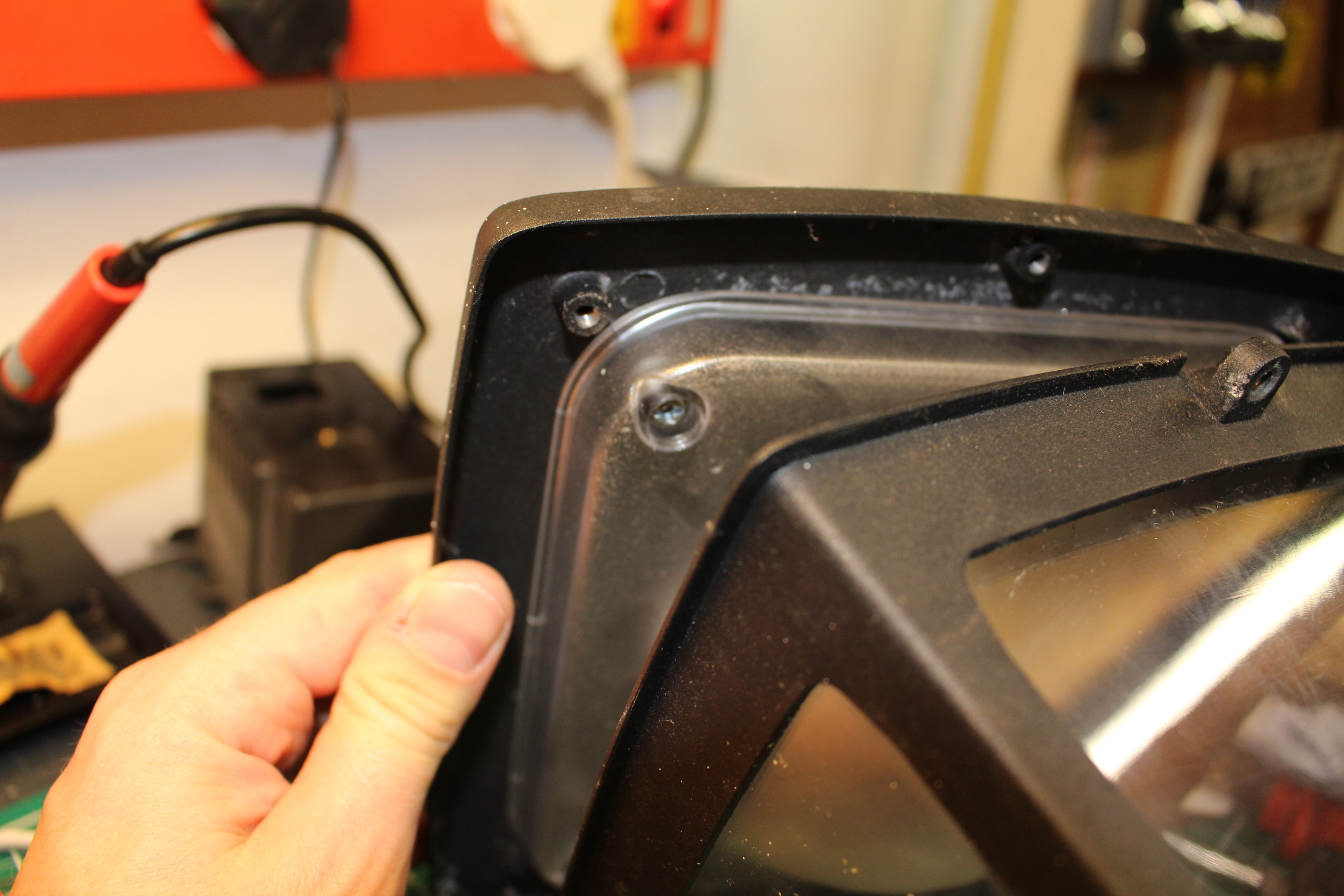
Opening up the casing was straightforward, just a few simple screws and retaining nuts holding the casing together, before finally revealing the bulb itself, under a lamp diffuser.

IMG_7609
FixItWorkshop, March’19, Philips outdoor wall light, lamp unit.

The bulb/ lamp unit itself appeared to be a custom/ bespoke disc light, that wasn’t user serviceable.  It had blown and there was evidence of scorching on a few of the LEDs, linked in series, indicating the failure of the entire circuit.

I couldn’t find any replacement disc LEDs suitable for the lamp from any of the usual sources, which I expected.  It could be that Philips can supply a replacement disc, but this was not evident on their website.

Not wanting to be beaten by a bespoke part, I thought about what else might work, within the lamp’s enclosure, to have the same effect.  I had a spare GU9 LED bulb, about the same brightness, sitting on the shelf, left over from another project which was going spare, so I set about fitting it in the space.

The generic GU9 bulb, available from most hardware shops, fitted in the existing disc mounting bracket, with a small modification and once connected to the lamp’s circuitry, worked well, albeit with a slightly warmer glow.

In case anyone else has the same problem, I made a little video of the repair.  I hope it gives others inspiration if faced with a similar problem.

Cost of replacement (with something similar): £50.00.  Cost of repair:  £1.50 for the bulb and a couple of Belgian beers for my time.