Keeping a light on the subject

A Herbert Terry 1227 lamp gets a light make over in the workshop.

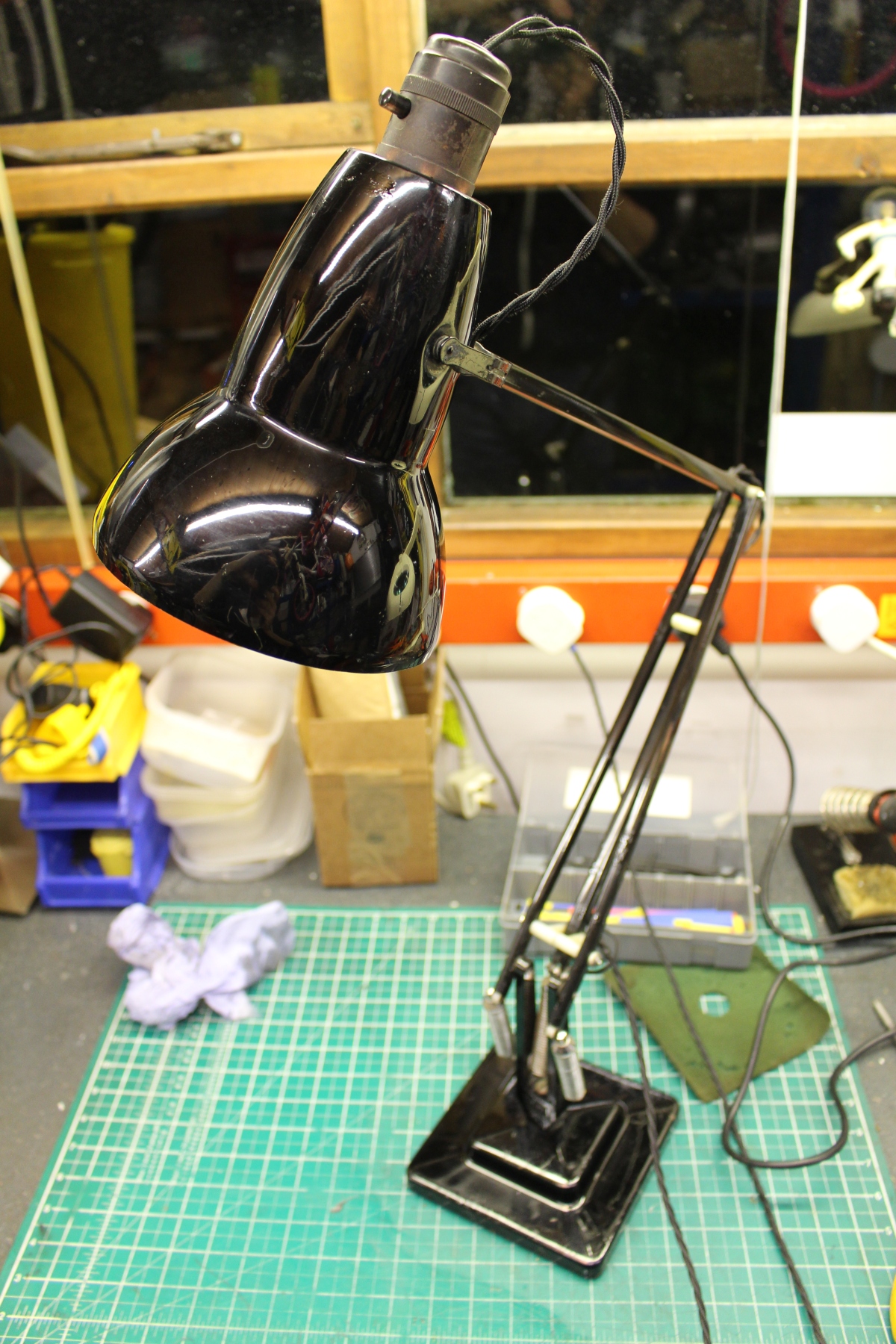
This lamp needs no introduction.  Herbert Terry Ltd first produced ‘Anglepoise’ lamps in England from 1934 and this 1227 model is instantly recognisable, with its art-deco characteristics and perfect proportions. Some of those early examples have survived to today and are now very collectable.

Make and model: Herbert Terry 1227 ‘Anglepoise’ lamp

Fault reported: Wiring requires replacement

Cost of replacement machine: £80.00 -£300.00 for an equivalent

Manufacturer support (in the UK): 8/10

Cost of parts (for this repair): £20.00

My time spent on the repair: 1.5 hours

Tools needed: Small knife, pliers, small screwdrivers, soldering iron, cutters, scissors

Sundry items: Cable, heat shrink, impact adhesive

Cleaning materials: Silicone spray, contact cleaner, wipes

Repair difficulty: 5/10 (fiddly)

Beverages: 2 teas

Biscuits: 2 chocolate digestives

Bad language: 4/10

My customer contacted me to ask if I could overhaul his family’s Anglepoise lamp and had told me that it was in daily use, but they all felt that the wiring was getting on a bit, and therefore they’d lost confidence in it. In other words, they were worried about a small fire or electrocution.

That’s the trouble with old, well-made stuff like this. Often, on the outside, it all looks fine and sturdy with a quick clean up, and it’s easy to forget that some things are as old as they are. But, one has to bear in mind that after all that time here on earth, things like plastics, rubber grommets and wire insulation break down with age and can be damn right dangerous. 

At 70 years old, this lamp was not in mint condition, but had been well looked after. It was still complete, with its original Bakelite bayonet bulb holder and switch, which is a rarity as they often crack. Over time, they get replaced with ‘B&Q special’ items, which never look right. Sadly, the original lamp holders are no longer available, but there are good alternatives out there, which will do the match well, if you know where to look. No issues with this one as it was all in very good order.

So to the brief; give it clean up, remove some rust, replace the worn-out felt base and re-wire, without over-restoring it. After all, it was wearing its age well, and a total re-spray would have removed all the ‘patina’.

Only a basic tool kit was required with this job, nothing fancy but with things like this, I tend to use a penetrating oil on all metal moving parts as rust and fatigue can make some fixings fragile. After all, I don’t want to add unnecessary cost to the job and while the oil is doing its thing, I can always have another brew, so there’s really no excuse not to do this. Only fools rush in and all that.

After I stripped all the old wire out, paying attention to the correct cable routes, I cleaned up anything previously covered up by the old cable. New modern fabric-covered plastic flex is available at a reasonable price, so that’s what I used and while there, I took the time to earth the frame of the lamp as a ‘Class One’ device. Technically, with a plastic/ Bakelite bulb holder, this isn’t required, but as I had some three cored cable, I decided to earth the metal base as a precaution. It couldn’t do any harm.

Normally I like to preserve as much as I can of the original parts, but in the case of the felt base, it was knackered. I could have just glued it back on, but that wouldn’t have done it justice. So, after a little raid of my daughter’s craft kit (which is full of off-cuts and felt) I had the perfect green felt, ready to be cut to size and glued in place. No one wants a scratchy base and once set, no one would ever know that the thing I’d just made, wasn’t a stock item. I was quite pleased with it.

A new LED bayonet 40W (equivalent), some light polishing, and a PAT (test) and this lamp was ready to be used daily, once again.

Until the next time…
Dinner will be served in a flash…

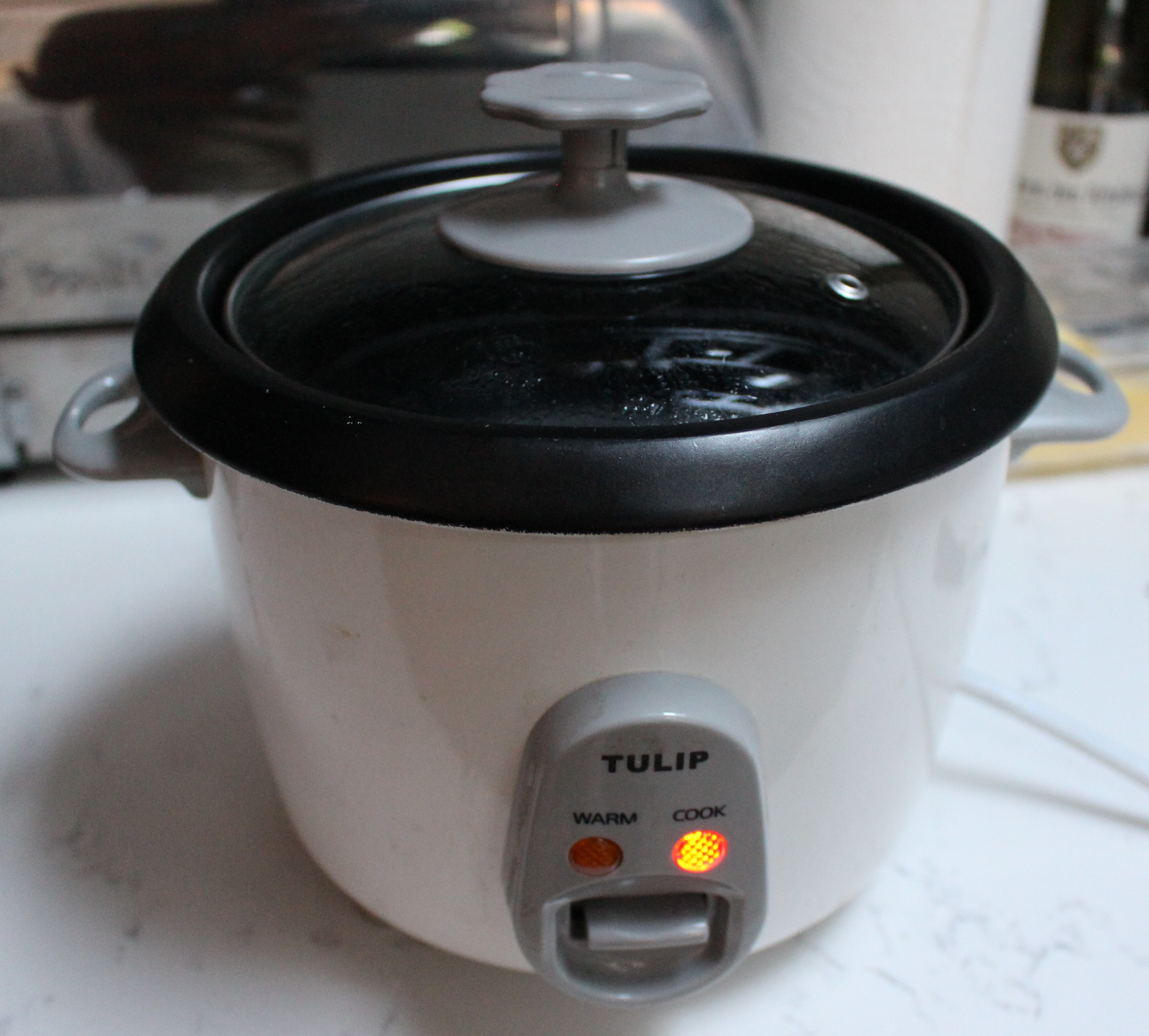
A Tulip A350T Electric Rice Cooker is repaired

IMG_2609
FixItWorkshop, Worthing, June’20, Tulip A350T 12Y1EI (to be exact).

I particularly enjoy receiving something to fix that I’ve never come across before.  Indeed, I’d never used an electric rice cooker, let alone heard of Tulip, the manufacturer of this example.  To be frank, I haven’t often thought about the popularity of electric rice cookers in general as an additional labour-saving device in the kitchen.  Clearly, I must be slipping.

This actual machine was a family treasure, which had moved around a bit and had originally been purchased in Holland and had since been converted from using a standard Euro plug to IEC/ kettle UK mains plug at some point.  All very interesting you say (maybe), but how did it end up in my workshop?

Make and model: Tulip A350T Electric Rice Cooker

Fault reported: Not working

Cost of replacement: £30

Manufacturer support:  0/10

Cost of parts: £2.00

Hours spent on repair: 1 hour

Tools needed: Screwdrivers, test meter, heat shrink, looped crimps etc

Sundry items: Cleaning materials

Repair difficulty: 3/10

Cups of tea: 2

Biscuits: Custard Cream X 2

After many years of reliable service, poor old ‘Tulip’ decided it had had enough of boiling up pilau rice and assorted vegetables and conked out.  When the owner tried to switch the cooker on, nothing happened, no light, no heat, no hope.

Most people would then usually have thrown in the towel, reached for their phone and within a couple of clicks, bought a new one on Amazon to be delivered the next day.

Perhaps it was the thought of poor old Tulip being crushed in the scrap metal pile at the tip which made the owner go online and find my website of strange domestic appliance tales instead of Amazon*…  But I’m glad they did.  *other online electrical retailers are available!

The machine is basically a large kettle with a removable bowl that holds whatever you wish to cook.  It has a thermostat for temperature regulation, a switch to change modes (cook/warm) and a safety cut-out mechanism, should something go wrong.  It was this safety system which had operated and caused the machine to fail-safe.

The design of the machine is quite simple, dare I say crude in places.  Within a few minutes, I had removed the base, exposing the wiring, switch, thermostat and other gubbins.

The earth bonding cable had melted which was the first alarm bell to ring.  Digging a little closer, the main issue revealed itself.  The heat-proof insulation on the ‘over heat’ one-shot thermal fuse had shorted out via a cracked piece of wiring on the metal casing of the unit.  Surprisingly, this had not overloaded the main plug fuse, but had heated the thermal fuse and had blown that instead.  Flash-bang, kaput.

The cooker’s switch, thermostat, element and other wiring checked out OK, so it was now worth fixing the failed system.

After purchasing a suitable replacement thermal fuse for a couple of quid, I set about installing this in place of the failed one, taking the time to upgrade the wiring harness with heat shrink to avoid a short again in future.  I removed the damaged earth and replaced it with fresh wire, securing it on to a better earth-bonded location and after some careful wire re-routing and fettling, the base of the machine was ready to be re-attached, ready for testing.  With the cooking bowl full of water and power applied, the ‘cook’ light lit up and the machine started to work.  Utter joy.  After a few cycles of heating and warming, I was satisfied that my work was done.

This slideshow requires JavaScript.

Even though this device wasn’t marked as such, it’s a metal bodied Class One device here in the UK and ideally required a thorough integrety test of the safety system.  Using my newly-acquired Megger PAT150 tester, I was able to prove that the machine was compliant with current UK legislation for Portable Appliance Testing.  Ricely done.